
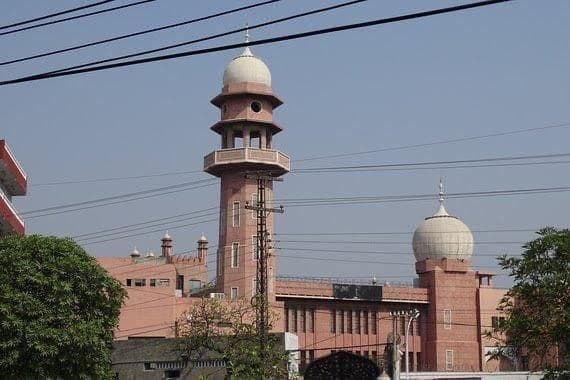
Singapore, 28 May 2010
I can remember every detail from that day.
It was a typically humid late afternoon in Singapore, slightly overcast with a hint of drizzle in the air. I had just left the Taha Mosque after Jumuah prayer. It had taken longer than usual that day because the local Jamaat had scheduled its Amila (Executive Committee) Elections for office bearers. The Elections had been scheduled for that Friday as it was a public holiday to commemorate Vesak Day, a celebration of Buddha’s birthday.
After the election, I must have walked only a few hundred metres when I received a call from a friend. It was a close friend, one who had been in Singapore for the last couple of years and one who would cross paths with me again in Australia a few years later. We had gone to the same university in Singapore, were of similar age and had developed a good rapport. I was happy to see his call.
I immediately noticed a tension in his usually calm voice.
“Please call home and make sure everyone is OK,” he said, as he started telling me about the events unfolding in Lahore that afternoon. I started to feel waves of anxiety slowly rippling through me. The smartphone era had just dawned and was beginning to gather pace but as a somewhat conservative late adopter, I was still using an older Nokia phone. My access to real-time information limited, I dashed back to my apartment to see for myself the reports of the attacks that were taking place on two of our mosques in Lahore.
The attacks made headline news on all major international networks, but the details were sketchy and limited as it was still a developing story. Given the three-hour time difference, it would have been time for Jumuah prayer in Pakistan and clearly the attackers had chosen the busiest time of the week to carry out their heinous plans.
I did notice, however, that both the mosques mentioned were not the ones that my father frequented. He usually prayed at a mosque closer to our home and I had no reason to believe that this Friday would be any different. This realisation brought a moment of calm and I picked up the phone to call my mother.
I did not get through on the first attempt and decided to wait a couple of minutes.
She picked up after a few attempts and confirmed that the unlikely scenario had indeed materialised: my father had gone to Masjid Dar-uz-Dhikr, one of the two mosques under attack that Friday.
There were no concrete details available, but what I could gather at that point was that the attackers had entered the mosques and had opened fire on the worshippers gathered inside for prayers. As of the most recent reports, they were embroiled in a shootout with security forces who had mounted a somewhat belated operation to halt this act of terror.
As the tension inside me rose rapidly, I paced the room nervously and prayed fervently to Allah the Almighty to protect my father and to protect all those who were inside the mosques. The phone in my hand became moist with the sweat from my palms and I struggled to focus my thoughts.
I called my mother again. Again, I was unsuccessful the first time but kept trying mindlessly, not thinking that she must be on the line with someone else. She did pick up on the third or fourth attempt.
“Wo nahin hain,” she said.
Her tone had said everything but her choice of words in Urdu had me confused momentarily. Perhaps it had been a desperate attempt on my part to cling on to the last strands of hope. When she had said “he’s not there”, she had meant “he’s no longer with us”. One of his friends had already identified him in a nearby hospital.
My father was no more. For the briefest of moments, I felt overcome by shock and fell to the floor on my knees.
Calm after the shock

It was indeed the briefest of moments, because, just as suddenly, I was overcome by a strange feeling of calm and clarity. My father had just attained shahadat (martyrdom). He had given up his life in the way of Allah, in His house, on the most blessed day of the week. There was no better way of leaving this world.
At the same time, the sense of responsibility that I had always felt as the eldest child suddenly seemed a lot weightier. I realised that I would need to summon all the strength within me to hold my family together. In the absence of my father, I would have to pick up and immerse myself in several matters, for which I felt unprepared, even after all the years of learning in his shadow. It was almost as if I had been instantaneously transported into another phase of my life, with no possibility of a gradual transition.
My memory of the next few hours seems to blur into a frenzy of activity, of condolence messages, of calls to make and lists of things that needed to get done immediately, of plans that we had to make for the funeral.
I will forever remember the kindness of the people around me in those moments.
My manager at the time, who was extremely understanding and reassured me that my employer would always support me. He was true to his word.
My friends, who helped me arrange a flight to Lahore and drove me to the airport.
Members of the Jamaat who were in shock themselves and who congregated at the mosque late that night to offer their words of sympathy. I distinctly remember our missionary, who tearfully embraced me and reminded me of the status that my father had just attained.
I was barely able to sleep that night as I thought of my family, concerned about their immediate safety and well-being.
Amidst this tumult of anxiety, I boarded my flight the next day and it was probably the first chance I had to process what had just transpired in the last 24 hours. I had just lost a parent, lost my biggest cheerleader, lost the person who had looked out for me more than anybody I could think of. I thought of how we would move on from this event and what the future may hold for us.
In a small corner of my mind, though, a seed of a question began to take root.
“Why him,” I asked myself. It was a question born not out of self-pity but out of genuine curiosity.
Why had the Almighty chosen my father? After all, he wasn’t even supposed to be there on that day and it was nothing short of a miracle that he was even with us at the time.
I will, of course, never even come close to understanding divinely decreed matters. Our way is to find peace and solace in His Will. At the same time, this question has remained with me since then and has compelled me to learn more about my father.
Lahore, 29 May 2010 and thereafter
I arrived back home in Pakistan and stepped into an altogether different role, in a completely changed environment. We learnt that 86 members of our Jamaat had been slain in these vicious attacks, my father among them and possibly one of the first few to lay down his life.
My sister arrived back from the United States along with my mother’s siblings. For the entire family, in those first few days, the wounds were fresh, the pain all too accessible and the vacuum unbearable.
As I had expected, I quickly became consumed with a few urgent matters and would remain entangled in some capacity over the next few days, weeks, months and even years.
The question that had appeared so spontaneously during my journey seemed to have withdrawn into the depths of my consciousness, out of sight but never completely forgotten. There was no chance of forgetting because events in the months ahead would further crystallise my curiosity to understand my father’s life better, as I increasingly fell in awe of the status he had attained.
Following my father’s death, three events in the summer of 2010 would go on to leave a lasting impression on me.
The first of these took place soon after the 28 May incident, when we had the tremendous honour of receiving a call from Hazrat Khalifatul Masih V (aa). I was entrusted by the family to represent us and in those moments of heightened nervousness, I am not sure if I was able to do justice to this responsibility. I do remember sharing some details about our family with Huzoor (aa) and his loving reply was “this family has a tradition of service and sacrifice”.
The call could not have been that long and my memory of the details may be hazy but even in those moments, the sheer magnitude of what I was experiencing was not lost on me. It was my first time receiving a call from the Khalifa of the time, it may well be the only time ever and it was an honour so distinctly unique and so incredibly uplifting that I would be willing to trade all my treasured memories for it.
A few days later, in a series of Friday Sermons delivered on the lives of these blessed martyrs of Lahore, Hazrat Khalifatul Masih V (aa) mentioned my father’s name. This was yet another occasion where time just seemed to stand still as we heard our Huzoor (aa) relay a brief biographical account of my father’s life. Hazrat Khalifatul Masih V (aa), had just mentioned my father’s name in front of a global audience. What an extraordinary honour for such a humble man!
Soon thereafter, I received a letter from Huzoor (aa), a letter that I will forever count amongst my most cherished possessions, a letter that I would go on to read and re-read in the years ahead, each time with the same intensity of emotion. In this message of condolence, Huzoor (aa) had expressed his own feelings in the aftermath of this tragedy that had befallen our Jamaat. He advised us to pray to the Almighty and beseech His help, as it says in the Holy Quran (Surah Yusuf, Ch.12: V.87):
قَالَ اِنَّمَاۤ اَشۡکُوۡا بَثِّیۡ وَ حُزۡنِیۡۤ اِلَی اللّٰہِ وَ اَعۡلَمُ مِنَ اللّٰہِ مَا لَا تَعۡلَمُوۡنَ
“He replied, ‘I only complain of my sorrow and my grief to Allah and I know from Allah that which you know not.’”
Huzoor (aa) concluded the letter with his affectionate salaam and prayers. His words, written in the most beautiful expression in Urdu, never cease to elicit my emotions. Every time I read these, I feel not only a great sense of pride and joy in being the son of a man who has been bestowed with such an honour but also an equally powerful sense of duty that I need to do justice to his legacy.
My mother and siblings also received personal letters of condolence. All of us continue to receive an eidi gift every year from Huzoor (aa) and we consider ourselves amongst the most fortunate of servants to be recipients of prayers said for martyrs and their families.
These are the gifts that my father has left behind for his family, priceless and matchless gifts that every father would dream of bequeathing to his children. And yet, no one could have imagined the heights that this remarkably simple man from Lahore would go on to attain.
It would be much later in life that I would have the maturity and presence of mind to contemplate and ponder over the question I had asked of myself that night in May 2010. Now, as a father of two young children myself, I feel a sense of urgency to delve into my father’s life, to peer beneath the façade of the roles that he played so well and understand for myself why he was chosen on that day. What lessons can I draw from his life that I could apply myself and impart to my children? How can I strive to carry on his legacy in the best possible way and ensure that we do justice to the great sacrifice that he has made?
Status of a Shaheed (Martyr)
It says in the Holy Quran (Surah Aal-e-Imran, Ch.3: V.170-172):
وَ لَا تَحۡسَبَنَّ الَّذِیۡنَ قُتِلُوۡا فِیۡ سَبِیۡلِ اللّٰہِ اَمۡوَاتًا ؕ بَلۡ اَحۡیَآءٌ عِنۡدَ رَبِّہِمۡ یُرۡزَقُوۡنَ
فَرِحِیۡنَ بِمَاۤ اٰتٰہُمُ اللّٰہُ مِنۡ فَضۡلِہٖ ۙ وَ یَسۡتَبۡشِرُوۡنَ بِالَّذِیۡنَ لَمۡ یَلۡحَقُوۡا بِہِمۡ مِّنۡ خَلۡفِہِمۡ ۙ اَلَّا خَوۡفٌ عَلَیۡہِمۡ وَ لَا ہُمۡ یَحۡزَنُوۡنَ
یَسۡتَبۡشِرُوۡنَ بِنِعۡمَۃٍ مِّنَ اللّٰہِ وَ فَضۡلٍ ۙ وَّ اَنَّ اللّٰہَ لَا یُضِیۡعُ اَجۡرَ الۡمُؤۡمِنِیۡنَ
“Think not of those, who have been slain in the cause of Allah, as dead. Nay, they are living, in the presence of their Lord, [and] are granted gifts [from Him], Jubilant because of that which Allah has given them of His bounty; and rejoicing for those who have not yet joined them from behind them, because on them shall come no fear, nor shall they grieve. They rejoice at the favour of Allah and [His] bounty and [at the fact] that Allah suffers not the reward of the believers to be lost.”
Family history

My father, Dr Asghar Yaqub Khan, was born into an Ahmadi family in 1949 in Lahore, Pakistan. His father, Professor Dr Mohammad Yaqub Khan (1903-1975), had served hospitals and medical colleges throughout British India. After the creation of Pakistan, Dr Yaqub had rendered invaluable services to the newly created state, playing an important role in the resettlement efforts for refugees arriving from India. He was the founder of Pakistan’s first Institute of Radiotherapy and Oncology at King Edward Medical College and Mayo Hospital Lahore and had introduced modern technology and treatment methods for cancer patients.
A very devoted and steadfast Ahmadi, Dr Muhammad Yaqub had the honour of being the personal physician to Hazrat Mirza Bashir Ahmad (ra). Hazrat Musleh-e-Maud (ra), a frequent visitor at Dr Yaqub’s residence in Lahore, also sought his medical advice on many occasions. During these trips, my father and his siblings had the opportunity to interact with Hazrat Musleh-e-Maud (ra) at a personal level.
My father’s paternal and maternal grandfathers were both pioneer Ahmadis in their families. His paternal grandfather, Hazrat Sheikh Abdul Rashid Khan Batalwi, was one of the companions of the Promised Messiah (as) and had the honour of taking the pledge of bai‘at at the Promised Messiah’s (as) hand. Dr Muhammad Ibrahim, my father’s maternal grandfather, was among the very fortunate 75 attendees who witnessed the first-ever Jalsa Salana Qadian, India.
Having a family that had such close ties with the Ahmadiyya Jamaat, my father grew up in an environment that was centered around service and obedience to the Nizam and Khilafat. He often narrated incidences of attending Jalsa Salana at Rabwah and told inspiring stories of events from his youth. Being the seventh child out of a family of eight children and being the youngest son, my father was much loved in his family. He spent most of his life at his ancestral Race Course Road home in Lahore, before finally moving to the Cantonment area of the same city in 2004.
Education and medical career
My father completed his initial schooling at St Anthony’s High School Lahore. After finishing secondary school from St Anthony’s, he passed his Higher Secondary examination at Government College Lahore. He then went on to complete a Degree in Biochemistry from the same institution before embarking on his medical studies at the Allama Iqbal Medical College. After completing his MBBS degree, he commenced his professional career at Services Hospital Lahore and continued to serve this institution for the next 25 years until his retirement in 2008.
Marriage and children
My maternal grandfather, Usman Ali Makhdum Sahib, had served Pakistan with great distinction throughout his Civil Services career. His grandfather, Hafiz Abdul Ali Sahib, was the brother of Hazrat Maulvi Sher Ali (ra), also a companion of the Promised Messiah (as) and well known for his scholarly translations of the Holy Quran.
My parents married in 1984 and went on to have three children, my younger sister and brother completing the trio. My mother was the second daughter out of a family of five children and had completed her initial schooling in Islamabad, Pakistan. She received her medical degree from Lahore and subsequently received higher professional degrees through the course of her career. She retired as an Associate Professor of Medicine in 2014, leaving behind an illustrious career, during which she had served at some of the leading hospitals and trained medical students at some of the best institutions in the country.
A loving father

My father was a devoted family man. He worked hard to provide his children with quality education in some of the best schools of the country and took great pride in their achievements. Growing up, all three of us were constantly exposed to opportunities to grow academically, spiritually and morally. Although he did not usually partake in teaching us directly, he would go to great lengths to make sure that the environment at home was conducive to learning and that we benefitted from any available opportunity to expand our knowledge. In the days before the Internet, he even invested a princely sum to buy us a set of Encyclopedias, a treasure trove of information before Google had arrived on the scene. My mother continues to keep these safe, as family heirlooms, for her grandchildren and our future generations.
At the same time, our father wanted us to become well-rounded individuals and encouraged us to take up memberships at cricket academies and sports camps. His contribution did not just stop at encouragement; he would always personally drop off and pick us up from our schools and extracurricular activities, taking great joy in this mundane activity. Even in the sweltering summer heat of Lahore, I do not think I had ever heard him complain about the seemingly never-ending list of drop-off and pick-up duties. If anything, he would relish getting us (almost daily) ice cream treats from the vendors outside our schools and insist only on taking a small bite as his “tax”. In the days and weeks after his heart attacks, when he would be unable to drive for some time, I could almost feel his angst at entrusting someone else to do these duties.
As a father, he also played a pivotal role in our spiritual and moral upbringing, always encouraging us to foster strong ties with Khilafat and the Jamaat. He laid focus on congregational prayers, financial sacrifice in the way of Allah and encouraged us to participate in Jamaat activities. All three of us had a strong personal relationship with our father because he invested time and effort in building these bonds. His approach was always gentle and nurturing, but he did not want us to compromise on important matters. I can recall one such incident when I was in the middle of my high school examinations and was busy studying when I learnt that one of my friends had just lost his father. I thought of my friend and how devastated he must have been, to experience such a shock at this critical time in the academic year. I wanted to visit him, but after the exams were over. My father, though, helped me set my priorities straight. In a few minutes, I was ready to visit my friend along with my father, to pay our respects and offer our condolences. Some matters just could not wait for us to find conveniently timed opportunities. This was one of those. It was an invaluable lesson to learn and helped to lay down in my mind, the foundation stone of a philosophy that my father believed in and practised wholeheartedly: people first, always.
A supportive husband
My parents had just marked their 25th anniversary a few months before his demise and my memory of their relationship will always be one of mutual respect, support and affection. My mother had been able to balance the demands of a medical career, which involved long hours and endless exams, with those of bringing up a family of three children and looking after their needs. She was able to do this because she could always count on my father’s support, practical and moral both, consistent in its resolve and application. I don’t think I had ever heard my parents quarrelling or arguing and this was the result of the immense respect and affection they had for each other. The pride and joy that our father felt in our achievements was matched by his feelings for our mother as she excelled in her field. As children, we were incredibly fortunate to grow up in this loving and nurturing environment. This was all that we had seen and had perhaps taken it for granted that this was a natural state of affairs. We did not have the wisdom to understand that it took patience, sacrifice, trust and devotion to provide that environment that these two very special people had created for us.
An embodiment of ‘Love for all, hatred for none’
Dr Asghar Yaqub Khan Sahib wanted to serve mankind to the best of his abilities, in the traditions laid down by his father. Fellow doctors and lab technicians at Services Hospital testify to these qualities, his accommodating nature and his willingness to help everyone in need, regardless of social rank or stature.
He was often seen providing financial assistance to his needier patients. During his time at Services Hospital, his lab was frequently visited by security guards, housekeepers, drivers and hospital orderlies seeking medical assistance and he was always ready to lend any help that he could, striving to ensure their health and welfare.
He would regularly take treats for children hospitalised in the ward next to his lab. His warm and sincere personality won the hearts of many around him. People fondly referred to him as Doc Sahib or Doctor Sahib and revered him as one of their own.
He managed all this even though he had frequently been the target of a concerted hate campaign by bigoted elements. Over the years and more so in the late 2000s, my father had received personal threats and those around him had been bullied into disassociating with him. My father had seen walls along the corridor leading up his lab plastered with hateful propaganda and more frighteningly, in 2008, found the windows of his car shattered. None of this, though, deterred him from soldiering on, carrying on his duties with dignity and professionalism.
Yaqub Clinic
A deeply altruistic man, my father, along with his duties at Services Hospital, continued to serve humanity through his practice at his Race Course Road clinic, situated on the premises of his residence. “Yaqub Clinic”, named after his father, brought together various physicians and provided treatment to people from all strata and walks of life.
It was only much later in life that I began to understand the scale of what my father had accomplished through this seemingly simple project. I have been fortunate enough to live in different countries, have seen state-of-the-art medical facilities and interacted with physicians delivering excellent patient care and treatment. But nowhere have I witnessed the extraordinary personal connection that one would feel at Yaqub Clinic, the feeling of being at home, of being cared for with the utmost love and sincerity. And this was done on a remarkable scale. Over the years, my siblings and I must have seen thousands upon thousands of patients walk in through those doors, some of whom would continue to stay in touch with us after our father’s death and who would readily share their memories of him.
Yaqub Clinic was not just any clinic. It was a place with no timings, where patients could walk in at any time, without any appointments. Through his work with various organizations, my father had built up a sizeable network but even those with no prior association were welcomed warmly. The needy would be treated without any expectation of fees while everybody would be treated to cups of tea and biscuits. Of all our childhood memories, probably some of the most vivid involve us playing in our backyard, watching trays laden with teapots and cups make their way from the kitchen at the back to the clinic in front.
In a world where aggressive self-enrichment was increasingly getting in vogue, Yaqub Clinic, which brought together some of the best physicians in Lahore, always remained faithful to the principles which my father and grandfather had envisaged. It was their belief that the skills and knowledge they possessed were gifts from the Almighty that needed to be used to help others, not to be monetised.
Yaqub Clinic was much more; it was a hub of intellect, of ideas, of discourse on various topics, a beacon in a time when waves of bigotry were buffeting against the edifice of society. It was a place where associations developed and friendships grew. For us as children, it was our window into the outside world. A world that seemed so bright from our vantage point that it hid away those dark and foreboding clouds that were gathering ominously on the horizon.
The day of his martyrdom
My father’s remarkable life came to an end that fateful afternoon when he was martyred while going for Jumuah prayer at the Dar-uz-Dhikr Mosque in Garhi Shahu, Lahore.
He was not supposed to be there that Friday but as the Almighty had decreed, he would be amongst the last few to walk in through the gates and amongst the first few to embrace shahadat.
We had been going to Dar-uz-Dhikr as far as I can remember and have many memories of Jumuah and Eid prayers in that mosque. However, since moving to a different part of the city in 2004, my family had started going to a nearby mosque and only visited Dar-uz-Dhikr occasionally.
That Friday, however, my father had to drop off my younger brother for one of his final high school exams. Since the school was situated nearby, he decided to offer prayer at Dar-uz-Dhikr, which was only two kilometers away. It would be the last couple of kilometers he would travel before meeting his Creator.
Reports would show that he had just entered the mosque when he was brutally shot in the chest and in the leg. He was conscious for a brief period during which he was carried off in an ambulance but attained shahadat before arriving at the hospital.
الَّذِیۡنَ اِذَاۤ اَصَابَتۡہُمۡ مُّصِیۡبَۃٌ ۙ قَالُوۡۤا اِنَّا لِلّٰہِ وَ اِنَّاۤ اِلَیۡہِ رٰجِعُوۡنَ
“Who, when a misfortune overtakes them, say, ‘Surely, to Allah we belong and to Him shall we return.’” (Surah al-Baqarah, Ch.2: V.157)
He had been looking forward to visiting me in Singapore and had already made the arrangements to travel in a few days. In a fateful twist, the visa labels that I had mailed from Singapore a day earlier were also opened by me in Lahore a few days later.
We would later be told by a friend that a few days before his shahadat, he had made a generous contribution towards the construction of a mosque. Another one of our friends would recall a recent dream in which they had seen their late father digging a grave close to him, for a friend who would soon be joining him. This was a dream seen by the son of one of my father’s closest associates, an Ahmadi physician who had practised at Yaqub Clinic for many years. My father was buried in a grave not too far from his.
As I write this in 2026, I note that acts of violence against our Jamaat have continued unabated in recent years. The attacks on our mosques (which are reported as places of worship in the local media) have increased in frequency and several Ahmadis have been killed for their beliefs.
And yet, I remain hopeful that one day my children will visit the land of their father and say salaam to their dada.