
Recall the most picturesque landscape you have ever seen. Maybe you envision snow-capped mountains, a roaring waterfall, or a crystal-clear lake. Imagine the deep breath you took that not only filled your lungs with fresh air but your heart with hamd, praise for Allah the Almighty. Your heart proves itself too small a vessel to contain this praise, so it spills over into every fibre of your being and “alhamdulillah”, “all praise belongs to Allah”, spontaneously emanates from the depths of your soul.
Yellowstone National Park, located in the Western United States, is one such extraordinary landscape. It attracts nearly four million eager visitors annually, making it one of the most visited national parks in the world. Its serene mountains, lakes, forests, canyons and wildlife, stretching over some 2.2 million acres, captivates beholders and inspires awe for al-Khaliq, but al-Musawwir, the Divine Artist of the universe.
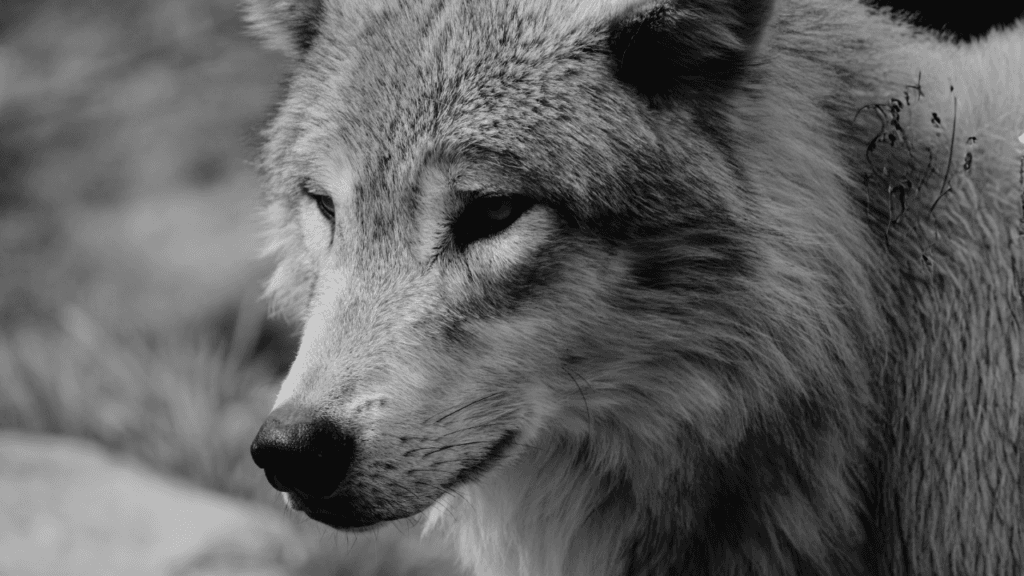
Lurking within its shadows, however, are the wolves of Yellowstone. These are some of the most ferocious yet tactful predators in the park. A well-coordinated pack has the ability to take down elk and even bison many times their own size.
Seen by its inhabitants as a threat to livestock and communities and as a blot on the canvas of the Almighty, ranchers and park rangers hunted these wolves down to the very last one in the early 20th century. Cash bounties were offered for wolf pelts, and legal mandates required park rangers to shoot and kill all wolves on sight. By 1926, the wolves of Yellowstone had been eradicated.
Man stepped back to admire the “correction” he had made to what he thought was Allah the Almighty’s “almost” perfect masterpiece. Gradually, however, his grin turned into a look of puzzlement and then horror. As he scanned the canvas, he realised that the real mistake was his own so-called correction.
With the elimination of wolves from Yellowstone, a host of unintended consequences devastated the park over the next several decades, in a phenomenon referred to by ecologists as a trophic cascade. Without the apex predator, elk populations soared beyond what the landscape could sustain. Overgrazing destroyed young vegetation, which in turn destabilised and eroded riverbanks. This ruined the habitats of various animals, especially beavers, leaving behind just a single colony in all of Yellowstone National Park. Fish, muskrats, and otters that had flourished in ponds and wetlands created by beaver dams were all adversely affected. Scavengers such as ravens, eagles, and foxes, which used to feed on the carcasses of elk and bison left behind by wolves, now found their food sources under threat. Yellowstone was rotting from the inside out.
Finally realising his mistake, man sought to undo his “correction” and return the painting back to its original, pristine state. From 1995 to 1997, wolves were captured and relocated from Canada to Yellowstone. They established packs, reproduced, and repopulated the park, gradually restoring balance and beauty to the National Park. Man stepped back again, this time to admire the correction of his previous “correction.” And to this day, he comes in droves to marvel at this perfect painting, yet still all too often fails to recognise its Divine Painter.
But the wolves of Yellowstone know better. Amidst their low howls echoes:
“No incongruity canst thou see in the creation of the Gracious [God]. Then look again: Seest thou any flaw? Aye, look again, and yet again, thy sight will only return unto thee confused and fatigued.” (Surah al-Mulk, Ch.67: V.4-5)
And if it is difficult to discern these verses in between their howls, then remember:
“And there is not a thing but glorifies Him with His praise; but you understand not their glorification.” (Surah Bani Isra’il, Ch.17: V.45)
The wolves of Yellowstone teach us that not only is there a divine balance in the universe, but that its beauty often depends on that which lurks in its shadows or is dismissed as a smudge on Allah the Almighty’s divine painting. Hazrat Musleh-e–Maud (ra) elaborates:
“Another question which is sometimes asked is, ‘if God is a Beneficent Creator, why has He created things like wild and savage animals, worms and reptiles, pains, troubles, ailments, and pestilences, etc.?’ Islam offers an explanation of this also. For instance, the Holy Quran says:
“‘All praise is due to God Who has created the heavens and the earth and has made the light and darkness, and yet those who deny the truth associate others with Him.’ (Surah Al-An‘am, Ch.6: V.2)
“That is to say, all things that are troublesome and are called the children of darkness, for instance, reptiles, wild beasts, poisons, plagues, etc., are also the creation of God, and their creation does not offend against the attribute of mercy but on the contrary proves the mercy of God. If their true nature is considered, they add to the praise and glory of God and do not detract from it […]. See how beautifully Islam has unveiled the truth and has explained the object of creating those things which appear at first sight harmful. It teaches that they have all been created for a useful purpose and that man ought to praise God for their creation […]. The same is the case with snakes, scorpions, and other reptiles. Much attention has not yet been devoted to these creatures, but further research is bound to disclose the fact that their existence is of great value from the scientific and medical points of view.” (Ahmadiyyat or the True Islam, 2017,pp. 51-52)
Just as man was hunting down the last of the wolves of Yellowstone in the Western United States, Hazrat Musleh-e-Maud (ra) came from the east to warn him. In 1924, Hazrat Musleh-e-Maud’s (ra) above statement was read out at the Conference of Living Religions Within the Empire in London, England. On the basis of the Quran, he explained that man, in his short-sightedness, objects to Allah’s creation and seeks to find flaws within it. Deeper research and reflection, however, invariably demonstrate that the very targets of His scrutiny bring divine balance to the universe. They do not detract, but rather “add to the praise and glory of God.”
In other words, all praise belongs to Allah for the wolves of Yellowstone.