
Guidance regarding basic Islamic issues that Hazrat Amirul Momineen, Khalifatul Masih Vaa, has given on various occasions in his written correspondence and during MTA programmes is being published officially below for everyone’s benefit.
When will my prayers be answered?
Someone wrote to Hazrat Amirul Momineen, Khalifatul Masih Vaa:
“1. Is my relationship with God not good, that the doors of the world have been closed upon me, even though I am highly diligent in offering obligatory and voluntary prayers?
“2. I have read that for prayers to be accepted, one must remain attached to Khilafat. Similarly, some people say that one should ask Hazrat Amirul Momineenaa for prayers. This is a very good thing and I do not deny it. But is God Almighty not closer to man than his jugular vein or have I failed to understand the matter of prayer?
“3. Does religion not teach us to use our intellect in religious and worldly matters? Is it permissible for some Ahmadi brothers to be stubborn about their opinions? Sometimes, when the argument becomes excessive, I abandon the debate to maintain mutual love. Such arguments are mostly about the authenticity of certain ahadith. We know that apart from the Holy Quran, no book is free from interpolation, is it not?
“4. In the Sahihain [the two authentic books of Hadith, Bukhari and Muslim], there are some ahadith regarding marital relations. Is it correct to say that these are not authentic? Or did Hazrat Aishara narrate them in her own way, having learned them through observing the Allah’s Messengersa?
“5. There is a hadith that during his final illness, Allah’s Messengersa asked for something to write on so that Muslims would not go astray after him, but some Companions objected to this. What is the authenticity of this hadith and what was the role of Hazrat Umar bin al-Khattabra in it?”
Huzoor-e-Anwaraa, in his letter dated 4 November 2023, provided the following guidance:
“The answer to your first question is that Allah the Almighty is the Sovereign; if He wills, He may hear the prayer of a servant and if He wills, He may not and whenever He wills, He may accept all prayers at once. The duty of the servant is simply to continue asking. The Promised Messiahas states:
“‘Those people who are impatient fall into the clutches of Satan. A righteous person must battle with impatience as well. In Bustan, there is a mention of a worshipper. Whenever this individual stood for worship, he would hear an angel’s voice from the unseen saying: ‘You have been rejected and forsaken.’ On a certain occasion, one of his disciples heard this voice from the unseen and said: ‘Now the verdict has been passed. What then is the use of futile action?’ The man wept profusely and said, ‘If I am to leave God, where else should I go? If accursed I am, then so be it. At least I am fortunate enough to be called accursed.’ These discussions were still underway with his disciple when a voice was heard saying, ‘You have been accepted.’ So all this was the result of sincerity and patience, which is a condition for one who is righteous.’ (Malfuzat, 2022, Vol. 1, p. 21)
Similarly, at another place, he stated:
“‘Prayers possess an efficacy and they undoubtedly manifest themselves. In one instance, Hazrat Abul Hasan Kharqanira states, ‘For 30 years I offered certain prayers which had no effect whatsoever and the thought crossed my mind that they had not been accepted. Finally, after 30 years, all those objectives were achieved and it became evident that all the prayers had been accepted.’ When a prayer is accepted after a delay, one’s life is prolonged.’ (Maktubat-e-Ahmad, Vol. 2, Letter No. 35 addressed to Hazrat Nawab Muhammad Ali Khan Sahib, 2008, p. 234)”
Do I have to request the Khalifa-e-Waqt for prayers?
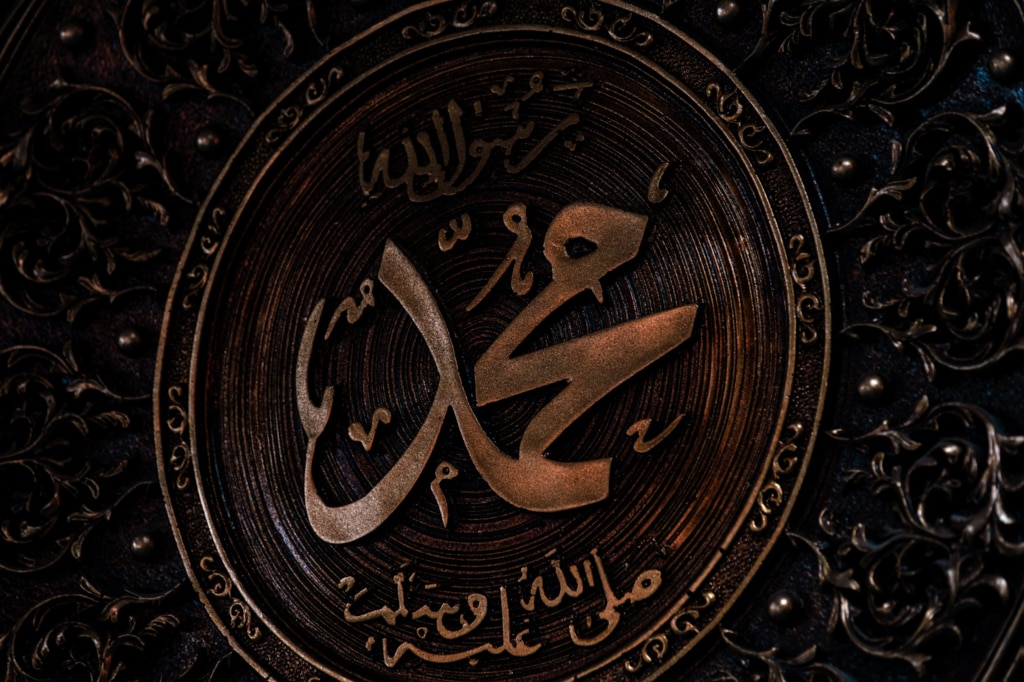
“In answer to your second question, please note that for the acceptance of prayers, you should abundantly invoke blessings upon the Holy Prophet Muhammadsa. This, too, is necessary, but with understanding. Allah the Almighty states in the Holy Quran:
وَابْتَغُوا إِلَيْهِ الْوَسِيلَةَ
“‘And seek out ways of approach unto Him.’ (Surah al-Ma’idah, Ch.5: V.36)
“For attaining the nearness of Allah the Exalted, there can be nothing greater than the holy personage of the Holy Prophetsa. Expounding upon this subject, the Promised Messiahas states:
“‘On one occasion, it so happened that I remained very much occupied with calling down blessings on the Holy Prophet, may peace and blessings of Allah be upon him, for a long time, for I believed that the ways leading to God are very fine and cannot be discovered except through the agency of the Holy Prophet, as Allah says too:
وَابْتَغُوا إِلَيْهِ الْوَسِيلَةَ
“‘[‘And seek the way of approach unto Him.’ (Surah al-Ma’idah, Ch.5: V.36)].
“‘After a time, I saw, in a vision, that two water carriers came and entered into my house, one by the outer entrance and the other by the inner entrance, carrying on their shoulders water-skins full of divine light, and they said:
هٰذَا بِمَا صَلَّيْتَ عَلٰى مُحَمَّدٍ
“‘[‘This is on account of the blessings you invoked upon Muhammad’].’ (Haqiqatul-Wahi, Ruhani Khazain, Vol. 22, p. 131, footnote)
“As for wanting to involve the Khalifa of the Time to pray for you, that is your own prerogative. After all, a person also asks their close relatives to pray for them. The Holy Prophetsa himself said to the Companions, ‘Help me with your prayers.’ (Sahih Muslim, Kitab as-salah, Bab fadhli s-sujudi wa l-haththi ‘alayhi) Even though he was in no need of this, as he himself is the ultimate means of approach [wasilah] to God.”
Is it permissible to argue over religion in Islam?
“The answer to your third question is that, to a certain extent, there is no harm in engaging in scholarly discussion accompanied by arguments and devoid of personal ego. However, one should not argue merely for the sake of arguing, because instead of resolving matters, this complicates them further. You do the right thing by leaving a gathering where such a situation arises.”
Are the ahadith regarding marital relations authentic?

“In answer to your fourth question, it is written that the Holy Prophetsa provided guidance to his followers in every matter of life, whether minor or major. He informed us of necessary matters, even concerning eating and drinking, sleeping and waking, relieving oneself and matters of purification and cleanliness. Similarly, he also guided us regarding marital relations. Some of these ahadith are based on the sayings of the Holy Prophetsa and some are based on the observations of his pure wives, who noted them in the holy personage of the Holy Prophetsa and narrated them for our knowledge so that we too may adopt the example of the Holy Prophetsa in these matters. Accordingly, in his commentary on [Sahih al-Bukhari’s Kitab al-ghusl,] Bab al-ghusli bi s-sa‘i wa nahwih, Hazrat Syed Zain-ul-Abidin Waliullah Shah Sahibra writes:
“‘Here, the purpose of this chapter is not this specific issue but rather the subject matter contained in the first two narrations of this chapter, which is that the Companionsra had a profound desire to follow the Holy Prophetsa. The fundamental basis for this was the following verse:
قُلۡ اِنۡ کُنۡتُمۡ تُحِبُّوۡنَ اللّٰہَ فَاتَّبِعُوۡنِیۡ یُحۡبِبۡکُمُ اللّٰہُ
“‘‘Say, ‘If you love Allah, follow me: then will Allah love you.’’ (Surah Aal-e-Imran, Ch.3: V.32)
“‘Therefore, the Companions, may Allah be pleased with them, firmly believed the Prophetsa to be the exemplar and leader in every matter and they were always mindful that their every action should accord with the excellent model of the Holy Prophetsa. This is why they would investigate matters.’ (Sahih al-Bukhari: Tarjamah wa Sharh, Vol. 1, p. 340)”
What is the significance of the ‘Hadith of the Pen and Paper’ or Hadith al-Qirtas?
“As far as the Hadith al-Qirtas [Hadith of the Pen and Paper] is concerned, Imam Bukharirh has recorded this hadith in his Sahih under various chapters and this hadith has long been a subject of debate and dispute between the Sunnis and the Shias. The Shias claim that this will related to the right of Khilafat of Hazrat Alira, which Hazrat Umarra prevented the Noble Prophetsa from writing by saying, ‘Is the Book of Allah not sufficient for us?’ However, this is merely a hypothetical notion and has no connection to reality.
“The actual matter is that even in his final moments, the Holy Prophetsa was concerned lest his Ummah forget and go astray from the path of truth after him. Therefore, he wished to further exhort them to remain firmly established upon the Book of Allah. But when Hazrat Umarra, observing the pain of the Holy Prophet’ssa illness, submitted, ‘O Messengersa, we have the Book of Allah, which is sufficient for us,’ since the Holy Prophetsa knew that the Holy Quran is the Final Scripture revealed by God Almighty with the promise, ‘We have left out nothing in the Book’ (Surah al-An‘am, Ch.6: V.39) and that it explains everything clearly (Surah an-Nahl, Ch.16: V.90), the Prophetsa was satisfied by the words of Hazrat Umarra. This was because he only wished to advise them to hold the Book of Allah dear as their very life. Thus, after hearing the words of Hazrat Umarra, he did not repeat his request for paper and pen. Moreover, as is evident from certain other ahadith, he lived for a few days after this incident and during those days, he accomplished several other necessary tasks, but he did not reiterate the matter of the paper and pen. Thus, it becomes clear that since the commandments he deemed necessary to be written down were already present in the Book of Allah and he only wanted to emphasise clinging to the Book of Allah, observing that both these objectives were fulfilled by Hazrat Umar’sra statement, he was satisfied and, in endorsement of Hazrat Umarra, chose to remain silent.
“Since a difference of opinion had arisen among the Companions on that occasion and a state of clamour had ensued, the Holy Prophetsa expressed his displeasure at this and ordered the people to leave, saying, ‘Do not make noise in my presence.’ (I have already narrated this incident with reference to Hazrat Umarra in the series of sermons on the Badri Companions.)
“Hazrat Abdullah bin Abbasra, who was of a young age at that time, would later say when narrating this incident that it was a great loss that the Holy Prophetsa was prevented from writing. However, even he never said that the Holy Prophetsa wanted to dictate a will regarding the Khilafat of Hazrat Alira; rather, his regret was simply that whatever the Holy Prophetsa wished to dictate should have been written down.”
What does the White Minaret of Damascus represent in Islam?
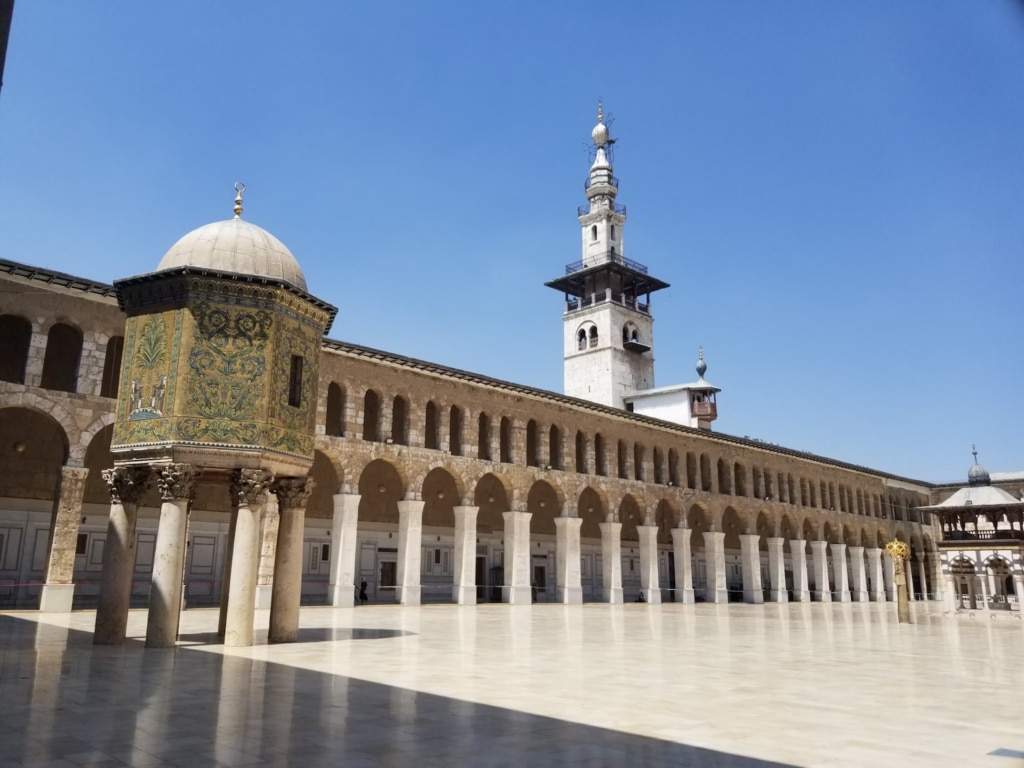
Someone from Canada asked Hazrat Amirul Momineen, Khalifatul Masih Vaa, what the white minaret in Damascus signifies.
Huzoor-e-Anwaraa, in his letter dated 4 November 2023, provided the following guidance regarding this:
“This is part of a lengthy hadith recorded in Sahih Muslim, narrated by Hazrat Nawwas bin Sam‘anra. In this hadith, the Holy Prophetsa mentioned the Dajjal [Antichrist], his signs and the place of his emergence and also explained the method of protection against him. Similarly, he mentioned the descent of Jesusas, Son of Mary, his signs and the killing of the Dajjal at his hands. Furthermore, he also mentioned Gog and Magog and their destruction. During this, the Holy Prophetsa mentioned the advent of Jesusas, Son of Mary, as descending near the white minaret to the east of Damascus, wearing two yellow sheets and resting his hands on the wings of two angels, in the words:
إِذْ بَعَثَ اللَّهُ الْمَسِيحَ ابْنَ مَرْيَمَ فَيَنْزِلُ عِنْدَ الْمَنَارَةِ الْبَيْضَاءِ شَرْقِيَّ دِمَشْقَ بَيْنَ مَهْرُودَتَيْنِ وَاضِعًا كَفَّيْهِ عَلَى أَجْنِحَةِ مَلَكَيْنِ
“Thus, this hadith, in a metaphorical manner, provides many prophecies regarding the latter days. Among these are specifically the prophecies of the emergence of Satan’s agents – the Dajjal and Gog and Magog – and the advent of the Muhammadan Messiah, with the support and succour of Allah the Almighty, to combat these afflictions. Clarifying this hadith, the Promised Messiahas states:
“‘This wording of the hadith in Muslim, that the Messiah will descend near the eastern minaret of Damascus, does not signify that it will be the Promised Messiah’s place of residence; rather, at the very most, it appears to signify that at some point his activities will reach Damascus. And this too is on the condition that the word Dimashq is taken to mean the literal Damascus. And even if it is understood as such, what is the harm in it? Now a railway line is also being constructed from Damascus to the Holy Mecca and any person can reach Damascus within 20 days. Furthermore, in Arabic, a traveller is called nazil [one who descends]. However, it is a settled matter that the true meaning of this hadith is that the Promised Messiah was to appear to the east of Damascus and Qadian is situated to the east of Damascus. The intent of the hadith is that just as the Dajjal was to appear in the East, similarly, the Promised Messiah was also to appear in the East.’ (Tohfah-e-Golarhviyyah, Ruhani Khazain, Vol. 17, p. 165, footnote)
“He further states:
“‘It is established from Hadith that the Dajjal was to emerge from the East and Nawab Maulvi Siddiq Hasan Khan Sahib has already conceded in Hujaj-ul-Karamah that the East appointed for the tribulation of the Dajjal is India. Therefore, one is compelled to accept that the East destined for the manifestation of the Messianic lights is also India, for the physician must go to where the sick are.’ (Tohfah-e-Golarhviyyah, Ruhani Khazain, Vol. 17, pp. 166-167)”
What is the satr for men in Islam?

Someone from the UK enquired from Hazrat Amirul Momineen, Khalifatul Masih Vaa, stating that Islamic instructions regarding the bounds of modesty [satr] for women are clear, but what is the commandment regarding the satr for men? He wrote:
“I have seen that men display their bodies and muscles, even though they claim to have covered the area between the navel and the knees. Nevertheless, this is against the Islamic commandment of modesty because women look at them with improper gazes. I request guidance in this regard.”
Huzoor-e-Anwaraa, in his letter dated 6 November 2023, provided the following guidance regarding this question:
“Prior to the commandment of the veil [purdah], Islam gave the commandment of lowering the gaze [ghadd-e-basar] and this commandment is identical for both men and women, as it is stated:
“‘Say to the believing men that they restrain their eyes and guard their private parts […] And say to the believing women that they restrain their eyes and guard their private parts.’ (Surah an-Nur, Ch.24: V.31-32)
“Thus, the commandment to lower the gaze is for both men and women. When both do not look at each other, impure thoughts will not arise either. Interpreting this verse, Hazrat Khalifatul Masih Ira states:
“‘When it is not permissible to cast the physical eye, how can it be permissible to investigate their circumstances with the inner eye […] We have seen many such people who are ruined by a single glance. Allah the Almighty says to tell the believers to keep their gazes lowered. I am an enemy of the [shuttlecock] burqa for this very reason, because the eyes of the one wearing it cannot be lowered. Maulvi Muhammad Ismail Sahib Shaheed, may Allah have mercy on him, says, ‘If your first glance falls upon a beautiful person, you must never cast a second glance at them. This will create a light in your heart.’’ (Haqaiq-ul-Furqan, Vol. 3, p. 213)
“Thus, when it is not permissible for men and women to look at each other with physical eyes, how can it be permissible to bring impure thoughts about one another into the mind? Therefore, the commandment to lower the gaze is for both men and women.
“As for the rest, if clothes are not available, the minimum satr for a man is the area between the navel and the knees, which must be covered.
“Pure and righteous women should refrain from watching various sports and programmes that showcase the physique and muscles wherein men’s bodies are partially exposed. This is exactly in the same manner that righteous men must avoid watching such programmes featuring women which give rise to impure thoughts in the heart.
“The Promised Messiahas states:
“‘The purpose of these [purdah] regulations is to restrain men and women from letting their eyes to rove freely and from displaying their good looks and beauties, for therein lies the good both of men and of women. It should be remembered that to restrain one’s looks and to direct them only towards observing that which is permissible is described in Arabic by the expression ghadd-e-basar, which is the expression employed in the Holy Quran in this context. It does not behove a pious person who desires to keep his heart pure that he should lift his eyes freely in every direction like an animal. It is necessary that such a one should cultivate the habit of ghadd-e-basar in his social life. This is a blessed habit through which his natural impulses would be converted into a high moral quality without interfering with his social needs. This is the quality which is called chastity in Islam.’ (Islami Usul Ki Falasafi, Ruhani Khazain, Vol. 10, p. 344)”
(Compiled by Zaheer Ahmad Khan, Head of Records Department, Private Secretariat, London and translated by Al Hakam)