
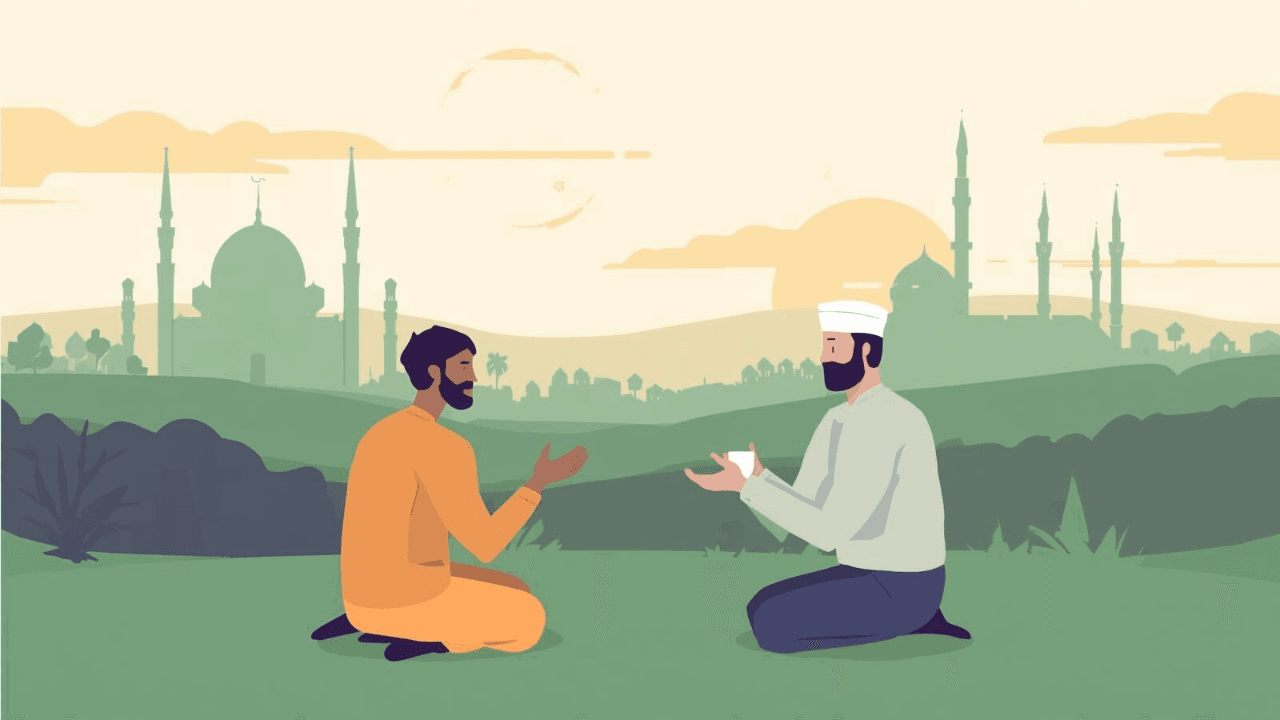
A recent article asked, “What’s the point of God if even Justin Welby is seeing a therapist?” The piece seemed to suggest that if a former Archbishop of Canterbury – someone with unparalleled spiritual access – needs professional help, then ordinary believers are in a far more dire situation.
As an Ahmadi Muslim, I would suggest that this perspective misunderstands both faith and the human heart. Islam teaches us that even the most devoted servants of God are tested, sometimes in profound ways. The trials we face in life are not indicators of a weak connection with God, but opportunities to seek support, exercise patience and grow in resilience.
Consider the example of the Holy Prophetsa. Upon receiving his first revelation from the Archangel Gabriel, he did not face the moment alone. Overwhelmed and seeking reassurance, he immediately went to his beloved wife, Hazrat Khadijara, who comforted him, strengthened his resolve and encouraged him to trust in God’s guidance. Even the greatest Prophet needed human support.
Similarly, Prophet Mosesas sought the help of his brother Prophet Haroonas when confronting Pharaoh, as the Quran recounts, highlighting that even the most divinely guided leaders benefit from companionship and counsel.
Justin Welby’s decision to see both a psychotherapist and a psychiatrist reflects the same principle: human beings, no matter their spiritual standing, have limits. Islam encourages believers to seek help when needed – through prayer, counsel and wise action. The Quran instructs us to surround ourselves with true and faithful people, which shows that human support and guidance are essential for growth and resilience. Professional therapy can be understood as one of the means God provides for healing, insight and recovery. It is a form of using means created by God.
Throughout history, we see other examples of seeking human counsel and support: Hazrat Abu Bakrra, the first Rashidun Caliph, consulted trusted companions to navigate challenges; Hazrat Umarra, the second Rashidun Caliph, sought advice before making major decisions. Likewise, Hazrat Musleh-e-Maudra explained that individuals who suffer from certain illnesses or life challenges often need professional help, and obtaining that help is not an indication of spiritual weakness. (The Way of the Seekers, p. 113)
Expecting faith alone to shield us from life’s struggles is unrealistic. Even the prophets faced immense trials. What matters is not the absence of hardship, but how one engages with it, by turning to God, seeking wisdom and accepting support. Welby’s example reminds us that true spiritual strength includes humility, honesty about our struggles and a willingness to use the tools God has placed within our reach.
Some may argue that therapy and religious ritual are two separate approaches to the same challenge. However, I would say that taking care of our mental health and seeking professional guidance is already something instructed to us under the umbrella of Islam. Faith does not remove our burdens; it teaches us how to bear them wisely, with humility and with the right support. In this light, seeking help is not a sign of weakness. It is actually an act of spiritual responsibility and resilience.