
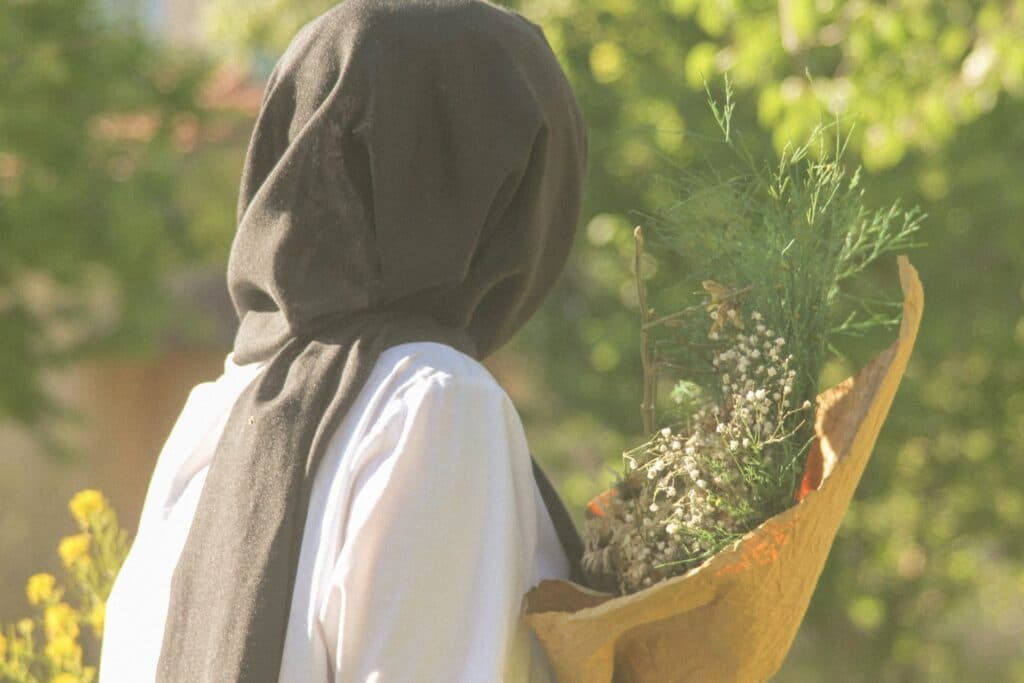
When I was 10 years old, my mother would sit next to me and gently recite prayers every night and I would repeat them after her. After the prayers, she would softly explain to me the meaning of the hijab, why Muslim women observe purdah and also why it is so lovely to choose modesty for the sake of Allah. They were simply gentle explanations given with love; there was never any coercion or force. I paid close attention and let her words sink into my heart.
When I think of purdah, the first and strongest image that comes to my mind is my mother.
As a young child, I remember watching her put on her burqa every time she stepped outside. She never complained, never treated it as a burden. It was simply a part of who she was. She grew up in Pakistan observing purdah and when she attended university, she wore a full niqab that covered her face, leaving only her eyes visible. When I look at her old photographs now, she stands out, not because she tried to, but because of the dignity and quiet confidence she carried. Without saying much, she taught me that purdah is strength.
But still, questions lingered in my young mind.
What would others think of me if I started wearing a hijab?
Would my friends still like me?
Would they see me differently, as though I now carried a visible mark?
Then one Monday morning in fifth grade, I woke up feeling something I had never felt before. Instead of fear or hesitation, there was an overwhelming sense of excitement and certainty in my heart. Almost without thinking, I walked into my mother’s closet, picked up a scarf and covered my head. My heart had decided before my mind could question it.
That was the day I walked into school wearing my hijab for the first time.
I was nervous… very, very nervous, but there was also a quiet thrill within me. I knew I looked different. Some classmates smiled warmly; others asked curious questions. When they asked why I was wearing a scarf, I replied simply, “I’m a Muslim and this is my identity.” There were a few who whispered behind my back, but deep in my heart, I knew I was doing this for Allah. When Allah is pleased, no opinion can shake you.
From that day onward, I wore my scarf to school every single day. I searched online for ways to wear my hijab properly, ensuring my hair and neck were fully covered. Slowly, it stopped feeling new. It began to feel natural, like a part of me. Yes, there were days when the heat felt uncomfortable, but I reminded myself that discomfort was not a reason to abandon faith. I thought of those who walk long distances under the sun, for those who do not have the safety and comfort that I would soon have when I return home. Gratitude kept me grounded. Gratitude made me strong.
A year later, in sixth grade, I stood in front of my entire elementary school and delivered a speech while wearing my hijab. I felt calm, proud and complete. I knew Allah was pleased and that was more than enough.
As I entered high school, I became more aware of the changes that come with womanhood. Islam, in its infinite wisdom, guides women with clarity, dignity and protection. Allah says in the Holy Quran:
“O Prophet! Ask your wives, daughters, and believing women to draw their cloaks over their bodies. In this way it is more likely that they will be recognized and not be harassed. And Allah is All-Forgiving, Most Merciful.”(Surah al-Ahzab, Ch.33: V.59)
And He says:
“And say to the believing women […] that they draw their head-coverings over their bosoms.” (Surah an-Nur, Ch.24: V.31)
With this guidance, I became more mindful of how I dressed. I covered my chest and hips with loose cardigans and coats. My hijab fully concealed my hair and neck and my clothing reflected dignity as my body changed. I understood that modesty was not a restriction – it was protection.
I know that for many girls, wearing a hijab can feel scary at first. And that’s okay. It’s natural to feel nervous, but remember this: you wear your hijab for Allah and that is what matters most. When you choose to cover yourself, your identity shines quietly and beautifully, like a flower slowly blooming. As I embraced this choice myself, I began to notice how it quietly gave me strength, confidence and a sense of purpose.
Throughout high school, I felt empowered. I was treated with respect. I felt secure, confident and protected. Being recognised as an Ahmadi Muslim woman filled me with pride. I wore my purdah everywhere, even during an all-girls gym class, because activities were often held outdoors. I never felt the need to remove it. My hijab became so deeply woven into my life that it felt inseparable from who I was. Buying new scarves each year became a joy and seeing my younger cousins follow in my footsteps felt like a quiet but meaningful victory.
Near the end of high school, I was required to complete a final project before graduating. As I searched for a topic, one question kept returning to me: what has shaped me the most? The answer was clear. My hijab.
I titled my project “The power of my hijab.” I spoke about empowerment, self-respect and the confidence purdah gave me. My principal appreciated the topic deeply.
But the most important lesson I learned was this: purdah is more than clothing. It is a guardian spirit. It reflects itself in how we speak, how we behave and how we carry ourselves.
I carried this understanding into university, into marriage and into every stage of my life. I have not removed my hijab since fifth grade. Every time I wrap my scarf around my head, I am reminded of the strength, dignity and confidence that it has helped me carry through life.
Today, I am 24 years old, happily married to a missionary, alhamdulillah, as well as a waqifa and I am endlessly grateful to my mother for those quiet nighttime conversations about purdah when I was only 10. I chose hijab because I cherish my faith. This is who I am. Proper purdah keeps me safe and draws me closer to Allah.
This is my story, a reminder to never underestimate the power of putting faith above fear.