
Many children grow up harbouring a deep-seated fear of their own parents. Some become quick-tempered, struggle with self-confidence, grow withdrawn or even lose all emotional closeness with their families. Others may appear obedient but are merely acting out of fear of reprimand.
This situation is merely the tip of the iceberg – a remnant of past parenting practices that have long been regarded as normal. For decades, harsh shouting threats and even physical punishment have often served as the primary tools for disciplining children. Yet, without realising it, this parenting style – fraught with emotional repression – leaves internal scars that persist well into adulthood, even if it produces compliant children.
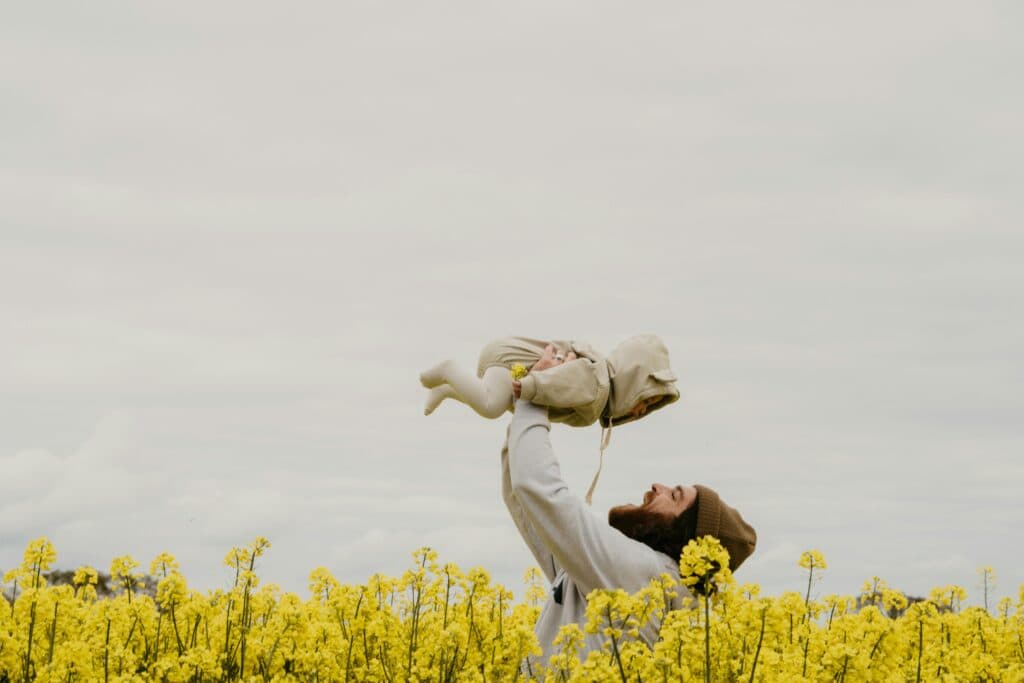
In the modern world, when a generation carrying these emotional wounds grows up and becomes new parents, a collective desire to break this cycle emerges. They do not want their own children to experience the same fear. This wave of awareness has propelled the popularity of “gentle parenting” – a parenting approach focused on empathy, validating a child’s emotions and completely rejecting all forms of verbal and physical aggression.
The challenges of a new era: Shouting and screens
The transition toward a gentler approach to parenting, however, has not been without its challenges. Just as modern parents strive to restrain their emotions and refrain from outbursts, they are immediately confronted with a new reality never experienced by previous generations: gadgets lurking around children from infancy. The struggle to regulate one’s emotions must now compete with the rapid tide of digitalisation.
Many children today grow up accompanied by screens from a very tender age. In restaurants, in cars and even before bedtime, devices are their constant companions. While it may initially seem practical, this practice gradually weakens the emotional bond within the family.
Modern science indicates that continuous shouting can disrupt a child’s emotional development. Intriguingly, excessive exposure to gadgets produces a remarkably similar emotional impact. Children become more easily angered, struggle to focus, lack empathy and find it difficult to build healthy social relationships.
This alarming phenomenon is comprehensively analysed by social psychologist Jonathan Haidt in his phenomenal book, The Anxious Generation. Haidt explains that the global transition from a “play-based childhood” to a “phone-based childhood” has triggered the largest mental health crisis in modern history.
When children spend hours in front of screens, they lose crucial time needed for physical interaction, reading facial expressions and developing gross motor skills. As a result of this excessive digital interaction, the modern generation has experienced a drastic surge in acute anxiety and loneliness. Gadgets promise connectivity but isolate a child’s soul from the real world.
On the other hand, Daniel Goleman, through his legendary concept of “emotional intelligence” emphasises that a child’s emotional brain does not develop automatically; it is designed to grow through external stimulation. The finest stimulation is a warm, secure and interactive emotional relationship between a child and their parents.
When a mother gazes into her baby’s eyes with a smile or when a father listens intently to his child’s story, the neural circuits in the child’s brain are building the capacity to empathise, manage stress and exercise self-restraint. Conversely, when parents ignore their child and choose to busy themselves with their phones or hand over a device just to keep the child from disturbing them, the development of emotional intelligence undergoes a functional failure.
The impact is deeply ironic. A child who is frequently shouted at suffers trauma from verbal aggression, while a child left abandoned with a gadget experiences an emptiness of the soul due to emotional neglect. Both are wounded. In this era, breaking the cycle of past trauma is no longer just about lowering the volume of one’s voice; it is also about having the courage to limit screen time to be fully present as a parent.
Rifq: Kindness as the foundation of Islamic child-rearing
In Islam, child-rearing does not begin with communication techniques or psychological theories, but rather with the tenderness of the parents’ hearts. Islam introduces the concept of rifq – gentleness born out of love, patience and a living relationship with Allah the Almighty.
This gentleness is a reflection of the divine attribute itself. The Holy Prophet (sa) stated: “Verily, Allah is Kind and He loves kindness (rifq).” (Sahih Muslim, Kitab al-birr, Hadith 4683)
Gentleness in Islam, when it comes to parenting, does not imply weakness or permitting a child to do as they please. Rather, it is a method of upbringing that ensures a child feels secure, valued and loved without losing the moral direction of their education. Mirroring the parenting style of the Holy Prophet (sa) means anchoring oneself in this principle of rifq. History records that he was the best of examples in manifesting gentleness to children, long before the world ever coined the term “gentle parenting.”
This is made clear from the account of a Companion of the Holy Prophet (sa), who saw the Prophet (sa) kissing his grandson Hazrat Hasan (ra). He remarked to the Holy Prophet (sa): “I have ten children and I have never kissed any of them.” Thereupon, the Messenger (sa) of Allah said: “He who does not show mercy will not be shown mercy.” (Sahih al-Bukhari, Kitab al-adab, Hadith 5997)
In the modern era, where children face complex mental pressures due to digital exposure, this principle of rifq finds renewed urgency through the guidance of the Khulafa. Hazrat Khalifatul Masih V (aa), on various occasions during his Friday Sermons and to various audiences, has consistently provided profound guidance that parents must absolutely avoid shouting at their children. Shouting and explosive anger within the home can never reform a child’s behaviour; instead, it emotionally distances them and causes permanent psychological harm.
As a practical solution to the challenges of the “gadget generation” discussed earlier, Huzoor (aa) has also strongly emphasised the importance of parents actively encouraging outdoor activities for their children. Rather than leaving children isolated in their rooms with phone screens, parents are advised to accompany them to interact with nature, engage in sports and play in open environments.
This step is not merely a common physical exercise. Taking children outdoors, besides being scientifically proven to restore mental health and reduce anxiety, is a tangible manifestation of rifq. In the open air, parents possess a golden opportunity to rebuild warm communication, listen to their stories without distraction and introduce the grandeur of Allah the Almighty’s creation. Through this balance – safeguarding one’s tongue from shouting and providing healthy alternative activities – the Prophetic model of child-rearing can be revitalised within the modern family.
Gentle parenting stems from tazkiyat-un-nafs (purification of the self)
Returning to the concept of gentle parenting, much of it aligns seamlessly with the sunnah of the Holy Prophet (sa): abstaining from shouting, respecting a child’s feelings, listening with empathy and educating through personal example.
Nevertheless, Islam envisions a much broader objective than merely raising a child who is self-confident or emotionally healthy. In Islam, the ultimate goal of parenting is to mould an individual who is righteous, well-mannered, responsible and close to Allah the Almighty. Love without guidance can yield a fragile generation. Conversely, harshness without affection leaves deep internal wounds. Islam offers the perfect equilibrium.
One of the greatest flaws in modern parenting is focusing too heavily on “fixing the child” while forgetting to reform oneself. But children do not learn merely from verbal advice. They learn from the atmosphere of the home, the way a father speaks to the mother, how a mother manages stress and how the parents connect with Allah the Almighty.
This is exactly what Hazrat Khalifatul Masih V (aa) states:
“A child’s nature also contains the tendency to imitate. This tendency is certainly for our benefit, but its misuse can also ruin a person or lead him towards destruction. It is through this tendency to imitate and the influence of the environment that a person learns his language from his parents, learns other things from them and adopts good qualities. By learning good things, a child develops good morals.
“If the parents are righteous, regular in offering prayers, accustomed to reading and reciting the Holy Quran, loving and affectionate towards one another and they dislike falsehood, then the children, being influenced by them, will also adopt these virtues. However, if a child sees lying, quarrelling and fighting, making fun of others in the home, showing no regard for the dignity of the Jamaat or other such evils, then because of this natural tendency to imitate, or due to the influence of the environment, the child will learn and adopt these very evils.” (Friday Sermon, 13 December 2013)
The primary focus of modern gentle parenting often stops at the child’s psychological comfort. In Islam, however, the ultimate destination of all parenting endeavours is to rear a faithful servant, refined in conduct, responsible and possessing a firm spiritual bond with Allah the Almighty.
Therefore, Islamic parenting must not fall into the trap of permissive parenting, where parents become too fearful of enforcing rules out of concern that their child might feel uncomfortable. Herein lies the perfect balance offered by Islam between gentleness and firmness. Excessive affection devoid of clear boundaries only breeds a spoiled and self-centred generation.
On the contrary, rigid harshness without love boundlessly leaves behind deep resentment. Islam guides parents to be gentle in their approach, yet unwavering and firm in upholding the principles of adab (refined conduct) and the commandments of Allah.
This signifies that before we can apply true gentle parenting to our children, the process of upbringing must commence with self-parenting – a process of tazkiyat-un-nafs (purification of the soul) on the part of the parents. We can never offer genuine gentleness if our own souls remain barren and consumed by ego. When parents reform themselves and draw their hearts closer to the Creator, an aura of peace will naturally flow into the souls of their children.
Children are a trust, not a burden
Ultimately, the entire discourse on parenting leads to a single realisation: children are a sacred trust (amanah) from Allah the Almighty. In this contemporary age, children are sometimes viewed as “future projects.” The focus of parents is frequently restricted to securing the best schools, academic achievements, skills or career prospects. However, Islam reminds us that a child is not merely a worldly investment. Allah the Almighty states in the Holy Quran: “O ye who believe! save yourselves and your families from a Fire […].” (Surah at-Tahrim, Ch.66: V.7)
This verse demonstrates that the success of parenting in Islam is measured not by report cards or future professions, but by a child’s morals and their relationship with Allah the Almighty. Amidst an era rife with distractions, mental pressures and fracturing family ties, the parenting model of the Holy Prophet (sa) becomes ever more relevant.
Prophet Muhammad (sa) demonstrated that gentleness does not equal weakness and firmness need not be manifested through violence. He educated with love, while firmly instilling adab and responsibility.
Islam teaches absolute balance: making children happy without indulging their base desires, building emotional closeness without losing the direction of their moral upbringing and raising children to succeed in this world while remaining honourable in the sight of Allah the Almighty.