

The period from the 17th century to early 20th century transformed humanity’s understanding of reality, shattering classical limitations and establishing the frameworks of modern science. The era saw foundational breakthroughs in chemistry, biology and physics of electromagnetism, including Dalton’s atomic theory, Pasteur’s germ theory and Maxwell’s unification of electromagnetism.
This gave way to the early 20th century revolution led by Albert Einstein, Max Planck and Niels Bohr, which all but redefined physics as we know it. By introducing special and general relativity, discovering subatomic particles and culminating in the definitive 1927 Solvay Conference that solidified quantum mechanics, science proved that the universe at its most fundamental levels is dictated by a warping fabric of spacetime and microscopic probabilities rather than absolute certainties.
For centuries, the Christian clergy maintained a steadfast monopoly on human knowledge, enforcing intellectual conformity through deep-seated political control across Europe which inhibited scientific thought since the decline of the Islamic Golden Age in the 14th century.
However, the dawn of the 20th century empowered the scientific community to finally dismantle these systemic shackles, freeing empirical inquiry from the grip of dogma. Yet in their triumphant push for liberation, modern thinkers inadvertently painted all global faiths with a single, sweeping brush – incorrectly equating the universal concept of the Divine solely with the specific Christian archetype they had fought so hard to overthrow, ignoring Islam’s concept of God as revealed in the Holy Quran.
Bertrand Russell: Why I am not a Christian, 6 March 1927
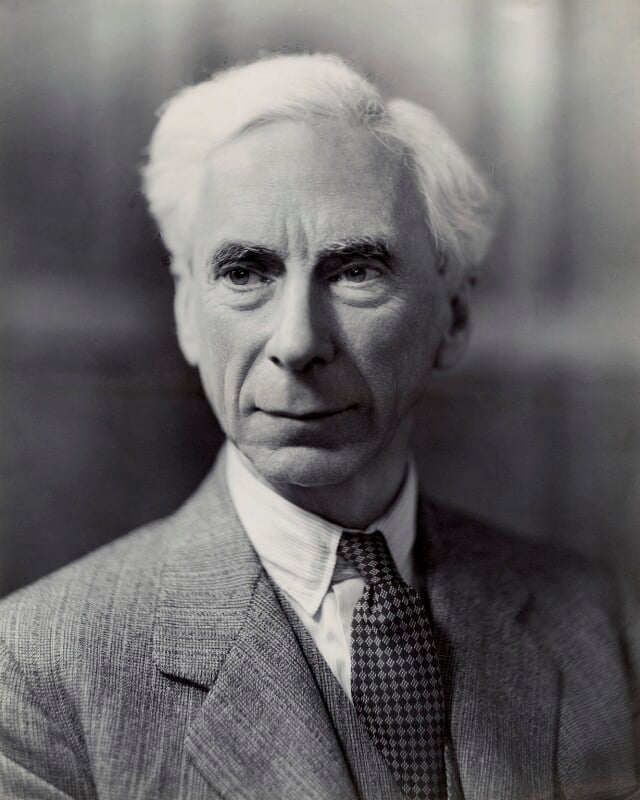
Bertrand Russell was arguably one of the most effective synthesisers and communicators of the intellectual currents that had been developing since Hume, Darwin and the rise of modern science. He took complex philosophical and scientific developments and presented them in a coherent worldview that many educated people found compelling.
Russell’s well-known “First Cause” critique was presented in his lecture Why I Am Not a Christian, delivered on 6 March 1927 at Battersea Town Hall in London under the auspices of the National Secular Society. It was published as a pamphlet later that same year.
He was a philosopher translating scientific developments into broader metaphysical conclusions. The lecture has been continuously republished, discussed, assigned in university courses and cited in secular literature for nearly a century. The lecture remains a primary catalyst for modern scientists to adopt an atheist viewpoint openly, frequently without profound reflection.
Reason, observation and revelation are not competing but complementary, 3 March 1927

Just three days before Russell’s lecture on 3 March 1927, Hazrat Musleh-e-Maud (ra) in his landmark lecture titled Mazhab aur Science (i.e. Religion and Science) advanced the compelling proposition that unpretentious religion and genuine science cannot be in conflict, for both ultimately derive from the same divine source – God. (Mazhab Aur Science, Anwar-ul-Ulum, Vol. 9, pp. 497-520)
He argued that while science seeks to uncover the mechanisms and laws governing the natural world, religion addresses the deeper questions of purpose, meaning, morality and humanity’s relationship with its Creator. Any perceived contradiction between the two, he contended, arises not from an inherent incompatibility but rather from either erroneous interpretations of religious scripture or the provisional and incomplete nature of human scientific comprehension.
Far from regarding scientific discovery as a threat to faith, he viewed each new advancement in knowledge as an opportunity to gain a greater appreciation of the wisdom, order and majesty of God. Central to his argument was the belief that reason, observation and revelation are not competing authorities but complementary avenues through which truth may be sought and understood.
These principles went on to become defining features of the Ahmadiyya Muslim Jamaat’s engagement with modern science throughout the twentieth century, fostering a discourse that emphasised harmony between intellectual inquiry and spiritual conviction.
Born just a year earlier of these two lectures, Dr Abdus Salam was an Ahmadi Muslim who masterfully navigated this profound line of inquiry, unlocking the secrets of the cosmos while remaining an unwavering believer who lived in constant praise of his Almighty. He was awarded the prestigious Nobel Prize in Physics in 1979 for his ground-breaking work in unifying two forces of nature.
In his profound lecture, Hazrat Musleh-e-Maud (ra) established a harmonious framework between faith and reason by defining religion as the explicit word of God and science as the observable act of God. Because the Creator’s words cannot contradict His actions, he demonstrated that true religion and empirical science can never clash, noting that modern scientific breakthroughs were already fundamentally outlined in the Quran 1,400 years ago.
‘I do not know’
Hazrat Musleh-e-Maud (ra) mentioned Huxley’s agnosticism as a more appropriate scientific position in his lecture countering the atheistic tendencies of the scientific world. Coined by English biologist Thomas Henry Huxley in 1869, agnosticism is not a specific belief system but rather an intellectual method of rigorous honesty that asserts one should not claim certainty on metaphysical matters, including the existence of God, without sufficient empirical evidence.
Rooted in evidence-based thinking, intellectual humility and the deliberate suspension of judgment, this philosophical position demands that beliefs always remain strictly proportioned to demonstrable facts. Unlike practical atheism, which views divine existence as highly improbable, Huxley’s core principle emphasises the inherent limits of human knowledge, dictating that when evidence is lacking, the only honest and rational response is to declare, “I do not know.”
Food for thought
Bertrand Russell famously posited that the universe is a “brute fact”, existing entirely without inherent cause, reason or divine purpose. He argued that if everything requires a creator, then God must also require a cause, rendering the traditional “First Cause” argument logically flawed.
Furthermore, Russell asserted that the natural world, with its chaotic and unguided realities, did not resemble a perfect, instantaneous divine creation. From his perspective, the physical laws of nature are merely arbitrary descriptions of reality rather than manifestations of a higher, divine command.
In contrast, the views of Ahmadiyya Muslim Jamaat expounded by Hazrat Musleh-e-Maud (ra) in his lecture and Harat Mirza Tahir Ahmad (rh) in his famous book, Revelation, Rationality, Knowledge and Truth, rejects Russell’s worldview or similar opinions by identifying it as a mistake that conflates the Creator with creation.
The Ahmadiyya Muslim Jamaat argues that a highly structured, mathematically precise universe cannot be a brute fact; rather, its continuous infusion of order relies on Al-Badi (the Creator who creates from nothingness), Al-Khallaq (the Supreme Creator), Al-Fatir (the One who splits) and Rabb (the Sustainer), a conscious force actively maintaining physical laws outside the space-time framework.
Because time and space are themselves created dimensions, causality only functions inside the universe and without it the whole notion of time and space collapses. Nobel Prize-winning physicist Sir Roger Penrose proposed a radical cosmological model called Conformal Cyclic Cosmology (CCC), which argues exactly that: the cold, empty end of our universe will become the Big Bang for the next one. Therefore, asking what caused an extra-temporal, self-subsisting God is a logically incoherent question.
Additionally, the Ahmadiyya view harmonises the First Cause with modern science by fully accepting the Big Bang theory and biological evolution, which operates like a strategic game of chess and not a random game of dice, viewing them as the literal, multi-billion-year mechanisms of God’s creation as the underlying laws of nature and how they manifest are all acts of God.
The universe was initiated as a singularity designed to expand in deliberate stages, ultimately unfolding a meticulously guided blueprint to produce conscious human life besides other varieties of life and non-life in the universe. While Russell’s critiques successfully dismantled simplistic, literalist definitions of God proposed by Christian priests, they bypass Islam’s concept of a transcendent God whose continuous will is reflected in the rational, evolving order of the cosmos.
The modern discourse surrounding the existence and absence of God traces its spiritual and intellectual lineage back to an extraordinary time in 1927 when two monumental events occurred just three days apart. As such, the definitive mission of the Ahmadiyya Movement in Islam is to establish the reality of God through rigorous intellectual discourse, focusing on the understanding of divine revelation and the profound legacy of the prophets.