
Ahmed Danyal Arif, MA Economics & Politics, UK
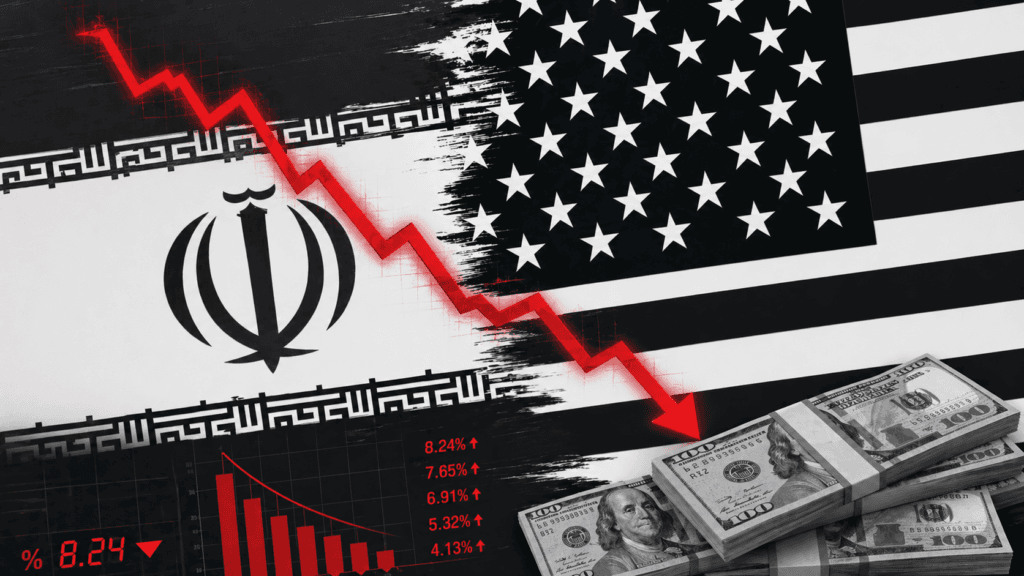
In 2026, the United States reached a new turning point that revealed this cycle in real time: federal interest payments on public debt surpassed defence spending for the first time in American history. According to the US Treasury Department’s Quarterly Statement (Q1 FY2026), net interest payments reached $270.3 billion, exceeding the Pentagon’s $266.9 billion spent in the same quarter.
On an annual basis, this equals around $1.04 trillion a year. It’s higher than America’s entire 2025 defence budget, which stood at roughly $839 billion before the current conflict, per the Congressional Budget Office (CBO, 2025 baseline). In effect, the US now pays nearly $3 billion per day just to service existing debt. When such levels become unsustainable under peacetime budgets, war increasingly serves as an instrument to justify further borrowing.
Interest-based debt doesn’t just fund wars it structurally requires them. When debt grows faster than production, the economy must always find new areas to absorb that excess borrowing.
The interest trap: How compound debt forces perpetual growth
Modern financial systems are built on compound interest debts that grow continuously even without new productivity. To visualise this, consider a simple scenario: if the US borrows $200 billion at 4% interest to finance a war, the annual interest bill alone is $8 billion. Over 30 years, total repayments have risen to around $440 billion, more than doubling the original loan. This exponential expansion echoes what Albert Einstein famously described when he referred to compound interest as “the eighth wonder of the world”, highlighting its extraordinary power to generate growth far beyond what seems naturally possible.
The problem is that real economies don’t grow exponentially. Civilian sectors such as housing, transport, or consumer goods eventually saturate. People only need so many homes or cars. But interest on debt keeps compounding and demands permanent expansion. When peaceful borrowing and consumption reach their limits, governments turn to something that has no saturation threshold: military spending. Unlike private consumption, which slows once needs are met, military procurement can always justify “more” one more missile, one more drone, one more base.
War is the only infinite market
War, by its very nature, removes the normal ceilings of production. Facing a perceived threat, the logic of national security transforms limitless production into a patriotic duty. A country that fears 100 enemy missiles will feel it must build 150 of its own, then 200, then 400 when the enemy upgrades. The cycle has no natural end. Defence spending is “the ultimate claim upon the produce of a nation” because no government dares limit it when security is at stake.
This is precisely why large defence contractors consistently outperform civilian manufacturers. Public reports from Lockheed Martin, Raytheon and Northrop Grumman show operating profit margins in the range of 15-20%, compared with only 3-5% across consumer-goods firms in the S&P 500. For banks and investors, the benefits are equally clear. Military spending is financed primarily through US Treasury securities, widely seen as the safest assets in global finance. These securities form the “risk-free anchor” of world credit markets, meaning war-linked borrowing not only enriches defence firms but also underpins the global banking system itself.
The US-Iran war of 2026
At the start of fiscal 2026, the Pentagon’s approved budget stood at $839 billion, already a historic high (US Department of Defence, FY2026 Budget Justification). However, following two weeks of strikes between US and Iranian forces in the Persian Gulf, the pace of expenditure skyrocketed. According to operational figures from the Centre for Strategic and International Studies (CSIS) Missile Defences Project, US munitions use reached $11.3 billion by Day 6 and $16.5 billion by Day 12, equivalent to about $1-2 billion burned per day just on precision-guided weapons such as Tomahawk Cruise Missiles and Joint Direct Attack Munitions (JDAMs). By comparison, the entire Gulf War of 1991 cost about $61 billion total (adjusted for inflation; CRS Report R43835).
In mid-February 2026, President Trump formally requested $200 billion in supplemental war funding. Defence Secretary Pete Hegseth justified it bluntly: “It takes money to kill bad guys.” The CSIS Defence Budget Analysis estimated that this figure finances roughly 145 additional days of sustained bombing, at $1.38 billion per day. But when financed through debt at an average Treasury yield near 4%, that $200 billion will translate into approximately $440 billion in total obligations over three decades – effectively doubling the true cost (Peter G Peterson Foundation Interest Tracker).
How the money chains up: From bonds to banks to contractors
The financing process follows a predictable pipeline. First, the US Treasury issues new bonds to raise the $200 billion, offering yields between 3% and 5%. Major underwriting banks (JPMorgan Chase & Co, Citi, Goldman Sachs) facilitate the bond sales, taking about 1-2% in underwriting fees (around $2-4 billion total). Institutional investors like BlackRock and Vanguard purchase large shares of these bonds, earning between $6-10 billion per year in interest payments. The Treasury then transfers the funds to the Pentagon, which disperses them through prime contractors: for instance, Lockheed Martin’s missile and F-35 divisions received contract extensions exceeding $50 billion, Raytheon Technologies added $4 billion in Patriot missile resupply orders, and Boeing expanded ordnance manufacturing lines (Pentagon Contract Announcements and Federal Procurement Data System, Jan-Mar 2026).
What happens next is crucial: the immediate spending inflates measured GDP/growth as factories produce more equipment, wages rise locally, and output appears to grow. Yet, in economic terms, this is not real wealth creation as it is debt-fuelled production of instruments that do not generate future income. The interest on that new debt then becomes part of America’s structural fiscal burden, paid through taxation between now and 2050. The banks that earned the underwriting and interest profits face no corresponding liability. The cycle completes itself neatly: borrow, spend, enrich financiers and contractors, then pass the repayment to taxpayers under patriotic rhetoric.
The warning of the Holy Quran 1,400 years ago
This structural connection between interest-based debt and warfare is not new. Islamic thought identified it with remarkable clarity long before modern data could confirm it.
“O ye who believe! fear Allah and relinquish what remains of interest, if you are believers. But if you do it not, then beware of war from Allah and His Messenger; and if you repent, then you shall have your original sums; thus you shall not wrong, nor shall you be wronged”. (Surah al-Baqarah, Ch.2: V. 279-280)
Hazrat Khalifatul Masih IV (rh) addressed these verses directly and his interpretation cuts to the heart of the argument presented here. The verses, he explained, are not a call to arms against usurers, nor a prophecy of Muslims fighting those who hold interest-based ideologies. It is a statement of economic law: those who persist in interest-based systems will inevitably be drawn into wars as a direct consequence and it is through those wars that destruction reaches them. The divinely ordered system governing economic life operates by this logic and no society that defies it escapes the consequences. (Khutbat-e-Tahir, Vol. 2, p. 173, Friday Sermon, 25 March 1983)
In other words, the scripture does not treat interest as a minor moral fault but as a mechanism that inevitably breeds large-scale violence once it becomes the foundation of public finance.
The argument is straightforward: when governments can borrow vast sums at interest, wars that would otherwise be financially impossible suddenly become easy to launch and easy to prolong. Instead of having to raise taxes immediately and face public resistance, states tap into “cheap” loans, delaying the true cost of war into the future.
During the conflict, citizens do not fully feel the burden; only after the guns fall silent do they discover that they have inherited enormous national debts, with interest stretching across generations. Without such interest-based loans, many governments would hesitate to start long, devastating wars, and even if they entered them, they would be forced to seek peace far earlier, as their treasuries would empty and their populations would rebel against the cost.
Seen through this lens, the events of 2026 are not an accident but a textbook example. Because interest-bearing credit is available on a massive scale, the United States can add $200 billion in new war spending with the stroke of a pen, knowing that repayment will be spread over decades in the form of invisible interest charges. The same financial logic applies to other belligerents, including Israel, which approved a $12.5 billion defense budget boost for 2025-2026 amid ongoing multi-front operations. With the total 2026 military spending reaching $49.8 billion according to the Defense Budget Project, these costs mirror the same debt-fuelled escalation pattern seen in the US.
What looks like “easy money” in the short term becomes a heavy chain of obligations in the long term, bending future generations under the weight of debt repayment. This is precisely the dynamic that Islamic teachings warned against: a credit system that enriches a small financial elite, enables wars far beyond what societies would otherwise tolerate, and then traps entire nations in a cycle of debt, interest and recurring conflict.
The mechanism in motion
- US annual interest bill: $1.04 trillion (Treasury Q1 FY2026)
- Defence spending pre-Iran conflict: $839 billion (CBO 2025 baseline)
- Additional war budget: $200 billion (White House FY2026 supplemental request)
- Resulting total obligation with 4% interest: ~$440 billion by 2056 (PGPF Interest Tracker)
- Financial sector profits: ~$240 billion interest + $2-4 billion underwriting fees
- GDP/Growth distortion: nominal expansion through debt-financed spending, masking long-term insolvency
No conspiracy is needed to explain this. The logic of compound interest on sovereign debt automatically creates pressures for expansion, and war is the most politically and economically “acceptable” form of that expansion.
Islamic teachings foresaw this clearly: interest-based loans let governments wage ruinous struggles that would otherwise collapse under public revolt. The data from 2026 proves this analysis as relevant today as ever. When interest surpasses defence spending, conflict becomes not only a moral failure, but a systemic inevitability.