
On the crisp morning of 18 April 1906, ordinary San Franciscans were just beginning their daily routines – shopkeepers sweeping storefronts, milkmen making rounds and families preparing breakfast – when a violent 7.9-magnitude earthquake struck without warning at 5:12 am, violently ripping up streets and collapsing thousands of buildings in seconds. As the initial tremors subsided, a far more terrifying disaster unfolded as ruptured gas lines ignited catastrophic fires that raged uncontrollably for three days, fuelled by a lack of water from broken water mains. The inferno trapped residents, destroyed over 80% of the city, and ultimately claimed more than 3,000 lives, instantly transforming a bustling capitalist metropolis into a smouldering landscape of ruin and resilience.
I am profoundly fascinated by how the Promised Messiah (as) explicitly delineated the catastrophic earthquakes in San Francisco, Formosa and Chile, alongside the disaster in Kangra, as the undeniable fulfilment of his prophecies concerning global calamities. This convergence naturally compels one to question: why do these events hold such paramount importance for the reflection of all humanity? We read in the Holy Quran:
“When the earth is shaken with her [violent] shaking, And the earth brings forth her burdens.” (Surah az-Zilzal, Ch.99: V.2-3). According to Arabic lexicons, the word thiqlun means anything which is in much demand and is preserved; treasure or buried treasure; burden (The Five-Volume Commentary, Surah az-Zilzal, Ch.99: V.2-3).
The Promised Messiah (as) was asked on his claims about earthquakes and he clarified in his book, Haqiqatul Wahi:
“Not only the earthquakes, but other terrible calamities will also appear, some from heaven and some from earth. This will occur because mankind has abandoned the worship of their God, and have fallen upon materialism with all their heart, all their resolve, and all their thoughts. Had I not come, these calamities might have been delayed a little, but with my coming the hidden designs of God’s wrath that had remained hidden for a long time, have been manifested as God said: ‘We never punish until We have sent a Messenger’ (Surah Bani Isra’il, Ch.17: V.16). And those who repent shall find security and those who fear before the calamity overtakes them will be shown mercy.” (Haqiqatul Wahi [English], p. 327)
The story of San Francisco
Some 57 years before the earthquake, in 1849, the California Gold Rush completely transformed San Francisco from a sleepy maritime hamlet of roughly 800 people into a chaotic, multi-ethnic boomtown of over 25,000 residents. Following the initial discovery of gold at Sutter’s Mill in 1848, a massive wave of an estimated 90,000 fortune hunters – immortalised as the “Forty-Niners” – poured into the region by land and sea, turning San Francisco into the primary gateway to the goldfields. During the peak five years of the initial rush (1848-1853), miners pulled roughly 370 tonnes of gold out of the ground. The sheer volume of gold flooding the markets from California and Australia doubled the world’s circulating gold supply. This massive influx stabilised international trade and pushed the global economy onto the international gold standard by 1873. By 1880, the massive wealth generated by the rush financed an agricultural boom in America.
Great Kagi earthquake
On 17 March 1906, a violent 6.8 magnitude earthquake struck southwestern Formosa (now Taiwan), centred on modern-day Meishan, Chiayi County. Historically referred to as the Great Kagi Earthquake, the disaster occurred during the period of Japanese colonial rule and remains the third-deadliest earthquake in the island’s recorded history. The powerful tremor caused massive surface ruptures, obliterating entire villages, triggering widespread fires, and resulting in 1,258 deaths and thousands of injuries. Formosa was highly productive and wealthy compared to its regional neighbours even back then.
Kangra earthquake
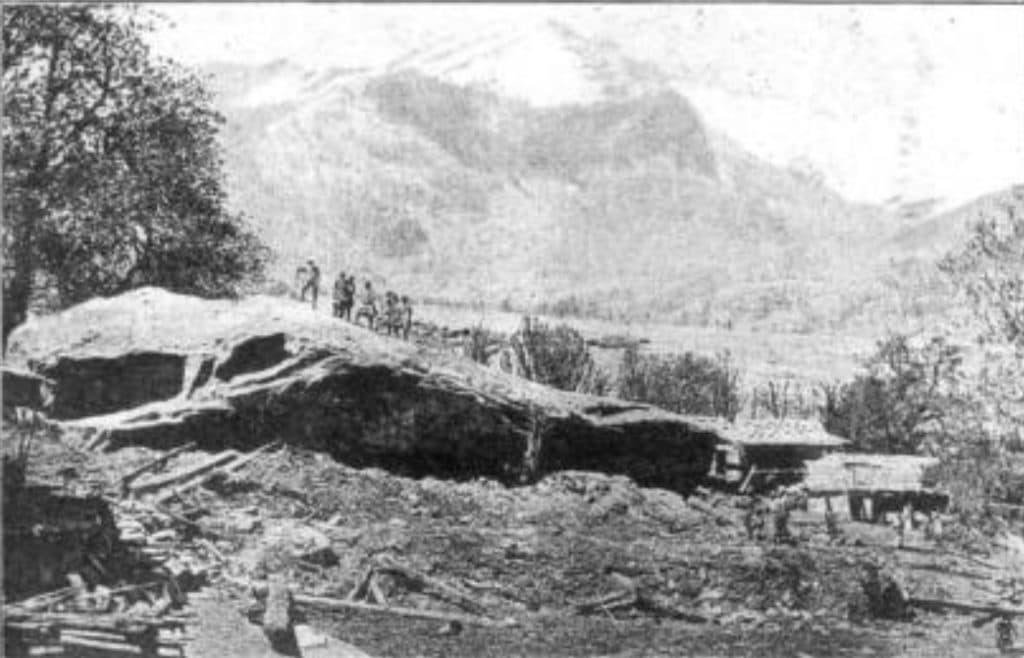
The catastrophic Kangra earthquake violently struck the western Himalayas of northern India at 6:11 am on Tuesday, 4 April 1905, forever altering the landscape of the undivided Punjab province. Registering a massive 7.8 magnitude, the seismic shockwaves erupted from a complex subsurface rupture beneath the sub-Himalayan hills near Kangra and Dharamshala. The tectonic convulsions radiated outward with such extreme intensity that tremors were felt across a staggering 1.6 million square miles, swaying land from modern-day Pakistan across northern India to the Tibetan Plateau. The immediate human and economic toll of the disaster was catastrophic, making it one of the deadliest seismic events in Indian history. More than 20,000 lives were cut short in an instant, as the early morning timing caught many residents asleep inside their homes. Across the rugged terrain, approximately 100,000 buildings collapsed into heaps of stone and timber, completely levelling thriving mountain towns like Kangra, Dharamshala and McLeod Ganj. The devastation extended deep into the region’s agricultural lifeline; massive landslides killed over 53,000 domestic animals and obliterated the intricate network of hillside aqueducts that communities had relied on for generations to irrigate their crops, causing a major economic loss besides the loss of life and property. Beyond the immediate loss of life, the earthquake wiped out centuries of cultural heritage. The revered Devi temple – one of the oldest and most sacred Hindu shrines in northern India – collapsed under the violent tremors.
Humanitarian disasters
In the rugged heights of Kangra, unyielding geography cut survivors off from the world, with landslides destroying paths and trapping victims before rescuers could arrive on foot. San Francisco’s earthquake was eclipsed by a four-day firestorm, fueled by broken gas lines and a lack of water pressure, while leaders hid the true death toll. In Formosa, fragile mud-brick homes collapsed, prompting the Japanese administration to use strict, military-style discipline to manage the aftermath.
All three disasters exposed how early 20th-century governments – whether democratic, imperial or colonial – struggled to answer humanity’s call when overwhelmed by catastrophic forces. In each case, authorities lacked modern emergency management systems, forcing a heavy reliance on military intervention to maintain basic order, enforce martial law and distribute aid. Physical infrastructure failures, such as fractured water mains in San Francisco and obliterated mountain roads in Kangra, crippled immediate rescue efforts, while cultural and linguistic divides in Formosa further slowed administrative relief. Ultimately, these events laid bare a universal truth of the era: when facing natural disasters of this magnitude, the scale of human suffering vastly outpaced the logistical and institutional capabilities of the states tasked with saving them.
The theme of natural calamities continues till today, where even the most formidable and resourceful nations find themselves powerless to shield their citizens from catastrophic ruin, leaving a wake of profound and enduring human suffering.
Final word
Materialism dictates that human value is measured solely by possessions, sparking an insatiable greed that forces a deeply self-centred growth. When the accumulation of wealth by nations becomes the sole metric of success, empathy is discarded and fellow humans are reduced to mere instruments or obstacles on the path to accumulation. This unchecked acquisition inevitably expands beyond individual malice into systemic injustice and violence, driving nations to wage devastating wars simply to seize resources, secure markets, and violently sustain the very power structures that feed their greed. These calamities shake the hubris of such wealthy nations too.
The fame San Francisco gained in the prophecy by the Promised Messiah (as) retains its deep significance, as the city remains a symbol of materialism today. San Francisco is widely considered one of the ultimate global symbols of wealth and hyper-capitalism. The city transitioned from a 19th-century gold and banking empire into the modern epicentre of global technology, venture capital, tech and Artificial Intelligence (AI). The modern tech economy of the San Francisco Bay Area generates wealth at a scale unprecedented in human history. The city generates massive Gross Domestic Product, pulling in the majority of global venture capital. The San Francisco Bay Area’s total GDP exceeds $1.3 trillion, putting its standalone economy on par with entire G20 nations.
When humanity relies on the hubris of human wealth and technological marvels, Allah the Exalted asserts His power through such calamities to ensure that human arrogance is checked. Thus, humanity is forcefully awakened to its own profound vulnerability, leaving it with no choice but to seek a spiritual refuge. As expounded in Haqiqatul Wahi, these catastrophic upheavals are not manifestations of divine cruelty, but rather severe mercy sent to rouse the world, urge moral reformation, and guide mankind toward the appointed reformer of the age. Amidst these turbulent storms of the end times, a divine safe haven is promised: those who sincerely repent and reform their character are granted an enduring spiritual peace and divine protection.
For over a century, the noble successors of the Promised Messiah (as) have steadfastly guided the Jamaat to embody the true spirit of service, channelling this divine mission through institutions like Humanity First to become the ultimate helpers of mankind – serving the suffering and the marginalised irrespective of their faith, race or status, especially during disasters. This enduring legacy places a profound and sacred responsibility upon the shoulders of every Ahmadi Muslim to continuously refine and polish our skills in humanitarian efforts, systematically train our youth and stand prepared to act as a resilient safe haven of comfort and relief during humanity’s darkest hours of natural and human-caused calamities, such as wars.
The Promised Messiah (as) warned:
“O Europe! You are not safe! And O Asia! Neither are you secure! And O the dwellers of Islands! No artificial ‘God’ will come to your aid. I see cities falling and habitations in ruin. That One and Unique God remained silent for a long time. Abominations were committed before His eyes and still He remained silent. But now He shall reveal His countenance in an awe-striking manner. Let him who has ears hear that the Hour is not far. I strived to bring everyone under the protection of God, but the ordained decrees had to be fulfilled. I say it truly that this country’s turn is also drawing near. The age of Nuh [Noah] shall appear before your eyes, and you will witness with your own eyes the incident of the land of Lut [Lot]. But God is slow to wrath. Repent so that you are shown mercy. He who abandons God is a worm, not a man; and he who does not fear Him is dead, not alive.”
He also authored a poem in Urdu whose translation is given below.
“O ye who slumber! Awake at once–
“it is no time to dream–
“The heart is restless with–
“what God’s revelation has informed–
“I see the earth–
“with quakes in heaves and throws–
“The time is nigh–
“the Flood is about to come–
“That Noble Lord is standing–
“on the path of the pious–
“The righteous need not fear–
“though the maelstrom is huge–
“No ark can save now–
“from this surging swell–
“All excuses are gone–
“just the Great Forgiver is there!”