
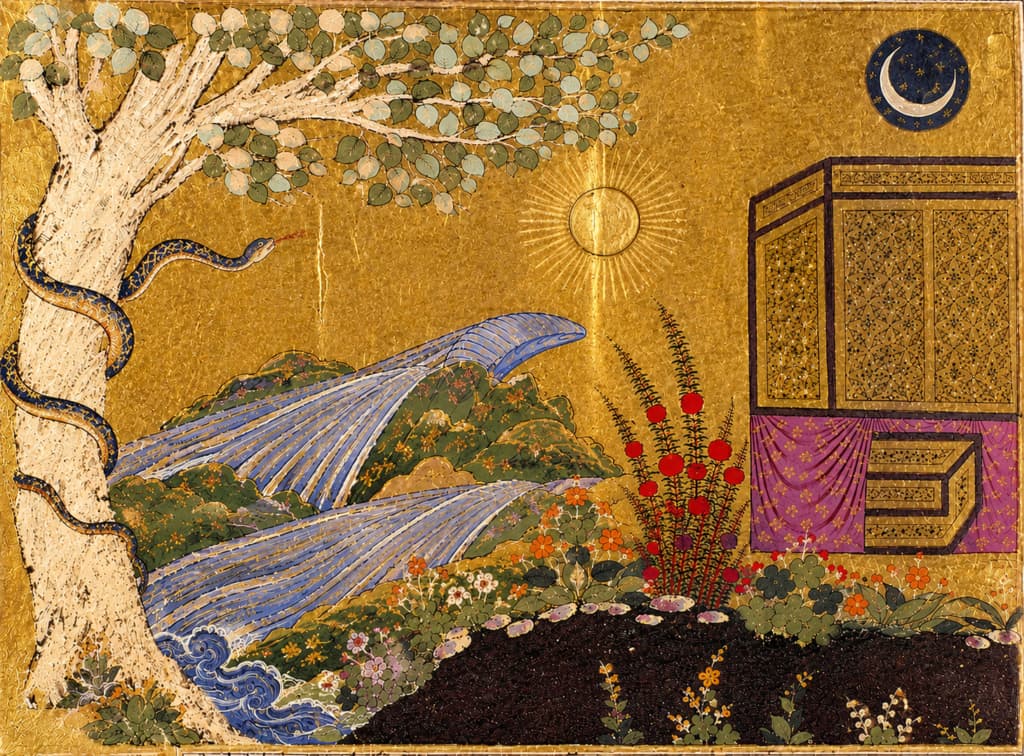
The Holy Quran employs the terms “Iblis” and “Satan” in a manner that suggests a subtle yet meaningful distinction between the two. While both names can refer to the same being, a careful study of the Quranic text reveals that each carries its own significance. This distinction not only reflects the precision of Quranic language but also offers valuable insights into the nature of evil, temptation and human moral responsibility.
Iblis in Quranic usage
The name Iblis appears 11 times in the Holy Quran. In most instances, it is mentioned in connection with the command given to the angels to prostrate before Adam (as) and Iblis’ refusal to comply. References to Iblis in Surahs al-A‘raf, al-Hijr, Bani Isra’il, al-Kahf, Ta Ha and Sad all occur within this context. Elsewhere, such as in Surah ash-Shu‘ara and Saba, the Quran speaks of his followers and the fulfilment of his expectations concerning those who succumbed to his influence. (Tafsir-e-Kabir, 2023, Vol. 1, p. 479)
In these Quranic passages, Iblis designates the opponent who refused the command concerning Adam (as). Hazrat Khalifatul Masih II (ra) explains that Iblis is an attributive name describing its bearer’s qualities. Elsewhere, he also applies it to human beings. (Anwar-ul-Ulum, Vol. 10, p. 214)
Why does the Quran speak of Satan?
Interestingly, when the Quran narrates the temptation of Adam (as), it does not describe the tempter as Iblis but as Satan. This is a noteworthy distinction. Allah the Almighty had already warned Adam (as):
“Then We said, ‘O Adam, this is an enemy to thee, and to thy wife; so let him not drive you both out of the garden, lest thou come to grief.’” (Surah Ta Ha, Ch.20: V.118)
Allah the Almighty also states:
“And verily, We had made a covenant with Adam beforehand, but he forgot, and We found in him no determination [to disobey].” (Surah Ta Ha, Ch.20: V.116)
In this regard, Hazrat Mirza Bashir-ud-Din Mahmud Ahmad, Khalifatul Masih II (ra), masterfully reconciles these verses. He explains that because Adam (as) was directly forewarned against Iblis and lacked any intention to disobey God, he could not have been deceived directly by Iblis himself. Instead, Adam (as) was approached by an agent or physical representative operating under Iblis’ influence – a satan, so to speak – whom Adam (as) failed to recognise as a threat and mistook for a genuine advisor, committing an error of judgment out of forgetfulness. (Tafsir-e-Kabir, 2023, Vol. 1, pp. 479-480)
Hazrat Khalifatul Masih II (ra) explicitly states that Iblis himself can also be called Satan. (Tafsir-e-Kabir, 2023, Vol. 1, p. 480) The distinction in this particular explanation concerns Iblis and the representative who approached Adam (as). Identifying Iblis as Satan therefore does not exclude distinguishing him from a particular agent of his influence, nor does that distinction prevent either name from being applied attributively to a human who embodies evil.
Satan: A broader category
The Quranic usage further suggests that while Iblis is the name of a particular being, Satan functions as a broader term.
A Satan is any being or influence that turns away from truth or seeks to lead others away from it. This is why the Quran applies the term not only to unseen beings but also to certain human beings.
For example: “And when they meet those who believe, they say: ‘We believe;’ but when they are alone with their ringleaders, they say: ‘We are certainly with you.’” (Surah al-Baqarah, Ch.2: V.15)
Likewise: “It is Satan who only frightens his friends.” (Surah Aal-e-Imran, Ch.3: V.176)
And: “And in like manner have We made for every Prophet an enemy, evil ones from among men and Jinn.” (Surah al-An‘am, Ch.6: V.113)
These verses demonstrate that satanic influence is not confined to an unseen realm but can also manifest itself through human agents who oppose truth and righteousness.
Two terms, two dimensions of evil
From a linguistic perspective, Iblis is commonly associated with despair, frustration and bewilderment, whereas Satan signifies one who is far removed from truth and seeks to distance others from it. In his monumental commentary Tafsir-e-Kabir, Hazrat Khalifatul Masih II (ra) explains that Allah calls Iblis by both names and draws from their order two successive stages of spiritual decline:
- The stage of Iblis: An initial state of passive spiritual degradation – marked by ignorance, loss of good, confusion and despair of God’s mercy.
- The stage of Satan: An advanced, active phase of evil – where one who has drifted far from truth actively works to misguide, envy and corrupt others.
This progression is deeply significant. Spiritual downfall rarely begins with outright hostility; it typically starts with hopelessness and confusion before escalating into active rebellion and misleading others. Recognising these distinct stages allows believers to guard against the earliest roots of spiritual decline. (Tafsir-e-Kabir, 2023, Vol. 1, p. 481)
The purpose of satanic influence
A common question arises: if Iblis leads people astray, why was he created at all?
The Holy Quran teaches that human beings have been granted freedom of choice. Though God the Exalted has opened unlimited vistas for the spiritual progress of man, He has not made him immune to satanic whisperings. While man has been endowed with perfect guidance through the Holy Quran, he has also been given the choice to accept or reject it.
Human excellence emerges not from compulsion but from conscious choice. The existence of both influences therefore forms part of the Divine scheme for mankind’s moral development.
The limits of Satan’s power
The Quran repeatedly emphasises that Satan possesses no coercive authority over human beings: “‘Surely, thou shalt have no power over My servants, except such of the erring ones as [choose to] follow thee.’” (Surah al-Hijr, Ch.15: V.43)
And again, we read: “Surely, thou hast no authority over My servants; and sufficient is thy Lord as a Guardian.” (Surah Bani Isra’il, Ch.17: V.66)
The Quranic term sultan also conveys the meaning of proof or compelling evidence. Thus, Satan does not prevail through sound argument or truth. Rather, his methods are deception, fear, false promises, greed and the exploitation of human weaknesses.
As the Quran declares: “And Satan promises them naught but deceit.” (Surah Bani Isra’il, Ch.17: V.65)
Conclusion
Iblis and Satan can describe the same evil being, while the names convey different qualities and can also have attributive applications to humans. The distinction discussed here concerns their use in particular Quranic passages and Hazrat Khalifatul Masih II’s (ra) explanation of Adam’s (as) temptation.
Recognising this distinction enriches our understanding of the Quranic portrayal of evil and highlights the moral responsibility placed upon every individual to resist influences that lead away from the path of righteousness.
(This article is based on the commentary of Hazrat Khalifatul Masih II [ra] in Tafsir-e-Kabir, 2023, Vol. 1, under Surah al-Baqarah, Ch.2: V.34-35)