
A man once passed by Hazrat Miqdad ibn Amr (ra) and expressed a wish familiar to most Muslims.
How fortunate, he said, were those eyes that had seen the Holy Prophet (sa). He wished that he too had seen what Hazrat Miqdad (ra) had seen and witnessed what he had witnessed.
Jubayr ibn Nufayr, sitting with him, was surprised when Hazrat Miqdad (ra) became angry; as far as Jubayr could see, the man had said only good.
Hazrat Miqdad (ra) then explained himself:
“Why should anyone wish to have been present at a time from which Allah kept him absent, when he cannot know how he would have behaved had he been there?”1
He went on to recall what that age had actually demanded. Some people saw the Holy Prophet (sa) with their own eyes and still rejected him. For others, accepting him could cut across the closest family ties: a person might believe while his father, son or brother did not.
We encounter that history differently. We already know the names. We know who Hazrat Abu Bakr (ra) was. We know who Abu Jahl was. We know how Badr ended, how Mecca was conquered and how Islam spread across Arabia. From fourteen centuries away, the choices can look clearer than they must have felt to the people who had to make them.
Hazrat Miqdad (ra) was not telling his listener that it was wrong to love the Holy Prophet (sa) or to wish that he had seen him. His warning was against assuming that, had we lived then, we would certainly have recognised the Holy Prophet (sa) and stood by him.
That distinction between admiring the past and answering for ourselves is also reflected in the Holy Quran:
“Those were a people that have passed away; for them was what they earned and for you is what you earn.” (Surah al-Baqarah, Ch.2: V.135)
The lives of those who came before us can teach and inspire us, but each generation still has to answer for itself.
A good wish and another question
It is entirely understandable that a Muslim should wish to have seen the Holy Prophet (sa). He himself spoke of Muslims who would come long after him and love him with extraordinary intensity:
“Among those of my Ummah who love me most intensely will be people who come after me, any one of whom would wish to see me even at the cost of his family and wealth.”2
So the longing itself is not the problem.
Reading the lives of the Companions (ra), a person may imagine what it would have been like to hear the Holy Quran directly from the lips of the Holy Prophet (sa), to pray behind him, to sit in his company or to stand beside those who sacrificed everything for Islam. Such thoughts can come from sincere love.
But the wish can also carry an assumption: I know what I would have done.
Psychologists have long observed a related tendency. Once people know how an event turned out, they can overestimate how obvious or predictable that outcome was beforehand. This is usually called “hindsight bias”.3 Once we know the ending, earlier decisions can appear easier than they were.
The people living through the beginning of Islam did not experience it as a completed chapter of history. They had families, friendships, reputations, livelihoods, habits and fears. They had to recognise the truth while ordinary life continued around them.
Perhaps, then, instead of asking what I would have done in the past, I should ask myself: How do I respond when faith calls upon me today?
When Muslims looked forward
We often look back to the time of the Holy Prophet (sa), yet Muslims before us also looked forward, hoping to reach another blessed age: the era of the Promised Messiah and Mahdi (as).
Hazrat Abu Hurairah (ra) once expressed the hope that, if his life were prolonged, he might live to encounter Hazrat Isa ibn Maryam (as). If he died first, he asked that whoever did encounter him convey his salam.4
Centuries later, the renowned Hanafi scholar Mulla Ali al-Qari wrote concerning the promised Mahdi and prayed that Allah might bring him into his presence and enable him to follow and serve him.5
Shah Waliullah Dehlawi (rh) expressed a “great longing” to reach the age of Ruh Allah – Hazrat Isa (as) – and to convey the Holy Prophet’s (sa) salam. If he did not live to see that time, he urged whichever of his descendants or followers reached it to cherish the same desire.6
For them, that promised future was not history yet. They could only hope that they might live to see it.
Hazrat Khalifatul Masih V (aa) drew attention to this same longing in his concluding address at the Majlis Khuddam-ul-Ahmadiyya UK National Ijtema on 27 September 2026. Speaking of the advent of the Promised Messiah and Mahdi (as), Huzoor (aa) said:
“During those many centuries of moral decline and especially as the appointed time for the advent of the Messiah and Mahdi drew near, countless pious people fervently prayed and desperately searched for him so that they may accept him and serve his mission. Yet they came and left this world without finding what their hearts yearned for.
“Yet we Ahmadis, with the grace of Allah, are those fortunate people who have recognised the one foretold in these prophecies and have pledged our allegiance to him.”7
We Ahmadis live in that era of the Promised Messiah and Mahdi (as) that Muslims of earlier centuries could only await.
Huzoor (aa) then turned from this good fortune to what it demands of us:
“At the same time, this immeasurable blessing carries a profound responsibility.” (Ibid.)
He spoke of giving precedence to faith over worldly matters, fulfilling the rights of Allah and mankind, striving for righteousness and obeying the commands of Allah, His Messenger (sa) and the Promised Messiah (as).
So, our test is what we do with that blessing.
The field is still open
The Promised Messiah (as) wrote:
“Rejoice and be happy that the field of achieving nearness to God is vacant.”8
The surrounding passage makes clear what such an opportunity demands. The Promised Messiah (as) urges his followers to turn wholly towards Allah, establish His greatness in their hearts and profess His Unity not merely with their tongues but through their conduct. He tells them to abandon rancour, show true compassion towards humankind and pursue every path of goodness, because one does not know through which act one may find acceptance before God.
After speaking of this open field, he speaks of trials. He explains that such trials are necessary to show who is truthful in the claim of bai‘at and who is not.
The opportunity and the test belong together.
Imam al-Ghazali (rh) makes a similar point through the image of a farmer who is blessed with a piece of fertile land. A man who works good soil, sows sound seed, waters it and clears away the weeds can rightly hope for a harvest; one who merely expects a crop without properly tending the field is, he says, not really hoping at all but deceiving himself.9
It is easy to imagine ourselves ready for something dramatic in another century or millennium. The tests before us are often quieter: getting up for prayer when staying in bed would be easier, keeping a promise that could quietly be forgotten, serving when somebody else receives the credit or controlling resentment when we feel wronged. Sometimes it is a matter of giving some of our time, ability or wealth when each feels limited.
The same applies to the age in which we live. To have reached the era of the Promised Messiah (as) is itself a blessing, but the opportunity bears fruit only if we respond to it.
The day we were given
Imam al-Ghazali (rh) approaches the matter from the scale of a single day.
At the beginning of a new day, he tells a person to address his own soul and remember that Allah has granted another day of life. Had death already come, he says, one would have wished to return to the world for just one day in which to do good.
So he tells the soul:
“Imagine that you have died and then been returned. Take care – take the greatest care – not to waste this day, for every breath is a priceless jewel.”10
We often imagine the day we wish we had been given: If only I had lived then. If only I had seen him. If only I had been among them.
Imam al-Ghazali (rh) asks us to imagine the reverse: that today is the day we had begged to be given back.
Hazrat Miqdad (ra) could not tell the man before him what he would have done had he lived in another time. None of us can know the answer to that question about ourselves either.
Allah did not place us in seventh-century Mecca. He placed us here.
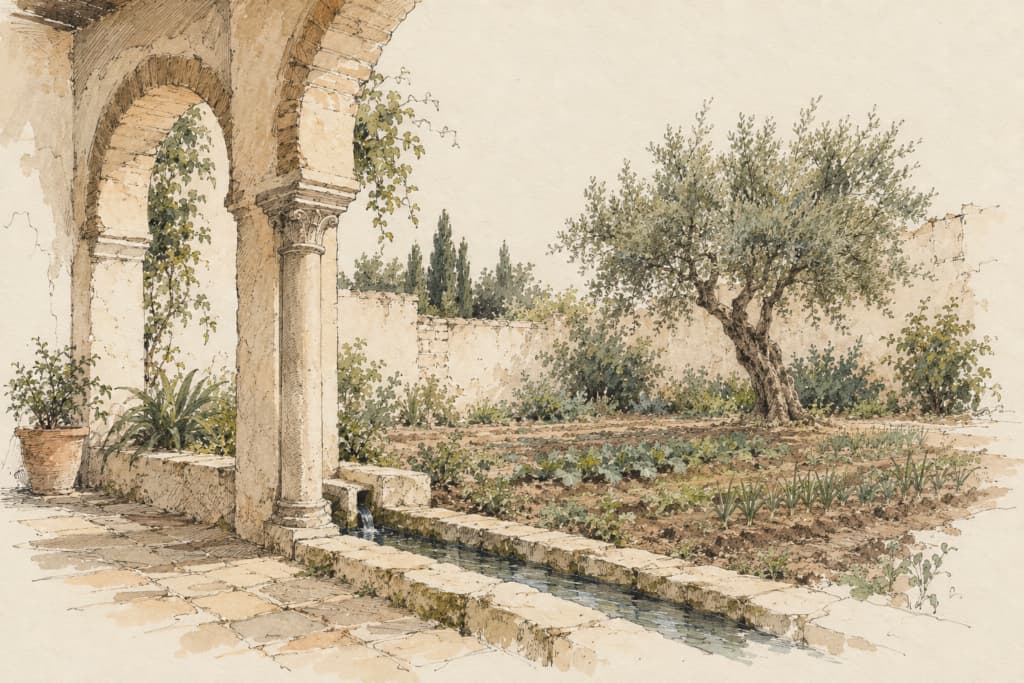
Here there are prayers to offer. There are promises of bai‘at to honour. There are parents, spouses, children, neighbours and strangers whose rights are due. There are abilities that can be put to use in the service of the Jamaat and humanity. There is a living Khilafat to which we claim attachment. And, in the words of the Promised Messiah (as), the field for attaining nearness to Allah still lies open.
Perhaps, then, the wish “If only I had been there” need not disappear.
It only needs another question beside it: Now that I am here, what will I do?
Endnotes
1. Al-Bukhari, Al-Adab al-Mufrad, Kitab ri‘ayati l-awlad, Bab al-waladu mabkhalatun majbanatun, Hadith 87.
2. Muslim ibn al-Hajjaj, Sahih Muslim, Hadith 2832.
3. Baruch Fischhoff, “Hindsight ≠ Foresight: The Effect of Outcome Knowledge on Judgment Under Uncertainty”, Journal of Experimental Psychology: Human Perception and Performance, Vol. 1, no. 3 (1975), pp. 288-299; Neal J. Roese and Kathleen D. Vohs, “Hindsight Bias”, Perspectives on Psychological Science, Vol. 7, no. 5 (2012), pp. 411-426.
4. Ahmad ibn Hanbal, Musnad Ahmad, ed. Shu‘ayb al-Arna’ut et al. (Mu’assasat al-Risalah, 2001), Vol. 13, Hadith 7978, p. 358.
5. Mulla Ali al-Qari, Al-Mashrab al-Wardi fi Madhhab al-Mahdi, ed. Mahir Adib Habbush, in Majmu‘ Rasa’il al-‘Allama al-Mulla Ali al-Qari (Istanbul: Dar al-Lubab, 2016), Vol. 6, p. 63.
6. Shah Waliullah Dehlawi, “Al-Maqalah al-Wadiyyah fi n-Nasihah wa l-Wasiyyah”, in Majmu‘ah Wasayah Arba‘ah, trans. Muhammad Ayyub Qadiri (Hyderabad, Sindh: Shah Waliullah Academy, 1964), p. 84.
7. Hazrat Mirza Masroor Ahmad (aa), concluding address, Majlis Khuddam-ul-Ahmadiyya UK National Ijtema, 27 September 2026, MTA International, official YouTube video and English subtitles, approx. 30:39-34:29: www.youtube.com/watch?v=dx7lV2–C9A.
8. Hazrat Mirza Ghulam Ahmad (as), Al-Wasiyyat, in Ruhani Khazain, Vol. 20, pp. 308-309; official English translation, The Will–Al-Wasiyyat (Farnham: Islam International Publications Ltd, 2023; repr. 2024), p. 11.
9. Abu Hamid al-Ghazali, Ihya’ Ulum al-Din (Beirut: Dar al-Ma‘rifa, n.d.), Vol. 4, p. 143.
10. Ibid., pp. 394-395.