
Aneelah Atiyatul Hayee Kauser, USA
Allah says that he “loves those who turn to Him and loves those who keep themselves clean.” (Surah al-Baqarah, Ch.2: V.223) When we keep our body clean by keeping it free from dirt, we find it easier to keep our soul clean by avoiding impure actions. Thus, we are purified by Allah’s love for us; this is the true connection between the physical and spiritual.
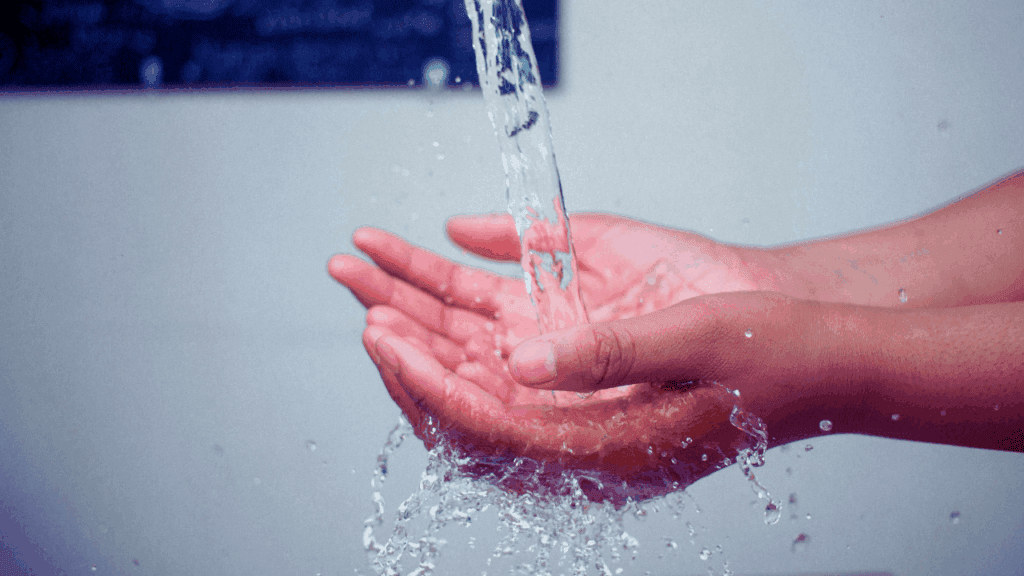
The definition of purity is “freedom from contamination.” The Holy Prophetsa said that cleanliness is half of faith, meaning that physical purity is vital to maintain a good soul. (Sahih Muslim, Kitab al-Taharah, Hadith 223) Think of all the things that could have been emphasised, but the Holy Prophetsa chose to emphasise cleanliness. This is also why ablution is required before completing prayers. (Surah al-Maidah, Ch.5: V.7)
The Promised Messiahas writes that “the natural state of man has a very strong relationship with his moral and spiritual states, so much so that even a person’s manner of eating and drinking affects his moral and spiritual states. […] If the natural state of a person is subjected to the control of the directions of divine law it becomes his moral state and deeply affects his spirituality, as is said that whatever falls into a salt mine is converted into salt.” (The Philosophy of the Teachings of Islam, p. 8)
The mind and body are deeply connected. Studies show that if one were to smile artificially, their heart would begin to experience joy. Huzooras similarly gives an example and writes that “when our eyes are filled with tears, even if the tears are artificially induced, the heart is immediately affected and becomes sorrowful.” (The Philosophy of the Teachings of Islam, p. 9)
In the case of tears, the heart can become sorrowful even after simply seeing someone else’s tears. If the physical body can influence the mind in such a way, it only makes sense that it can impact our soul, spirit, and morals as well. The Promised Messiahas continues, “when we draw ourselves up physically and strut about […], this attitude induces a mood of arrogance and vain glory. These instances establish clearly that physical conditions certainly affect spiritual conditions.” (Ibid.)
Huzooras states that even what a person consumes can have some sort of influence on them. Herbivorous animals lack the courage that carnivores have, and people who eat more meat are generally braver and suffer a decline in meekness and humility compared to vegetarians. Maintaining a balance is key, and the Quran has commanded for this very reason to “eat and drink but exceed not the bounds.” (Surah al-A’raf, Ch.7: V.32)
Allah has given us clear instructions in the Holy Quran on how to remain physically pure and clean to maximise our inner purity. Logically, if one must begin the process of becoming pure, it would be easier to start on the outside and work their way inwards. Maintaining a pure soul is far more complex than achieving physical cleanliness, since it encompasses many different elements.
According to the Holy Prophetsa, the spiritual effect of praying five times a day has the same effect as if one were to bathe one’s physical body five times a day. Hypothetically, if a person did bathe five times a day, would there be any filth left on them? Certainly not. In the same way, water cleanses the body, prayer affects the soul. (Sahih al-Bukhari, Kitab Mawaqit al-Salah, Hadith 528)
The Promised Messiahas also explained regarding this matter, “Anyone who desires to develop an inner state of righteousness and purity must also be physically clean as well.” (Malfuzat [English], Vol. 1, p. 254)
However, what is the point if a person keeps their body clean but does not believe in God and seek to perform good deeds? Being clean means nothing without morals. Physical purity is supposed to translate to purification of the self. Thus, as Muslims, we should cut out the bad things from our lives to cleanse our souls and be close to Allah.
Good actions, not just physical cleanliness, are necessary to maintain a pure soul. Islam is structured to shield us from falling into impure circumstances. For example, the institution of purdah and modesty is meant to protect both men and women by shutting all doors through which the temptation to commit adultery may enter.
This is why the Holy Prophetsa has said, “Indeed Allah is pure and loves what is pure.” (Jami‘ at-Tirmidhi, Kitab al-adab ʿan Rasul Allah sallallahu ʿalayhi wa sallam, Hadith 2799)
Kalima is the first pillar of Islam, and only the pure of heart can truly believe in Allah. Performing Salat seeks to purify the soul, and it requires us to do ablution to clean ourselves physically. Ramadan helps us reflect and improve our spiritual purity, and Islamic teachings also tell us that we should especially refrain from impure deeds during fasting.
The fourth pillar is Zakat, which literally means purity; giving out of our wealth helps us stay away from love of the world and avoid evil. Finally, Hajj, or pilgrimage, also seeks to purify pilgrims, who must stay in ablution and wear clean clothes.
Cleanliness is important for ourselves and for the sake of others. Islam is such a beautiful religion because it effectively prevents Muslims from being in impure circumstances and also guides us on how to remain clean in our everyday lives.