
Europe on the eve of reform
When the name “Martin Luther” is mentioned today, many instinctively think of the 20th-century civil rights leader whose words and actions helped transform American society. Yet four centuries earlier, another Martin Luther stood at the centre of a different kind of struggle – one that reshaped the religious and political landscape of Europe. In distinct circumstances, both figures would come to challenge powerful systems of authority, guided by conscience rather than personal ambition.
The early 16th-century was an age of intellectual revival and institutional power. As the Renaissance reached its height, debates surrounding humanism, classical learning, and religious authority became increasingly prominent. At the heart of European life stood the medieval Church, an institution whose immense spiritual influence had become closely intertwined with governance, economics and social order. While it offered moral and religious structure, many of its practices appeared increasingly distant from the original teachings of Christianity. Scripture itself remained inaccessible to most, preserved largely in Latin and mediated through clerical authority.
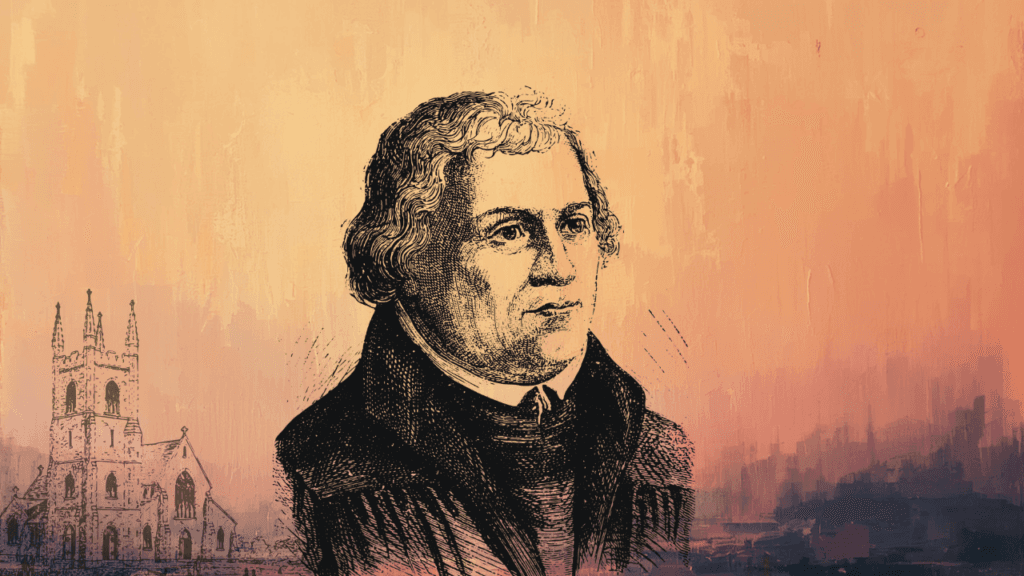
It was within this fractured landscape that Martin Luther, a German monk and theologian, emerged as an unexpected challenger. He did not seek to establish a new church, nor did he envision the upheaval that would follow. Rather, compelled by conscience and conviction, Luther questioned the authority of practices he believed contradicted foundational Christian principles. In doing so, he initiated a movement that would permanently alter Europe’s religious, intellectual, and political trajectory.
The medieval Church and the growing crisis of authority
To fully appreciate Luther’s impact, it is necessary to understand the conditions that preceded him. The late medieval Church enjoyed immense authority; however, with that authority came internal weaknesses. One of these was the selling of indulgences – essentially buying passage to heaven by paying the Church before death. This was one of the most controversial manifestations of this system. Many followers viewed these transactions as a distortion of the message of repentance and forgiveness that was taught by Jesus (as).
Dissatisfaction among believers continued to grow as cases of clerical abuse and political entanglements contributed to the widening gap between the clerical elite and ordinary followers. It was within this fracturing landscape that Luther began to study, reflect, and eventually ask questions that many others had silently harboured.
Faith, grace and the challenge to church authority
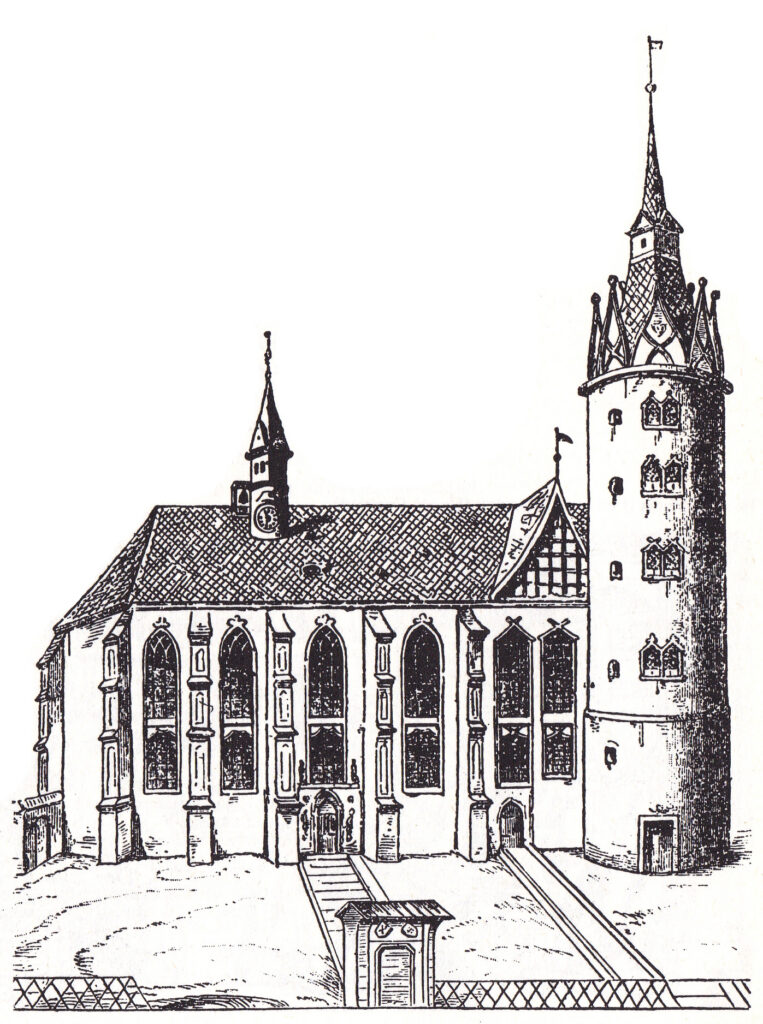
Luther’s moment came in 1517 when he articulated the belief that a true believer required only faith and divine grace to attain salvation. This led him to compose a document containing 95 questions and propositions for discussion. Legend says that he nailed the Ninety-five Theses to the door of the Wittenberg Castle Church as an act of defiance, while others say he intended to initiate an academic discussion regarding his concerns.
What he could not have anticipated was the speed with which his ideas would spread. The printing press, then a relatively recent invention, enabled his arguments to reach audiences far beyond the intended academic circles. This occurred during the height of the Renaissance, a period that laid important foundations for the later Enlightenment. Widespread intellectual exchange and the dissemination of new ideas were becoming increasingly common.
His stance against the Church required significant personal courage. Luther faced excommunication, political threats and the possibility of execution. Before his official trial, he was asked to recant his writings, which he famously refused, maintaining that he could not abandon what he believed to be true. In front of the Diet of Worms (meeting of the assembly of the Holy Roman Empire held at Worms in Germany), Luther stood by his principles and the Holy Roman Emperor Charles V issued an edict ordering the burning of all of Luther’s writings.
Scripture for the people and the spread of reform
The following year, Luther remained in hiding and worked on his German rendering of the Bible, which provided ordinary believers with direct access to scripture in their own language. In the years that followed, Luther returned to Wittenberg, and although the Reformation had grown beyond his sole leadership, his writings and ideas continued to shape its direction.
Luther’s opposition to the Church emboldened others to challenge established authority. His actions ignited the Protestant Reformation, shattering the previously impenetrable unity of the Church. Several German princes aligned themselves with the movement, seeing both theological justification and political opportunity, thereby granting it crucial protection.
The Reformation was not confined to Germany alone. Scandinavian kingdoms adopted Protestantism as the state religion, reform movements emerged in France through Calvinism, and in England, these developments laid the groundwork for the Church of England. Luther’s influence was therefore not limited to theology but extended into the political and social fabric of Europe. His conscience and subsequent actions were the root cause of widespread fragmentation in Europe. (The Cambridge Companion to Martin Luther, pp. 227-238)
Reform, conscience and divine guidance
Through an Islamic lens, the history of religious reform raises a deeper question: is conscience alone enough to cause lasting spiritual renewal? While moral conviction plays an important role in challenging injustice and corruption, Islamic theology emphasises that enduring religious renewal occurs through reformers sent by God in response to specific spiritual conditions.
The Ahmadiyya Muslim Jamaat holds that the Promised Messiah and Mahdi, Hazrat Mirza Ghulam Ahmad (as), is a divinely guided reformer. He emerged in a religious landscape marked by internal inertia, sectarian disputes and external ideological challenges to Islam itself. Rather than confronting a single institution, his mission addressed widespread spiritual decline, misconceptions about jihad and the erosion of faith in the face of modern materialism.
The defining distinction between this model of reform and that of Martin Luther comes down to the role of divine intervention. Luther’s stand, though rooted in sincerity and conscience, relied solely upon personal interpretation of scripture and the ensuing resistance to institutional authority. By contrast, the Promised Messiah (as) consistently presented his reform as originating from divine revelation and God’s direct guidance. His claim went beyond correcting religious practice, rather to revive faith itself through spiritual signs, reasoned argument and moral reformation.
Seen together, these two figures illustrate a critical distinction between reform initiated through conscience alone and reform sustained by divine guidance. Whilst conscience may provoke necessary challenge, Islamic thought holds that it is through God’s intervention alone that reform leads to unity, stability and lasting spiritual renewal.