
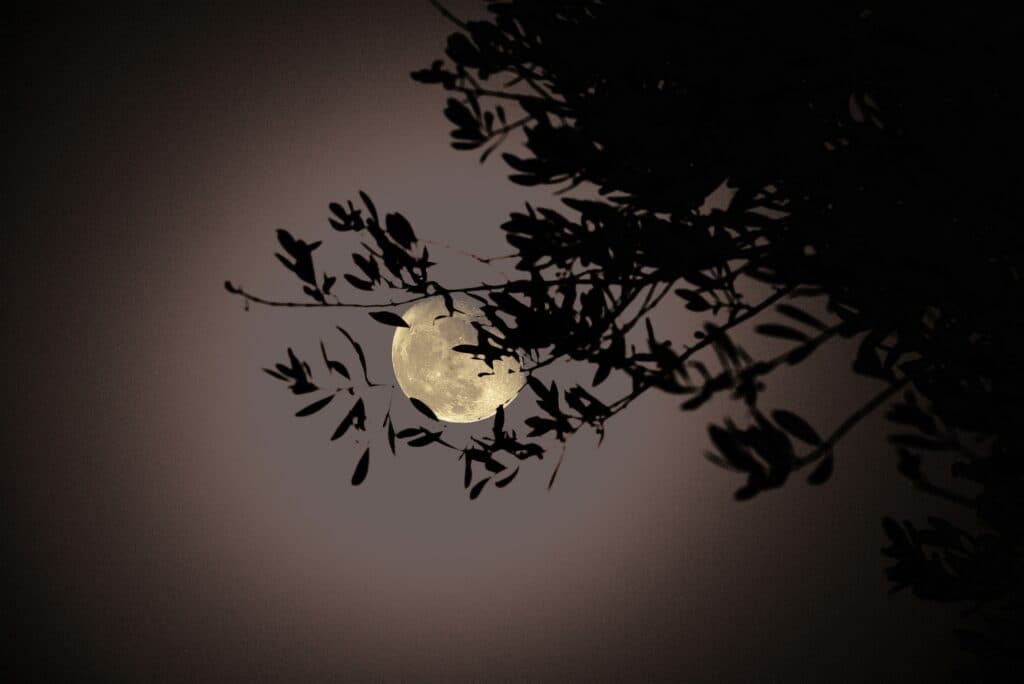
In response to a question about the role of the Moon in human life, posed by Professor Clement Lindley Wragge, who met the Promised Messiah (as) for the second time in 1908, Huzoor (as) elaborated on its significance in human life, particularly its influence on fruits. From his detailed explanation, we present an excerpt relevant to our article:
“The effect of moonlight upon plants is clearly evident. They become plump and sweet on account of it. Sometimes people have heard noises of pomegranates cracking, which occurs under the influence of moonlight. Anything beyond this, which is complicated and unproven, I am not ready to accept. It is clearly mentioned in the Holy Quran that the moon, the sun, and all the planets are useful servants of man and beneficial. And there are benefits for man centred in them.” (Malfuzat [Eng], Vol. 10, p. 554)
In addition, Huzoor (as) mentioned the Moon’s influence on fruits and vegetables at several other occasions. While many people object that there is no empirical evidence supporting the moon’s impact on crops, in this article we delve into this subject and demonstrate that the lunar influence on crops is not merely a traditional belief but is supported by substantial scientific evidence.
Historical background of lunar influence on plant growth and development
Since antiquity, celestial bodies such as the Sun, the Moon and the planets have been regarded as influential forces shaping life and environmental processes on Earth. The Sun’s role in driving photosynthesis, diurnal rhythms and thermal regimes is well established, while the Moon’s gravitational and luminous effects have been linked with tidal movements, reproductive cycles of marine organisms, animal migration and plant development. Early naturalists and agrarian societies recognised these periodic interactions between celestial and terrestrial systems, forming the basis for traditional beliefs and empirical observations that associated lunar phases with various biological and agricultural phenomena. Human fascination with the Moon and its influence on earthly life dates back to ancient civilisations. The Moon’s visible phases and its role in governing tides made it one of the earliest celestial bodies to be linked with natural rhythms and agricultural activities. Historical records and information available online reveal that many traditional societies associated the lunar cycle with fertility, growth and reproduction, not only in animals and humans but also in plants.
In Mesopotamia, Egypt and Greece, the Moon was revered as a deity connected to moisture and fertility, both vital for plant life. The ancient Egyptians observed lunar phases to determine optimal times for sowing and harvesting, believing that the Moon’s light enhanced seed vigour. Similarly, Greek and Roman farmers followed lunar calendars, assuming that waxing moons (new moon-full moon) favoured vegetative growth while waning moons (full moon-new moon) promoted root development and crop maturation.
In India, traditional agricultural practices under Vedic and later Hindu systems also considered the lunar cycle for determining auspicious sowing days. The Panchang (Hindu lunar calendar) was often consulted to synchronise planting with favourable lunar phases. (Anonymous 2025a)
During the Middle Ages, European farmers formalised these ideas through “moon gardening”, a practice later popularised in the Farmer’s Almanac. It suggested sowing leafy crops during the waxing moon and root crops during the waning moon (Anonymous 2025b). Such beliefs persisted into the 20th century and were incorporated into biodynamic agriculture, introduced by Rudolf Steiner in 1924, which explicitly recognised lunar and cosmic rhythms in plant development.
Transition to scientific inquiry
The scientific evaluation of lunar influence began in the 19th and early 20th centuries, when researchers started to test these traditional claims. Rudolf Steiner, regarded as the founder of biodynamic agriculture, emphasised that truly healthy farming must account not only for practical aspects like crop rotation, appropriate stocking densities and organic fertilisation, but also for cosmic influences. Early experiments explored whether moonlight intensity or gravitational effects could measurably influence seed germination, plant metabolism, or water uptake. Although most results were inconclusive or showed minimal direct effects, the idea that subtle lunar-related cycles might interact with plant physiology persisted. With advances in chronobiology and environmental physics during the late 20th century, attention shifted toward understanding possible indirect effects, such as lunar modulation of nocturnal light, humidity and gravitational forces influencing soil water movement or sap flow. Recent studies using controlled conditions and modern sensors continue to revisit these phenomena, aiming to discern whether lunar periodicities can affect circadian rhythms, flowering or fruit development.
It is an established fact that plant growth and development are influenced by the interaction between biotic and abiotic factors. The impact of the Moon can therefore not be rejected for lack of substantial scientific evidence. Numerous studies have explored the possible influence of lunar phases on plant growth and development and until recently the findings remained inconsistent and often contentious. While some studies report subtle physiological or phenological responses associated with lunar cycles, others dismiss these claims as pseudo-scientific, citing limited empirical evidence and methodological constraints. Nonetheless, as a general rule in exploring the science behind a phenomenon, the absence of conclusive data does not necessarily imply the nonexistence of such phenomena. Historically, many physiological processes in plants, such as photosynthesis, transpiration, hormone regulation and circadian rhythms, remained unexplained for centuries due to the lack of suitable observational tools and analytical methods. These mechanisms became scientifically established only after technological advances enabled precise measurement and experimentation. This progression underscores that scientific understanding evolves with improvements in instrumentation and methodology.
Studies highlighting lunar influence on crops
In ‘An Encyclopaedia of Plants in Myth, Legend, Magic and Lore’, which includes over 200 entries connecting plants with stars and natural elements, Phillips (2012) mentions that garlic (Allium sativum L.) has long been linked to the Moon and was believed to grow stronger as the Moon waned. According to the author, some farmers believe that Potato (Solanum tuberosum L.) growing is also supposed to be influenced by the Moon, so they suggest that this underground crop should be planted during the black moon (when the moon is waning).
According to Restrepo (2004), ocean water rises and falls in a regular rhythm depending on the Moon’s position. This same effect is also believed to influence the movement of sap in plants. So, talking specifically about the impact on fruit size, the movement of sap could play a pivotal role in determining fruit size by regulating the supply of water, nutrients and assimilates required for cell expansion and growth. Xylem sap transports water and minerals from the roots to the developing fruit, maintaining turgor pressure essential for cell enlargement, particularly during the early stages of fruit development. Phloem sap delivers photosynthates, primarily sugars, which not only provide energy for metabolic processes but also create osmotic gradients that draw water into fruit tissues, sustaining continued expansion (Anonymous 2025c).
Littlewood (2009) in his book ‘Gardening by the Moon Calendar’ makes recommendations based on the statements: “The best rate of germination is achieved just before a full moon, when moonlight and the Moon’s gravitational pull are both at their maximum, grafting should be done on a waxing moon, because sap rises in plants during this period and this will help a graft to establish, pruning should be done on a waning moon, because the sap is now falling and this will help cut surfaces to heal quickly and crops for storage should be harvested while the Moon is waning.”
Studies conducted by biodynamic researchers Thun and Thun (1963) indicated a relationship between the Moon’s position relative to the zodiac (sidereal rhythms), planting dates and crop growth. Their findings gained wide attention through the publication of biodynamic calendars and related research reports. The influence of these and other such studies has been considerable, with some documents and materials even being made available online by companies (Bussagli, 2019).
Spiess (1990) concluded that the largest effects of lunar influences were apparent during early growth stages and especially at emergence. Early influences on the formation of yield were modified by compensatory mechanisms, resulting in little impact on final yield. Nevertheless, lunar influences were still evident in the crude protein content of rye grain. These observations suggest that further research into this debated phenomenon cannot be dismissed.
Similarly, Barlow et al. (2010) noted that “lunar gravity alone could influence stem diameter variation and that, under certain circumstances, additional regulation may arise from geomagnetic flux.”
Conclusive evidence from recent research advancements
In a paper recently published in Plants journal (Singiri, JR; et al, 2023), new insights have been incorporated in the understanding of the lunar influence on plant life. This piece of research, besides authenticating some of the inferences drawn over the last decade in understanding the effects, has come up with some interesting facts that shed new light on our understanding of the effects of this abiotic factor on plant life. The authors selected the tobacco plant for these studies and the results were subsequently authenticated by conducting similar studies on a member of Brassicaceae (B. juncea). The research has suggested that though the lunar light is far lower than the Photosynthetically Active Radiation (PAR) of the electromagnetic spectrum yet it certainly affects plant life in many other processes. These changes have been found to influence nuclear structuring, growth and development, metabolite profiling, plant stress response, etc. Full moonlight (FML) has been seen to substantially increase the nuclear size as compared to dark-grown seedlings which could be due to genome reorganisation coupled with chromatin decondensation. At the molecular level, it was observed that there is considerable reduction in CG methylation, a natural process in which certain enzymes called DNA methyltransferases (DNMT’s) transfer a methyl group from a cytosine residue to guanine, thereby altering the gene expression levels. Similarly, a dynamic modification of H3 Histone, which is an essential component for nucleosome formation and hence very essential for tight packaging of the genome inside nucleus (Freeman, L; et al, 1996), has also been observed due to FML similar to sunlight. Using Gas chromatography-mass spectrophotometry (GC-MS) it was observed by the researchers that there is differential expression of a variety of metabolites. During this study specifically it was seen that there is substantial increase in the variety of amino acids when exposed to over 5 hour FML yet it was seen that there is a significant decrease in the levels of glycine amino acid. Similarly, the levels of Raffinose, a trisaccharide found in beans, cabbage, etc., have been seen to increase in FML. Proteome analysis during the study revealed that there is a substantial change in the expression of various proteins with both upregulation as well as downregulation as a result of considerable exposure to FML. These proteins were found to be involved in various important mechanisms of the plant like photoreceptors (phytochrome B & phototropin 2), multiple stress response proteins (chaperones, chaperonins, reactive oxygen species, etc). The results so obtained were authenticated by seeing the corresponding increase in the expression of mRNAs as the underlying causes.
Taking this research forward, Priyanka et al.,(2025) in a very recent research article on Mustard (Brassica juncea) gave substantial evidence on the effect of moonlight. In the summary of the research, they state “Lunar farming, often regarded as a myth, is regularly practised in many places around the world (e.g., India) where farmers organise their agricultural activities according to moon phases. Early and recent work showed that exposure to moonlight affects the life cycle of plants, from seed germination and vegetative growth to fruit maturation and dispersal. Here we addressed the long‐term effect of short exposure to full moonlight (FML) on cellular activities in Brassica juncea by analysing protein and metabolite profiles immediately after 3‐night‐exposure (3NE) or 7 and 15 days after exposure (DAE) to FML. This study shows an increase in nuclear size following 3NE to FML, which was accompanied by changes in protein and metabolite profiles. We identified significant alterations in protein and metabolite profiles between FML and dark‐treated plants in conjunction with developmental stages, which persisted long after exposure to FML. Most notable are the changes in the composition of metabolite interconversion enzymes (MIEs) at various developmental stages which were intensified in FML‐treated plants. Changes in MIEs were accompanied by significant alterations in metabolite composition and level, particularly at 15DAE, including branched‐chain amino acids (e.g., Valine, Leucine), multiple sugars (Raffinose, glucose, sucrose) as well as the tricarboxylic acid (TCA) cycle intermediates malic acid and citric acid. Thus, our results show that short‐term exposure to FML triggers a developmental switch resulting in a long‐term impact on plant performance that brings about an increase in cell activities and consequently enhanced growth. Our results call for meticulous research on this lunar phenomenon and its potential to enhance crop plant growth and development.”
The subject matter needs further discussion as the findings are based on some fascinating experiments where almost all the parameters have been considered. Every living organism, whether it be a plant, animal or a microbe, is a complex entity having a direct influence of surrounding biotic and abiotic factors. These influences are perceived as signals from the environment and the individual shows a definite reaction to them. Light is one such abiotic factor which is perceived at the cellular level by the cell surface receptors. There is a variety of such receptors at the cellular surfaces which perceive the signals and then transfer them to the interior of the cell through a complex process called as signal transduction. This signal transduction involves a variety of protein molecules in the form of second messengers and downstream signalling molecules which ultimately reach the nucleus which is the control centre and where gene expression is regulated for the effects to take place. Nature has also employed a feedback mechanism which also acts in downregulating the processes as and when needed. This down-regulation loop is very essential to check overexpression of genes. The FML for a required time period has yielded results that are in congruence to the general principles of plant physiology and molecular genetics. Its effects on genome packaging and decondensation of chromatin are suggestive of the fact that, besides the direct effects of FML, it prepares the genetic material for full potential expression after the dawn. Therefore, when the FML is considerably altering the gene expression, it can modulate any dynamic character of the plant, starting from growth, quantity and quality of its products and the vigor of the plant as such. The regulation of metabolites due to FML in the form of amino acids and sugars is one such example where the quality of the plant products is definitely going to show a reasonable change. The production of stress response factors by the plant during exposure to FML over a minimum required period of time indicates that the plant perceives the moonlight as a stress signal and subsequently employs its machinery for the production of stress response factors, which could help in the survival of the plant. As we know these amino acids are the precursors of various stress response factors like arginine for polyamines (Janowitz, T; et al, 2003), methionine for ethylene (Adams, DO & Yang, SF; 1979) and phenyl alanine for salicylic acid (Khan, MI; et al, 2015), such plants are definitely going to have some additional ingredients that the other non-exposed plants won’t have. A plant that is exposed to various harsh environmental conditions at high altitudes develops some of the most desired characters that the other plants lack. Thus, moonlight is perceived as a stress signal, as a result of which the plant accumulates some of the most desired metabolites to counter the stress, which is actually not a stress. Therefore, all these observations are suggestive of the fact that besides performing photosynthesis, there are various other phenomena underlying the existence of plant life that have a definite dependence on moonlight. Yet it would not be out of place to mention here that it is only because of the recent research that we have started to understand the effects of the Moon on life on Earth. It is very sure that we are going to see some fascinating facts coming to light for humans to understand the lunar effects in the near future.
There are various other indirect effects that the Moon has on both biotic as well as abiotic factors on the planet Earth. The gravitational pull of the moon, which is responsible for maintaining a uniform rotation of Earth around its axis, making days and nights, is very essential, especially for the long-day plants that require longer durations of sunlight for flowering. Similarly, some of the important nocturnal pollinators and seed dispersers require some minimum amount of light during nights for their functioning, which is provided by the moon. As the Earth rotates, the Moon’s gravity pulls the ocean water from the side nearest to the Moon, creating a bulge and the centrifugal force caused by the rotation of Earth bulges the waters on the opposite side, creating high and low tides mixing the waters. The lunar Nodal Cycle, an 18.6-year cycle when the lunar orbit wobbles between a maximum and a minimum of plus and minus 5 degrees relative to Earth’s equator, raises and lowers the tides, which in turn has been seen to change the demography of flora & fauna in and around the coastal areas, thus disturbing the ecological balance (Katherine Latham, BBC, 2021).
Conclusion
The studies and references discussed above indicate that lunar phases may exert a notable influence on crop growth and development, suggesting that the Moon’s impact is not a mere myth but a mystery gradually being unravelled through scientific advancement. Exploring this potential role of the Moon in agriculture could yield valuable insights for optimising planting schedules, enhancing crop performance, and harmonising traditional wisdom with modern farming practices. Thus, research on lunar influence holds both scientific and practical significance for sustainable agriculture
References
- Malfuzat Volume 10, English edition, 2022, p. 554
- Anonymous 2025a: From Seed to Harvest: Panchang’s Guidance for Successful Farming – Personalised Astrology : Horoscope Predictions By Vedic Astrologers (Accessed on 10/10/2025 )
- Anonymous 2025b. Planting by the Moon Phase: How It Works | The Old Farmer’s Almanac (Accessed on 10/10/2025 )
- Phillips, S. An Encyclopaedia of Plants in Myth, Legend, Magic and Lore (The Crowood Press Ltd., Marlborough, UK, 2012).
- Restrepo, J. La Luna: El sol Nocturno en los Trópicos y su Influencia en la Agricultura (Servicio de Información Mesoamericano sobre Agricultura Sostenible, Managua, Nicaragua, 2004).
- Anonymous 2025c. 30.16: Transport of Water and Solutes in Plants – Transportation of Photosynthates in the Phloem – Biology LibreTextss
- Littlewood, M. A Guide to Gardening by the Moon (Gaby Bartai, Glasgow, UK, 2009).
- Thun, M. & Thun, M. K. Aussaattage. Consecutive Years (Aussaattage-M. Thun-Verlag, Biedenkopf, 1963)
- Bussagli, M. Calendario Lunar de las Siembras y Labores Agrícolas (Pequeñas Joyas) (Susaeta, Madrid, Spain, 2019).
- Spiess, H. Chronobiological investigations of crops grown under biodynamic management. I. Experiments with seeding dates to ascertain the effects of lunar rhythms on the growth of winter rye (Secale cereale cv. Nomaro). Biol. Agric. Hortic. 7, 165–178 (1990). https://doi.org/10.1080/01448765.1990.9754543
- Barlow, P. W., Mikulecký, M. & Střeštík, J. Tree-stem diameter fluctuates with the lunar tides and perhaps with geomagnetic activity. Protoplasma 247, 25–43 (2010). https://doi.org/10.1007/s00709-010-0136-6
- Priyanka, G., Singiri, J. R., Novoplansky, N. & Grafi, G. Short exposure to full moonlight has a long-term impact on Brassica juncea cell activity and growth. Plant Cell Environ. 48, 3038–3051 (2025). https://doi.org/10.1111/pce.15333
- Freeman, L.; Kurumizaka, H.; Wolffe, A.P. Functional domains for assembly of histones H3 and H4 into the chromatin of Xenopus embryos. Proc. Natl. Acad. Sci. USA 1996, 93, 12780–12785.
- Janowitz, T.; Kneifel, H.; Piotrowski, M. Identification and characterisation of plant agmatine iminohydrolase, the last missing link in polyamine biosynthesis of plants. FEBS Lett. 2003, 544, 258–261.
- Khan, M.I.; Fatma, M.; Per, T.S.; Anjum, N.A.; Khan, N.A. Salicylic acid-induced abiotic stress tolerance and underlying mechanisms in plants. Front. Plant Sci. 2015, 6, 462.
- Katherine Latham, BBC; 24 August 2021. The subtle influence of the Moon on Earth’s weather. https://www.bbc.com/future/article/20210820-the-subtle-influence-of-the-moon-on-earths-weather
- Adams, D.O.; Yang, S.F. Ethylene biosynthesis: Identification of 1-aminocyclopropane-1-carboxylic acid as an intermediate in the conversion of methionine to ethylene. Proc. Natl. Acad. Sci. USA 1979, 76, 170–174.
- Singiri, J.R.; Priyanka, G.; Trishla, V.S.; Adler-Agmon, Z.; Grafi, G. Moonlight Is Perceived as a Signal Promoting Genome Reorganisation, Changes in Protein and Metabolite Profiles and Plant Growth. Plants 2023, 12, 1121. https://doi.org/ 10.3390/plants12051121.