
Restrictions on Ahmadis
In Iraq, Christian missionaries are granted the liberty to engage Muslims on matters of monotheism, drawing them instead towards the doctrine of the Trinity, thereby diverting them from belief in the Living God to the worship of a deceased human figure.
Likewise, Arya [preachers] are permitted to employ various methods and inducements to lead those who call themselves Muslims into apostasy, even to the extent of inciting them to use foul and abusive language against Islam and its Holy Founder (sa) – descendants of those who once nurtured Islam with their very blood.
Yet, in stark contrast, Ahmadis – who regard the preaching and defence of Islam as the foremost and most sacred duty of their lives and who, despite limited resources, traverse the farthest corners of the world for this very cause – were not granted even the minimal freedom to speak in support of Islam. They were denied the basic right to respond to objections raised against Islam by Arya or Christian [preachers] and were further restrained from refuting the falsehoods and allegations propagated by opponents of the Ahmadiyya Muslim Jamaat.
Underlying causes of restrictions
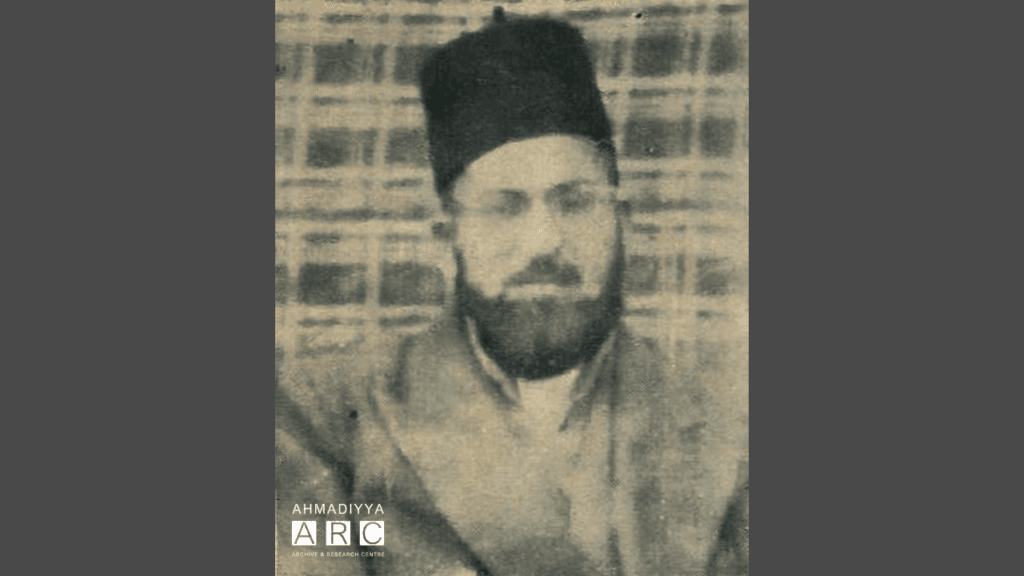
It had been presumed that such severe and unjust restrictions were enacted under the direct authority or tacit approval of the Iraqi government. However, it has recently come to light – following the arrival of Syed Zainul Abidin Waliullah Shah Sahib (ra), an Ahmadi missionary, in Baghdad – that the true cause lies elsewhere.
The instigators of these measures were certain Indian [Muslims] employed in the offices of senior British officials, who maintained close associations with colonial authorities. Motivated by the animosity and prejudice they had carried with them from India against the Ahmadiyya Community, these individuals became instrumental in securing orders that curtailed the Ahmadiyya mission of preaching Islam.
Not only were they themselves inactive and lacking the capacity to contribute to the spread of Islam, but they were also unwilling to tolerate that Ahmadis should courageously stand in defence of the faith – protecting uninformed Muslims from falling prey to hostile influences and extending the invitation of Islam to adherents of other religions.
Religious apathy and disunity
What greater example could there be of disregard for Islam and moral indifference than this? The need of the hour was that all Muslims, united in purpose and strength, should have collectively confronted the opponents of Islam – responding not only to their objections and allegations, but also presenting before them the inherent beauties of Islam.
Furthermore, arrangements ought to have been made to educate uninformed Muslims in the true teachings of their faith, so that they might remain safeguarded from falling into the snares of Christians [missionaries] and Arya [propagandists].
Yet, instead of adopting such a course, what transpired was quite the opposite. Through an unjust exercise of influence, even the small number of Ahmadi Muslims present were prevented from engaging in the preaching of Islam and formal prohibitory orders were issued against them.
These restrictions were enforced with such severity that some Ahmadis were declared “criminals” merely for preaching Islam and were consequently expelled from Baghdad.
Intervention and advocacy
In order to have these unjust and indeed inequitable restrictions lifted, Syed Zainul Abidin Waliullah Shah Sahib (ra) travelled to Baghdad and secured an audience with His Majesty King Faisal. He presented the matter before him with such clarity and effectiveness that the King remarked there was no justification for denying Ahmadis the same rights in Iraq that Christians and adherents of other religions enjoyed in propagating their faith. Not only did he express this view, but he also issued written instructions to one of his ministers to take practical action in this regard.
However, it later came to light that the British adviser to the said minister had recommended that the matter be deferred for some time.
In response, Shah Sahib (ra) met with the High Commissioner. Under the instructions of Hazrat Khalifatul Masih II [ra], repeated representations had already been made to the Government of India on this issue and the High Commissioner had been formally apprised of the matter. Consequently, he listened to Shah Sahib’s (ra) presentation with careful attention and consideration.
Partial relief and hope for full freedom
Subsequently, Hazrat Khalifatul Masih II [ra] received a telegram from Brother Jafar Sadiq Sahib, the amir of the Ahmadiyya Jamaat in Baghdad, conveying that, by the grace of God, a measure of relief had been secured. Letters received from Baghdad further indicate that, for the time being, Ahmadis have been granted limited permission to respond to allegations and accusations directed against Islam Ahmadiyyat. It is hoped that complete freedom will soon be attained.
Acknowledgement
On the attainment of this partial success, we extend our heartfelt congratulations, on behalf of the Jamaat, to Syed Zainul Abidin Waliullah Shah Sahib (ra). Considering the circumstances under which he undertook this effort, the significance of his achievement is greatly magnified.
The opinion of senior British officials was unfavourable towards Ahmadis, while those responsible for fostering such misconceptions remained resolute in their opposition. Moreover, the Ahmadis residing there found no avenue through which their grievances might be heard. That Shah Sahib assumed responsibility for this matter and through nearly two months of continuous effort, perseverance and diligent endeavour, succeeded – by the grace and favour of God – in securing this outcome, is indeed a remarkable accomplishment.
For rendering this highly important service, one which carries far-reaching implications for the interests of the Ahmadiyya Jamaat, we express our profound gratitude to him and pray that God Almighty may continue to grant him abundant opportunities to serve the faith.
Expressions of gratitude to authorities
We are also deeply grateful to His Majesty King Faisal, who not only granted an audience to a respected representative of our Jamaat, but also gave thoughtful and sympathetic consideration to his submissions, ultimately recognising for Ahmadis the same rights that are afforded to followers of other communities within his realm.
Likewise, we extend our thanks to the government of India, which facilitated the conveyance of accurate information regarding our Jamaat to the High Commissioner in Iraq.
A new convert from Albania
A young man from Albania, named Sulaiman Kazim, who is presently residing in America and had been studying the literature of the Ahmadiyya Muslim Community for some time, has now formally entered the Jamaat with full conviction and satisfaction of heart. May God Almighty grant him steadfastness, Amin.
(Translated by Al Hakam from the original Urdu, published in the 13 April 1926 issue of Al Fazl)