
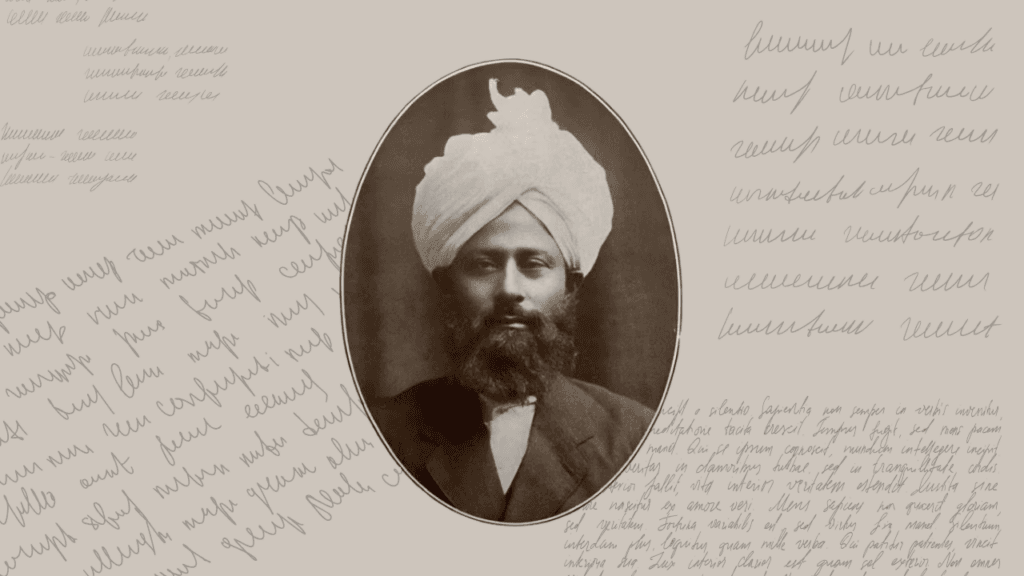
Abu al-Hassan Ali bin Uthman al-Julabi al-Hujwari, often known as Hazrat Datta Ganj Bakhsh, was a Persian Sufi and saint; his only surviving treatise, Kashf al-Mahjub, is often called the oldest Persian treatise on Sufism. While explaining the importance of sincerity of intention in seeking the pleasure of Allah in religious pursuits, he wrote:
“[…] No blessing arises from anything in which selfish interest has a part. If the selfish man succeeds in his purpose, it brings him to perdition, for ‘the accomplishment of a selfish purpose is the key of Hell’; and if he fails, he will nevertheless have removed from his heart the means of gaining salvation, for ‘resistance to selfish promptings is the key of Paradise’, as God hath said: ‘Whoso [restrains his soul from evil desires, the Garden shall surely be [his] home.’ [(Surah al-Nazi‘at, Ch.79: V.41-42)] People act from selfish motives when they desire aught except to please God and to escape from Divine punishment.” (The Kashf al-Mahjub, Taj Company, 1982, p. 3)
Hazrat Datta Ganj Baksh wrote the above and explained that his intention in writing Kashf al-Mahjub was precisely this: that he authored it purely for the sake of Allah. As such, it is a great point of reflection that this is the only one of his works that has survived to this day.
The concept of performing deeds deliberately and sincerely for the sake of Allah is not something unfamiliar to any Ahmadi Muslim. Since the advent of the Promised Messiah (as), this principle has been instilled in our ears and woven into our very nature. The Promised Messiah (as) taught us that true success in serving the faith comes only when our purpose is to attain the pleasure of Allah the Almighty.
Hazrat Khalifatul Masih V (aa) has also emphasised this countless times in his sermons and personal meetings with members of the Jamaat. It is for this very reason that the following couplet of Hazrat Khalifatul Masih II (ra) is cherished and well-known among Ahmadi Muslims across the globe:
خدمتِ دین کو اک فَضلِ الٰہى جانو
اس کے بدلے میں کبھى طالِبِ اِنْعَام نہ ہو
Meaning, “Consider service to the Faith a grace from God; never expect any reward in return for it.” (Lawh-ul-Huda, Anwar-ul-Ulum, Vol. 5, p. 190)
In the same spirit, although – according to the couplet of Hazrat Musleh-e-Maud (ra) – we do not seek any reward for serving the faith, there is indeed one “reward” we yearn for: Allah the Almighty Himself. The true crown jewel of our existence is none other than Him.
The question then arises: How does God manifest Himself in the life of a believer who serves Him sincerely? This is the subject we shall explore in this article, drawing upon the writings and incidents from the blessed life of Hazrat Musleh-e-Maud (ra).
Huzoor (ra) addressed missionaries of the Jamaat, advising them that:
“Thus, the thought of making sacrifices for the sake of faith must always be remembered. However, it should also be remembered alongside this that any sacrifice made for the faith brings its reward from Allah the Almighty. Therefore, you should cultivate spirituality within yourselves; thereafter, you will witness its results on your own.
“Spiritual stages are of two kinds. There are some whom Allah the Almighty deems worthy of acceptance in this world – He grants them acceptance. Accordingly, the Holy Prophet Muhammad (sa) said in a hadith:
فَيُوْضَعُ لَهُ الْقَبُولُ فِي الْأَرْضِ
“‘Then, acceptance is placed for him in the earth.’” (Zarreen Hidayat, Vol. 1, p. 402)
In the above statement, Huzoor (ra) explains that Allah the Almighty knows the true nature of the individual and understands how beneficial such recognition and destiny will be for him; thus, He bestows it upon him accordingly. However, there is a second group of people who may not receive widespread acceptance among the people. Yet, as a believer understands, they too are granted a special grace from Allah.
Huzoor (ra) further explains:
“The second rank is that Allah the Almighty does not spread a person’s acceptance among the believers, but He opens for him the doors of His mercy. Such a person begins to experience the effects of divine friendship (wilayat-e-ilahi). In this way too, he realises that he has not remained unsuccessful, for he witnesses the grace and favour of Allah descending upon him.” (Ibid.)
Huzoor (ra), further explaining how Allah “opens for him the doors of His mercy” and how a servant can sense this, says:
“Whoever sets out to serve for the sake of God Almighty should seek acknowledgement of his service from Allah alone. It is not necessary that Allah manifest this acknowledgement through the tongues of people; rather, He makes it evident through His revelation, His help, and His support.
“A person ought to reflect upon himself and consider how Allah the Almighty is dealing with him. If Allah honours him with His love, His word and His support, then what greater shame could there be than for him to think: ‘All of this is insignificant – I still desire praise from people?’
“If a person is not praised in the sight of Allah the Almighty, what benefit can the praise of people possibly bring him?” (Zarreen Hidayat, Vol. 1, p. 400)
Here, Hazrat Musleh-e-Maud (ra) has made it absolutely clear that service to the faith and its blessings come from Allah alone. When a believer relies upon the praise of other human beings, he becomes ungrateful to Allah the Almighty and risks losing the blessings that Allah has already bestowed upon him. If one fails to show gratitude for Allah’s mercies, one may ultimately lose them altogether. As Allah the Almighty says:
فَاذۡکُرُوۡنِیۡۤ اَذۡکُرۡکُمۡ وَاشۡکُرُوۡا لِیۡ وَلَا تَکۡفُرُوۡنِ
“Therefore remember Me, and I will remember you; and be thankful to Me and do not be ungrateful to Me.” (Surah al-Baqarah, Ch.2: V.153)
Later in the same speech, Huzoor (ra) presents his own example for the life-devotees and missionaries, showing how Allah manifested these blessings in his own life. Huzoor (ra) says:
“We have witnessed a time after the passing of the Promised Messiah (as) when certain people made it their mission to obstruct others – hindering them from undertaking any work, and, should they attempt anything, raising objections at every step. At such times, when a task was entrusted to me, they would say, ‘It is a disgrace to the progeny of the Promised Messiah (as) to have this work done by him; we cannot tolerate it.’ Yet, on another occasion, the very same individuals would approach Hazrat Khalifatul Masih Ira and complain, ‘He does nothing at all.’ These were the circumstances through which we had to pass.
“Nevertheless, in those very times, I observed that not a single week would pass without Allah the Almighty revealing news of the unseen or bestowing glad tidings. I would convey these to my friends, and they would come to fruition. Whoever places his trust in Allah the Almighty grants him support and divine succour – sometimes through knowledge, sometimes through glad tidings, and sometimes through His abundant bounties.
“Though I never received formal, systematic instruction in knowledge, when I set out for Hajj, Hazrat Khalifatul Masih I (ra) took my hand and led me aside. In private, he said, ‘Look, my son! Life is uncertain; I do not know whether I shall be alive when you return. Therefore, I tell you now: you are my student. Yet I am also your student. From your sermons and speeches, I have learned the meanings of many verses of the Holy Quran, and I found them most pleasing.’
“Just think about this: what greater joy can there be for a student than that his teacher has benefited from his knowledge? This is the highest reward a student may ever receive from a teacher. Thus, when a person dedicates himself to the service of Allah, and when his service is founded upon spirituality, he can never remain unsuccessful.” (Zarreen Hidayat, Vol. 1, pp. 400-401)
These incidents from the life of Hazrat Khalifatul Masih II (ra) show us how the two levels of spiritual reward, which Huzoor (ra) explained, manifested in the highest measure in his life.
I would like to conclude this article with some heartfelt and inspiring words from the same speech by Hazrat Musleh-e-Maud (ra), offering motivation for all those who have devoted themselves wholeheartedly to the cause of Islam. Huzoor (ra) says:
“Seeking recognition for your services to the faith is a form of ill-thinking – first of all, ill-thinking of Allah the Almighty, and secondly, ill-thinking of your own self. It is ill-thinking of Allah because whoever serves God, it is God Himself who appreciates his works and acknowledges him. And even if the whole world were to conspire to erase him from the earth, they could not succeed.
“People may try to push him behind their backs, yet Allah the Almighty elevates him to the forefront. People may wish to cast him into the pit of ignominy, but Allah places him upon the heights of recognition and honour.
“Whoever doubts God in this way, or seeks to elevate himself by his own power, can never make true progress. That is why the Holy Prophet (sa) said that whoever seeks an office or position, it should not be granted to him. Thus, to think that your services have gone unrecognised is both ill-thinking of Allah and ill-thinking of your own self. […]
“Therefore, when one serves Allah, the foundation of that service must be rooted in spirituality. Only then will the person remain truly successful. But whoever keeps his eyes on the approval or praise of people will be deprived of success. Man is, indeed, like a flute in the hands of Allah the Almighty. Allah blows into the flute of whomever He wills; yet, whoever lacks spirituality is like a broken flute, incapable of producing any melody.
“Hence, the desire to serve the faith, and the foundation of that service, must rest upon spirituality. In such a case, a person will never be disappointed.” (Ibid., pp. 399-401)