
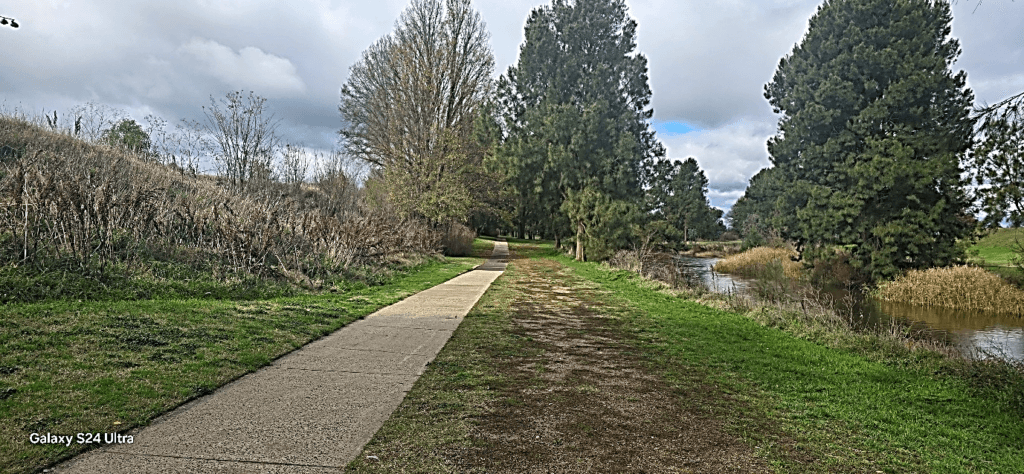
This year, our Shura was convened at Hadiqa-e-Ahmad, a sprawling 341-acre estate nestled in the heart of New South Wales, approximately a two-and-a-half-hour drive from Sydney on 5-7 June 2026. The setting, while serene and expansive, greeted us with a markedly colder climate than the gentle, temperate conditions we are accustomed to in our coastal cities around Australia. Nearby, Bathurst revealed itself as a charming and picturesque township, adding to the quiet dignity of the overall experience. I took the opportunity to explore Bathurst’s gentle charm, completing a 22-kilometre bike ride near the Macquarie river and nearly 25 kilometres more through walking and running during those three days. However, the brisk mornings, dropping to a sharp -2°C – quickly reminded me that a typical Sydney wardrobe is quite unprepared for such invigorating cold.


As I participated in the proceedings in my capacity as a Shura delegate, I found myself reflecting deeply, not only on the deliberations themselves, but also on the significance of the gathering and the unique character of the location. These moments of contemplation were both humbling and enriching, prompting me to pause and appreciate the broader purpose and spirit of the Shura.
I felt compelled to share some of these reflections in the hope that they may resonate with others and capture, in some measure, the essence of this meaningful experience.
The value-based customs
The British political system stands as a remarkable testament to the enduring power of continuity, having evolved organically over more than a millennium of governance. Its strength lies not merely in statutes or formal institutions, but in its profound and unwavering respect for established customs and conventions. Over centuries, practices once shaped by royal decree or enshrined in Acts of Parliament have matured into deeply rooted customs and traditions, forming the living fabric of governance.
What distinguishes this system most notably is the cultural and institutional reverence afforded to these conventions. Once proven effective and accepted, such customs are upheld with remarkable fidelity by governments, decade after decade, even across centuries, alongside their institutions and the citizenry alike. Departure from these established norms is therefore not viewed merely as a procedural matter but is often met with reservation, if not regarded as outright taboo, reflecting a collective commitment to continuity and stability.
This steadfast adherence fosters a unique form of resilience within the British polity. It engenders durability in governance, ensuring that change, when it occurs, is both measured and respectful of historical precedent. In turn, this continuity nurtures a deep sense of national identity and pride among the people of the United Kingdom and its realms. Thus, the British system exemplifies how the careful preservation of tradition, balanced with gradual evolution, can yield a governance framework that is both robust and enduring across centuries.
The profound wisdom of Shura
When one reflects upon the institution of Shura within the Ahmadiyya Muslim Jamaat, one cannot help but recognise the profound wisdom and foresight of the blessed leadership that, more than a century ago, laid its foundations. It is evident that this was not merely the creation of an administrative body, but the establishment of a living, enduring system rooted in spiritual depth and collective responsibility.
Yet, the true strength of Shura does not lie in its existence alone. Rather, it resides in the carefully cultivated ecosystem that surrounds it. The method of election, upheld with sincerity and consistency, ensures that those entrusted with this responsibility are individuals deeply committed to the values of Islam. The continuous and unrelenting emphasis on these electoral principles safeguards the integrity of the institution, ensuring it remains a reflection of righteousness rather than mere representation.
“And those who hearken to their Lord, and observe Prayer, and whose affairs are decided by mutual consultation, and who spend out of what We have provided for them.” (Surah ash-Shura, Ch.42: V.39)
At its heart, Shura is guided by timeless principles, drawn from the Holy Quran, embodied in the noble traditions of the Holy Prophet (sa) and further illuminated by the guidance of the Promised Messiah (as) and his Khulafa, particularly the visionary leadership of Hazrat Musleh-e-Maud (ra). These sources are not invoked symbolically; rather, their teachings are woven into every facet of deliberation and decision-making.
“And it is by the [great] mercy of Allah that thou art kind towards them, and if thou hadst been rough [and] hard-hearted, they would surely have dispersed from around thee. So pardon them and ask forgiveness for them, and consult them in matters of [administration]; and when thou art determined, then put thy trust in Allah. Surely, Allah loves those who put their trust in [Him].” (Surah Aal-e-Imran, Ch.3: V.160)
Thus, when members gather, they do so not as individuals driven by personal inclination or ambition, but as servants of a higher purpose. Their discussions are shaped by humility, their perspectives informed by faith and their conclusions free from worldly politics or self-interest. Each contribution reflects a sincere effort to understand local realities while offering thoughtful guidance on matters that affect the future of the Jamaat. Ultimately, these deliberations are presented with reverence to Hazrat Khalifatul Masih (aa), whose blessed leadership binds the collective effort into unity and direction.
“And hold fast, all together, by the rope of Allah and be not divided.” (Surah Aal-e-Imran, Ch.3: V.104)
In this way, one witnesses a living manifestation of the Quranic injunction to “hold fast, all together, to the rope of Allah”. The Shura becomes that rope in motion, where young and old, experienced and emerging voices alike, come together like intertwined strands, each reinforcing the other. Bound in devotion and strengthened through unity around Khilafat, they form a structure both resilient and harmonious.
Over the course of its proceedings, every address, every banner, every prayer serves as a powerful reminder of the sanctity and significance of this gathering. It instils in each participant a deep awareness of the responsibility they bear and the honour they are entrusted with. This shared consciousness has, over time, evolved into a cherished and enduring tradition within the Jamaat.
Formally established in 1922, this institution has now continued, unbroken, for over a century, thriving across nations wherever the Ahmadiyya Muslim Jamaat is present. Its methods, its principles and its noble customs have collectively endowed it with remarkable strength and longevity. They ensure that Shura not only remains relevant but continues to serve as a vital pillar supporting the institution of Khilafat, reinforcing unity, fostering wisdom and embodying a model of administration rooted in faith, humility, collective purpose and well-tested customs drawn from Islamic values.
Final word
In both cases of the British political system and the Ahmadiyya Muslim Jamaat’s institution of Shura, longevity is not accidental, but the product of an unwavering commitment to values that transcend individuals and generations. The British system demonstrates how customs, once proven and respected, become the invisible threads that hold the fabric of governance together. Similarly, within the Ahmadiyya Muslim Jamaat, the consistent emphasis on righteous conduct, principled consultation and spiritual accountability has transformed Shura into more than a procedural mechanism; it has become a living tradition, deeply embedded in the collective consciousness of the Jamaat. What elevates the institution of Shura even further is its anchoring in divine guidance and its unbreakable connection to Khilafat.
Hazrat Musleh-e-Maud (ra) had outlined the divine status of the Ahmadiyya consultative system (Nizam-e-Mushawarat), contrasting its long-term spiritual destiny with contemporary worldly governments. He emphasised that while the Shura might appear small or lack political leverage in the material world today, its authority is anchored in the sight of God. He said at the meeting of this body in 1928, “Although at present our Shura does not enjoy any importance in the world, a time comes when the members of the greatest Parliaments of the world shall not have the status which the delegates of this Shura shall have, for all Parliaments shall be under it. Membership of Shura is a great honour, and time comes when kings shall be proud of its membership.” (The System of Mushawarat in Jamaat-e-Ahmadiyya, p. 103, 2007)
During the concluding address delivered before the 43rd Shura of Jamaat UK, Hazrat Khalifatul Masih V (aa) had said, “I hope and pray that whatever you have deliberated upon and whatever recommendations you send to me are those that have been formulated with the true objectives of Shura kept in mind at all times and with the deep desire that the bond of unity within our Jamaat reaches new levels and that the message of true Islam reaches all parts of the world. With these words, I pray that may Allah the Almighty bless the institution of Shura as it enters its second century and may our Jama’at forever witness the divine blessings and rewards of Allah the Almighty.”