
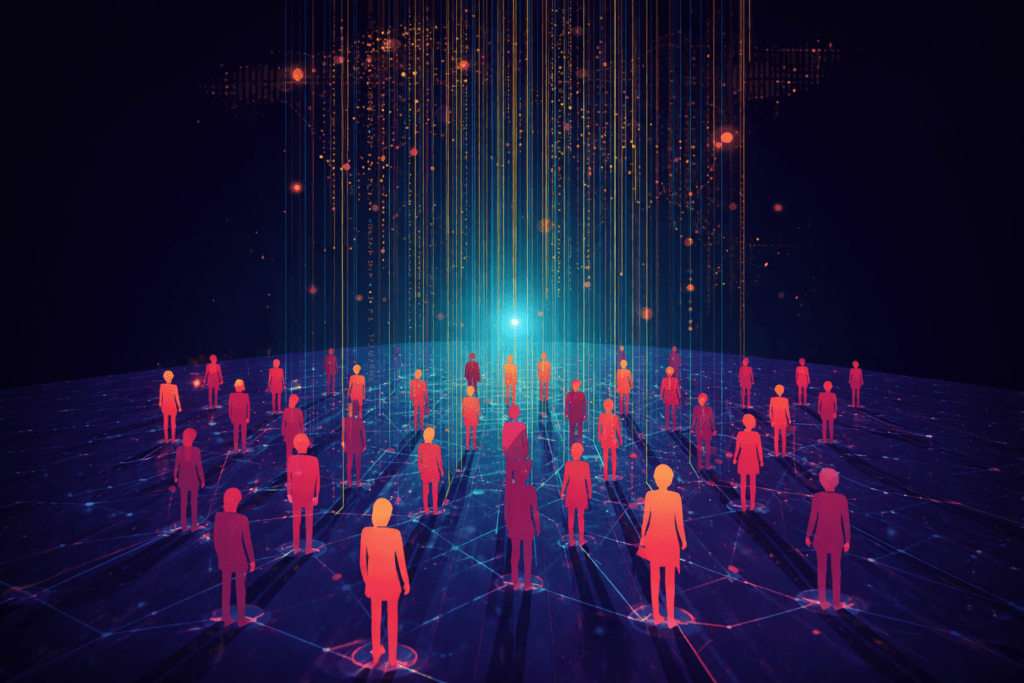
We live in a time that has no precedent in human history on this scale. There are new methods of warfare, new types of weapons and new technologies. AI has become a reality. In the past, when people fought for dominance, military and financial power played a central role. Today, the methods of mass influence have changed somewhat.
Now that everyone can share their opinions on the world stage, it has become difficult to control people through violence, displays of power and oppression. Therefore, people have sought new ways to guide others subtly. For this, a method termed “soft power” plays a central role.
Coined by American political scientist Joseph Nye, soft power is used to get others to adopt one’s own interests and goals. It does not rely on traditional methods such as military or economic coercive means named “hard power.” (Soft Power and Public Diplomacy Revisited, The Hague Journal of Diplomacy, Vol. 14, No. 1-2, 2019)
How is it supposed to function? This form of power relies on attraction, persuasion and the ability to influence the preferences of others without exerting pressure. Nye recognised that although “hard power” carries out interests through bribery and power, it has no ability for attraction and persuasion with which the modern world will go along. (Ibid.)
In his work, Soft Power: The Means to Success in World Politics, Nye describes it as “getting others to want the outcomes that you want.” (Joseph S Nye, Jr., Soft Power: The Means to Success in World Politics, PublicAffairs, 2004, p. 111) This form of exercising power is a subtler and more sustainable method than the application of hard power, as it is based on voluntary consent and not on forced submission. The effect arises through the conviction that the values, culture or foreign policy of a country or an organisation align with one’s own ideas and interests. This can lead to a situation in which other countries or societies pursue the same goals without a direct command or pressure being exerted.
The three components of soft power
Nye mentions three major categories, which form the foundation of soft power: culture, political values and foreign policy. It is also interesting that if these three elements come into play interactively, the overall strength of soft power on the global stage is even more formidable.
Let us start with the first foundation: culture. Culture is one of the most important elements of soft power. The reason lies in the diversity and variety of cultural levels. It encompasses artistic, literary and musical levels. This power can serve in films, music, literature, or even one’s own lifestyle as a role model.
A prominent example is the global influence of American pop culture, especially Hollywood films, which spread the “American way of life” worldwide. The idea here is to promote this lifestyle as a benchmark and a centre for all other cultures. There are also further scientific terms for other similar concepts, such as Eurocentrism.
A particular aim also lies in the ideals of superiority. Taking the concept of an American way of life or Eurocentrism as examples, one wants to use soft power to place one’s own superiority above everything else, which in turn means that non-European cultures are regarded as fundamentally inferior or backward. There are also countries in Asia that have adopted this method, such as the Korean pop culture called “Hallyu.” And let’s not forget Bollywood, which also fulfils the criteria of “soft power,” although it plays a secondary role on the global stage and is mainly focused on audiences from India and Pakistan.
The second foundation is one’s politics or political values. These values are, for example, democracy, human rights, the rule of law, and freedom of opinion. In the present time, it has become apparent that these values are merely hypocritical if one looks at the handling of world conflicts such as the Gaza-Israel war. But what is important in this foundation is that one’s own political values should be regarded as exemplary for all other countries in the world. However, this only works if these values are credibly embodied through soft power.
The third foundation of soft power is the country’s foreign policy. Now, in this element, cooperation and multilateralism play a role. The purpose of this type of soft power should be one’s own authenticity and trust and willingness to give a part of one’s own peace to other countries that have problems, so that one also acts as a “helper” on a global level, thereby making cooperation work. For example, the European Union appears as a civil power on the world stage. This is also part of soft power. Another example is the development and climate policy of the European Union.
Here, I should also briefly mention that there are scholars who have dealt with soft power. For example, the political scientist Janice Bially Mattern has exercised fundamental criticism of the concept in her essay Why ‘Soft Power’ Isn’t So Soft. She says that the attractiveness on which soft power is based does not always arise from free will, but can sometimes also be produced through the power of discourses and ultimately even through coercion.
In such a case, soft power would not be as “soft” as the name suggests, but rather a more inconspicuous form of control that builds on influencing narratives and gaining dominance over interpretations. This criticism calls into question Nye’s basic idea, according to which soft power is based on voluntary attraction and therefore represents a morally superior form of exercising power. (Millennium: Journal of International Studies, Vol. 33, No. 3, 2005, p. 583)
Cultural soft power
Now, I would also like to discuss the instruments of this soft power. Hollywood is a good example of soft power. Pop culture is also instrumentalised precisely for this purpose. American films, television series, and music have spread the “American way of life” – embodied by apparent values such as individualism, freedom, and democracy – worldwide.
The subtle power in these aspects lies in promoting positive attitudes towards the USA and this naturally also strengthens the image as a land of opportunities. Studies show a clear connection. This is between contact with films from the USA and positive opinions on political and cultural values in America. (Winning Hearts and Minds: Soft Power, Cinema, and Public Perceptions of the United States and China in Brazil, Global Studies Quarterly, Vol. 3, 2023, pp. 2-3)
Not only does the USA use soft power, but every country that can afford it does as well. In China, the concept of soft power has been strongly discussed and this term has also found its existence on political levels. (Soft Power and Great-Power Competition: Shifting Sands in the Balance of Power Between the United States and China, Joseph S Nye, Jr., pp. 102-103)
According to Joseph Nye, more than a hundred articles on this topic have been published in China, which shows the presence of the topic in China. (Ibid.) China recognised that it possesses important soft-power resources, particularly its traditional culture, and began to use these systematically to increase its global attractiveness. For example, the establishment of hundreds of Confucius Institutes worldwide and the dissemination of Chinese media content abroad are examples of China’s efforts to strengthen its soft power. (Ibid., p. 31)
South Korea also pursues a strategic goal of being present on the world stage through soft power. For example, one instrument of this soft power is the Hallyu wave, or as otherwise described, the Korean wave. South Korea has succeeded in changing global perception through Korean pop culture, series and films. As a result, the revenue of the Korean cultural sector rose from USD 1.7 billion to USD 9.5 billion. (Creative Futures: Continued Cooperation Between UNESCO and the Republic of Korea, p. 2)
The number of foreign tourists who visited South Korea because of Hallyu increased from nearly 300,000 in 1998, when the Korean Wave began, to 11.8 million in 2014. (The effect of Hallyu on tourism in Korea, Eun-song Bae, Meehyang Chang, Eung-Suk Park and Dae-cheol Kim, Journal of Open Innovation: Technology, Market, and Complexity, Vol. 3, Article 22, 2017, p. 2) The Korean Ministry of Culture estimated the overall economic effect at USD 9.48 billion in 2017. Groups such as BTS or TV shows such as “Squid Game” have sparked strong interest worldwide in Korean culture, language, and way of life. On the Duolingo app alone, there was a 40% increase in Korean learners after Squid Game Season 1. These figures show how much power soft power has in the present era and how pop culture can become a mighty tool of cultural diplomacy.
India deliberately utilises its diverse culture as a soft power resource. The Indian government is also making efforts to be part of the global community. This includes not only Bollywood films and series, but also music with its dance arts. It must also be said, however, that the influence primarily reaches its own population first. (The power of Bollywood: A study on opportunities, challenges, and audiences perceptions of Indian cinema in China, Global Media and China, Vol. 6, 2021, p. 347)
All this demonstrates that soft power is multifaceted and that platforms such as Netflix, Spotify, YouTube, and TikTok enable cultural products to reach a global audience independently of traditional gatekeepers like state broadcasters or major publishing houses.
Intelligence services as soft power
International media organisations such as the BBC (based in the UK), CNN (based in the USA), or Al Jazeera (based in Qatar) play a decisive role as soft power actors. Through their global reach and reporting, they shape the image of events and countries in world public opinion.
A country that receives positive and extensive coverage from these media outlets can benefit from enhanced prestige. Conversely, negative or one-sided reporting can considerably damage a country’s image. Control over, or influence on, such media organisations can therefore become a significant soft power resource – and this is precisely the case.
For example, consider the BBC; the BBC World Service delivers news in more than 40 languages via television, radio and digital services. It reaches 365 million people every week. This power is also used to misrepresent Islam. In the British media alone, a study found that 59% of all analysed articles in print linked Muslims with negative behaviour. Similarly, 43% of all TV contributions (broadcast clips) linked Muslims with negative behaviour. Then, 37% of articles in conservative/religious publications were classified as “very biased.” Over a third of all articles depict Muslims in a distorted or generalised way. (State of Media Reporting on Islam & Muslims: Quarterly Report Oct - Dec 2018, Faisal Hanif, Centre for Media Monitoring, 2019, pp. 5-6)
The influence of artificial intelligence
Artificial intelligence, or AI for short, is changing the rules for how soft power emerges and spreads. AI-assisted tools make it possible to produce films, music, and other cultural content faster and more cheaply. At the same time, algorithms on streaming platforms and in social media ensure that these contents are distributed more effectively because they provide recommendations precisely tailored to users.
If we look solely at the global AI market, especially in the military sector, we can conclude that there is strong, extraordinary growth. This is also driven by the race for supremacy in the AI field. According to the Stanford University AI Index Report 2025, the US government, together with the tech giants, invested a total of USD 470.9 billion in AI technologies. This large sum accounts for approximately 63% of all AI spending worldwide.
China is the second-largest player in the world. China is investing a total of USD 119.3 billion in AI, because the government has an important strategic goal. It wants China to become the leading country in AI worldwide by the year 2030. (Artificial Intelligence Index Report 2025, Loredana Fattorini, Stanford University, 2025, pp. 252-253)
Other important countries that invest heavily in AI are the United Kingdom, Canada, and Germany.
However, the deployment of AI also brings significant risks. AI-generated false information, deepfakes, and bots can be used to influence people’s opinions in other countries. This is also referred to as “computational propaganda,” meaning the algorithmic automation of disinformation dissemination.
In classic propaganda, one knows who is spreading it and what message lies behind it. Computational propaganda is different: it is anonymous, spreads extremely quickly, and simulates genuine opinions. Particularly alarming: deepfakes are increasing rapidly (up 550% since 2019). By 2025, 8 million videos were expected. Already now, 6% of all fraud cases involve deepfakes. (Computational Propaganda, Disinformation, And Democracy: Multidisciplinary Strategies For 2025, Kunle Olawunmi, International Journal of Social Science and Human Research, Vol. 8, Issue 9, September 2025, p. 6874)
The strength of artificial intelligence in soft power lies in the fact that a country’s “own AI strategy” should not only aim to do everything itself and be independent. Far more important is to build AI systems that other countries and people willingly want to use of their own accord. When this AI is used most frequently around the world, a gentle but very strong form of influence emerges from it. This arises because this AI intervenes deeply in people’s daily lives and also helps make important decisions.
This type of “sharp power” poses a new challenge to soft power because it exploits the openness of their societies in order to weaken them from within.
Conclusion
Soft power is very mighty because its strength lies in the subtle influence it exerts. The figures and the impact of each method speak for themselves. Therefore, it is important that one informs and educates oneself when consuming media so that one does not become a victim of soft power.
As Ahmadis, we bear a great responsibility, which consists not only in protecting ourselves from any un-Islamic influence, but also in guiding people onto the path to Allah. One of the victims of soft power is religion. Among other things, attempts are made to present religion to people as something outdated or primitive.
Hazrat Khalifatul Masih V (aa) has repeatedly warned that one should protect oneself in every way from the negative influence of the media. The more one understands the system of distraction, of soft power, and in the future of AI, the more one should reflect on the extent to which one is influenced by it oneself.