
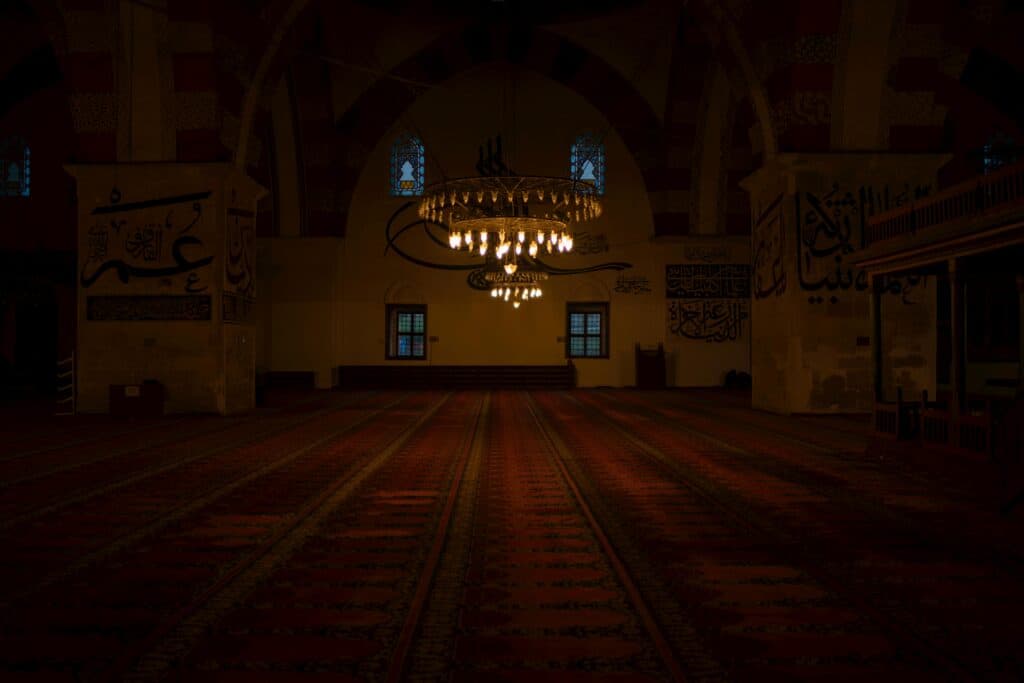
Hazrat Khalifatul Masih Vaa, in his Friday Sermon of 20 February 2026, urged Ahmadis to strive to offer Tahajjud prayers during the month of Ramadan (and outside of Ramadan). He stated that though Tarawih prayers are offered after Isha, even then everyone should aim to pray Tahajjud, be it only two or four rak‘ahs.
Huzooraa presented examples of the immense dedication to worship the Promised Messiahas had and how he would be regular in the Tahajjud prayer and would pray with great fervour.
Allah the Almighty states in the Holy Quran:
قُمِ الَّیۡلَ اِلَّا قَلِیۡلًا ۙ۔ نِّصۡفَہٗۤ اَوِ انۡقُصۡ مِنۡہُ قَلِیۡلًا ۙ۔
“Stand up [in Prayer] at night except a small portion thereof – half of it, or make it a little less than that.” (Surah al-Muzzammil, Ch.73: V.3-4)
And further:
وَاذۡکُرِ اسۡمَ رَبِّکَ وَتَبَتَّلۡ اِلَیۡہِ تَبۡتِیۡلًا
“So remember the name of thy Lord, and devote [thyself] to Him with full devotion.” (Surah al-Muzzammil, Ch.73: V.9)
These verses remind us that the night is not only for rest, but also for worship. It is the blissful time when a believer steps away from distractions and turns to Allah with focus.
Hazrat Khalifatul Masih Ira, explaining how praying at night is a means of gaining closeness to Allah, states:
“If at night you remember God, your soul will draw closer to Him. When a believer turns even slightly toward God, every hardship becomes easy. Take a moment to focus your attention on Him, and all difficulties will become light.
وَاذۡکُرِ اسۡمَ رَبِّکَ وَتَبَتَّلۡ اِلَیۡہِ تَبۡتِیۡلًا
“[So remember the name of thy Lord, and devote (thyself) to Him with full devotion.]
“Remember Allah’s name, and in the quiet of the night, detach yourself from the world.” (Khutbat-e-Nur, 18 October 1912, p. 527)
During Ramadan, waking up for Tahajjud becomes even more important. This is the month in which Allah’s special grace is sought with greater intensity.
Allah the Almighty states in the Holy Quran:
وَمِنَ الَّیۡلِ فَتَہَجَّدۡ بِہٖ نَافِلَۃً لَّکَ ٭ۖ عَسٰۤی اَنۡ یَّبۡعَثَکَ رَبُّکَ مَقَامًا مَّحۡمُوۡدًا
“And wake up for it [the Quran] in [the latter part of] the night as a supererogatory service for thee. It may be that thy Lord will raise thee to an exalted station.” (Surah Bani Isra’il, Ch.17: V.80)
Hazrat Khalifatul Masih Vaa has repeatedly drawn attention to this Quranic instruction and reminded the Jamaat that Tahajjud is a time when Allah’s mercy is especially close. He said:
“Allah the Almighty draws near to His servant and listens to his prayers. And in Ramadan, special attention has been drawn toward Tahajjud and voluntary prayers.” (Friday Sermon, 26 September 2008)
He further reminded us that Ramadan is meant to train us for the rest of the year and that this training must continue beyond the month itself. He stated: “By acting upon the ways that Ramadan has taught us to become true servants of the Most Gracious, it is our duty to keep our nights adorned with acts of worship.” (Friday Sermon, 25 September 2009)
Hazrat Khalifatul Masih Vaa has also highlighted the lofty standard of the Holy Prophet’ssa night worship. He said:
“Then we see that even in the worship of the night, such lofty standards were established that no example of them can be found. Regarding this, there is the testimony of Hazrat Aishara. When she was asked about the prayer of the Messenger of Allah – that is, the Tahajjud prayer – she said: ‘The Holy Prophet, peace and blessings be upon him, would not offer more than 11 rak‘ahs in Ramadan or outside of it. But they were such long, beautiful and excellent prayers that do not even ask about their length, beauty and excellence.’” (Friday Sermon, 18 February 2005)
A time of acceptance of prayer
The Holy Prophetsa, describing the bounties of Tahajjud, said:
يَنْزِلُ رَبُّنَا تَبَارَكَ وَتَعَالَى كُلَّ لَيْلَةٍ إِلَى السَّمَاءِ الدُّنْيَا، حِينَ يَبْقَى ثُلُثُ اللَّيْلِ الْآخِرُ، فَيَقُولُ: مَنْ يَدْعُونِي فَأَسْتَجِيبَ لَهُ؟ مَنْ يَسْأَلُنِي فَأُعْطِيَهُ؟ مَنْ يَسْتَغْفِرُنِي فَأَغْفِرَ لَهُ؟
“Our Lord descends every night to the lowest heaven when the last third of the night remains, and He says: ‘Who is calling upon Me so that I may answer him? Who is asking Me so that I may give him? Who is seeking My forgiveness so that I may forgive him?’” (Sahih al-Bukhari, Hadith 1145)
This hadith draws our attention to a precious daily moment when Allah’s mercy is near and the doors of prayer and forgiveness are wide open.
The essence of fasting
Hazrat Musleh-e-Maudra explains: “The life and spirit of fasting lie in the time of suhoor [pre-dawn] and in performing Tahajjud. If a person does not wake up for suhoor and does not pray Tahajjud, then what is the benefit of merely staying hungry and thirsty?” (Khutbat-e-Mahmud, Vol. 8, p. 365)
Hazrat Khalifatul Masih IVrh also stressed the importance of Tahajjud during Ramadan. He stated: “In reality, Ramadan is not merely about eating suhoor; rather, the true Ramadan is to partake of spiritual nourishment before suhoor – that is, to offer voluntary prayers.” (Friday Sermon, 7 April 1989)
A means of attaining closeness to Allah
Hazrat Musleh-e-Maudra narrated an incident in which the Holy Prophet’ssa anguish for his companions to read Tahajjud becomes clear. He narrated:
“Since offering Tahajjud is a great means of attaining closeness to God, the Holy Prophetsa said about one of his companions that he was a very good man – if only he would rise at night (for prayer). Therefore, continue this practice and do not let what you began in Ramadan come to an end.” (Khutbat-e-Mahmud, Vol. 1, p. 95)
Explaining how Tahajjud serves as a means of correcting our morals, Hazrat Musleh-e-Maudra states:
“Tahajjud is a blessing from the blessings of God and it is mentioned in the Holy Quran – it says it is: اَشَدُّ وَطۡاً وَّاَقۡوَمُ قِیۡلًا, meaning Tahajjud is a great tool for the reformation of the nafs [soul] and through it all actions are set right.” (Ibid.)
Tahajjud is, therefore, a spiritual training exercise too. It shapes the soul and helps a person become steadier in conduct, speech and self-control.
All Ahmadis should offer Tahajjud
Hazrat Khalifatul Masih IVrh, in one of his sermons, strongly urged Ahmadis to be regular in Tahajjud during Ramadan. His heartfelt words were:
“So tomorrow, as we enter Ramadan, all those Ahmadi mothers to whom my voice has reached, as well as parents and children who are hearing me directly, should keep this especially in mind: there should not be a single Ahmadi in the world who does not develop the habit of offering Tahajjud during the blessed month of Ramadan.” (Friday Sermon, 7 April 1989)
If our aim this Ramadan is to attain closeness to Allah the Almighty and to attain His love, then we must shorten our nights of sleep and awaken our nights of worship. Only then can we spend our Ramadan with firm belief that we are getting closer to our Lord.
This was the practice of the Holy Prophetsa which we should all follow to reap the benefits of Ramadan and continue this worship after as well.