
Ata-ul-Haye Nasir, Ahmadiyya Archive & Research Centre
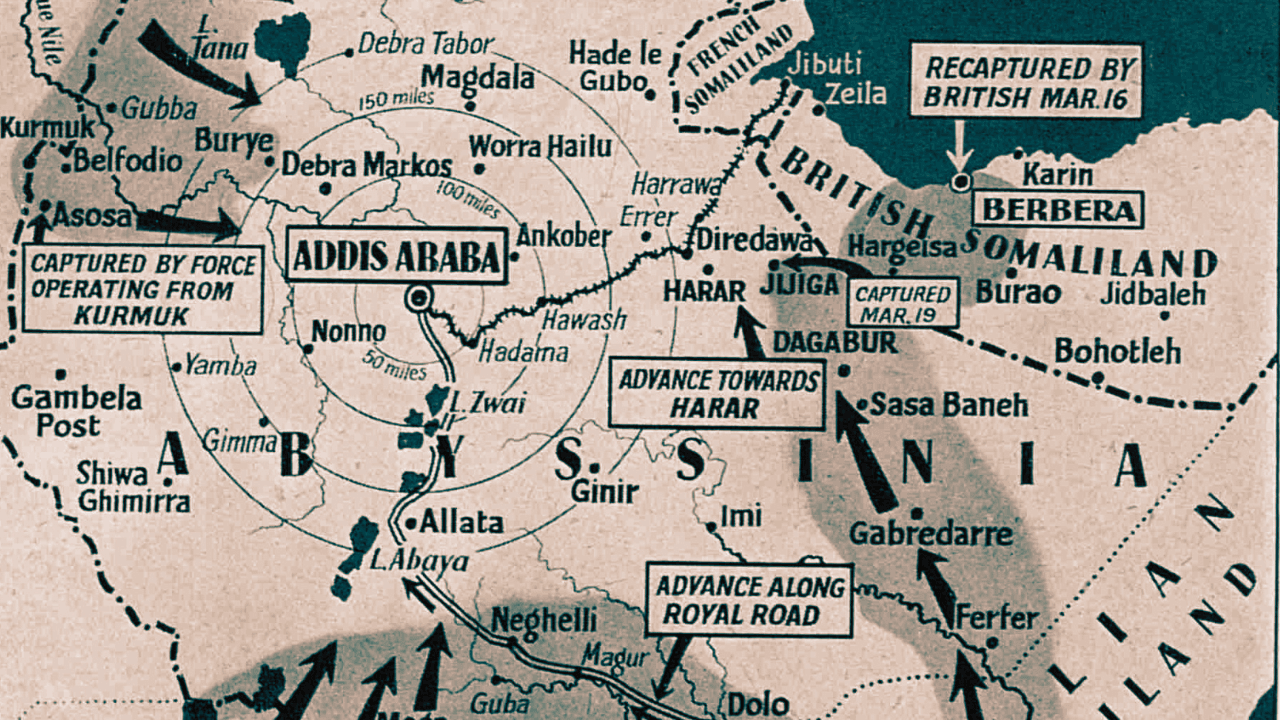
Abyssinia, having great significance in the history of Islam due to the just treatment by King Negus, was one of the earliest places where an Ahmadi representative was sent under the Tahrik-e-Jadid scheme, which was launched in 1934 by Hazrat Musleh-e-Maudra.
It must be noted that Abyssinia – the present day Ethiopia – was not the first African country where an Ahmadi was sent for tabligh. In the early years of his Khilafat, Hazrat Musleh-e-Maudra had already sent missionaries to various African countries.1
Ahmadiyya missions were established in Mauritius, Nigeria, Gold Coast (now Ghana), Sierra Leone and several other African countries.
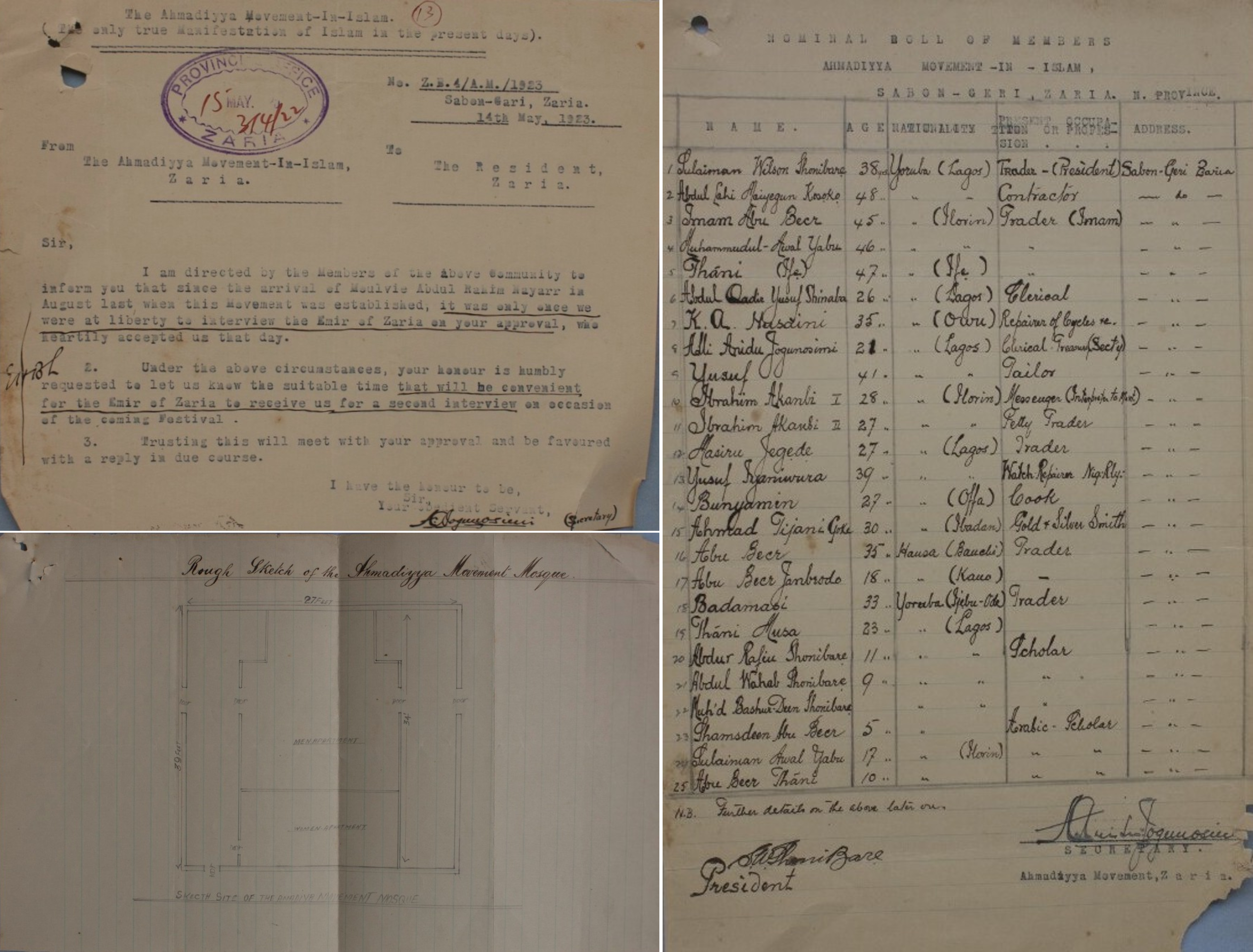
In relation to the early endeavours in Nigeria, the Ahmadiyya Archive & Research Centre has uncovered documents, mentioning the pioneer missionary’s meetings with the Emir of Zaria, efforts for building a mosque there in 1925-26, a list of some early Ahmadis and opposition to Ahmadiyyat.2
With the launch of the grand scheme of Tahrik-e-Jadid, the propagation of Islam Ahmadiyyat in Africa picked up pace, so much so that a prominent Christian missionary, Rev Samuel M Zwemer, wrote in an article (1936) that “on the Gold Coast the Ahmadiya movement supported by Indian Moslems is alarmingly active.”3
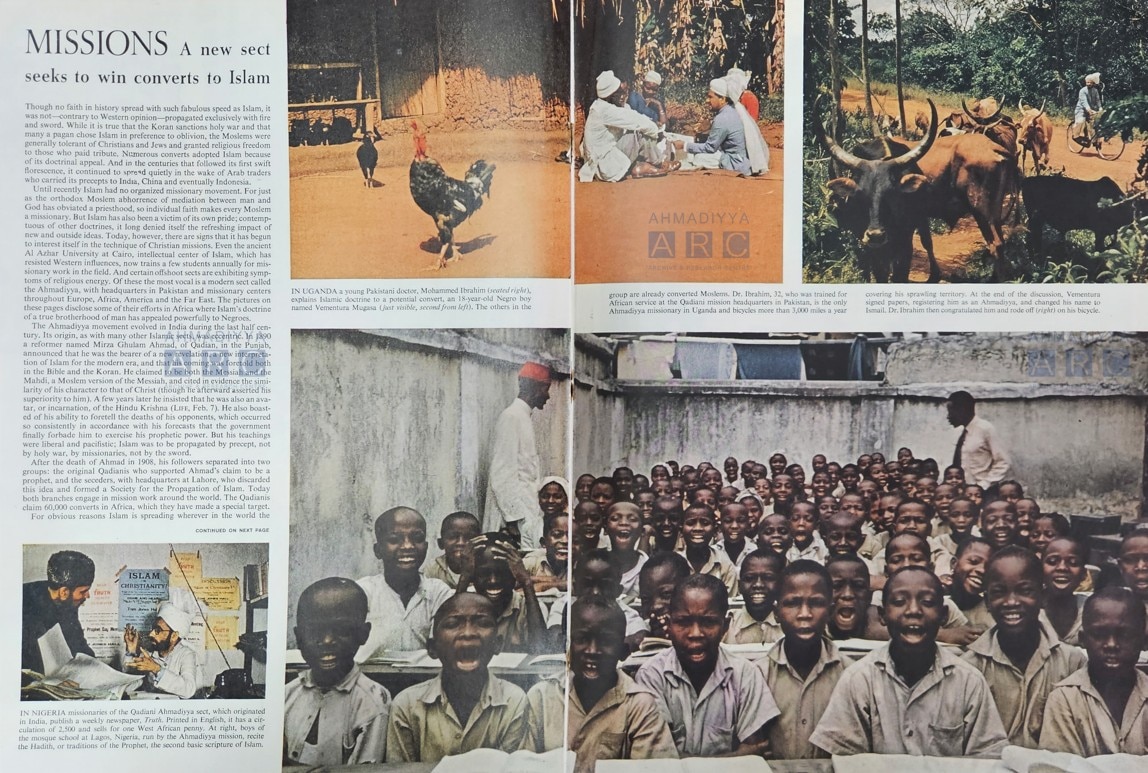
A glimpse of the Jamaat’s efforts to spread Islam in Africa can be visualised from an article that was published in 1955 by the Life, a prominent American magazine, under the heading “Missions: A new sect seeks to win converts to Islam.”4
Furthermore, EJ Huxley’s article in The Sunday Times of 1958, titled “Fanning the Flame of Islam”, highlighted that in Africa, “Ahmadiyya missionaries are gaining converts steadily” and that Ahmadiyyat “appears to be spreading in most parts of Eastern Africa.”5
The Ministry, a periodical for the Ministerial Seventh-Day Adventists, also mentioned the increasing impact of Ahmadiyyat in Africa in an article published in 1967. It highlighted that the Ahmadi missionaries were proving to be a major challenge for the Christian missionaries there.6
Tahrik-e-Jadid and Abyssinia
Let’s now focus on this article’s subject, i.e., the early years of the propagation of Ahmadiyyat in Abyssinia.
It was in August 1935, when Hazrat Musleh-e-Maudra instructed Dr Sardar Nazir Ahmed Sahib (1906-1987), son of Hazrat Sardar Abdur Rahmanra, to travel to Abyssinia for the propagation of Islam Ahmadiyyat.7
During his stay in Abyssinia, one of his letters to Hazrat Musleh-e-Maudra was intercepted by the authorities.8 The Ahmadiyya Archive & Research Centre has obtained the document recording the transcript of this letter.
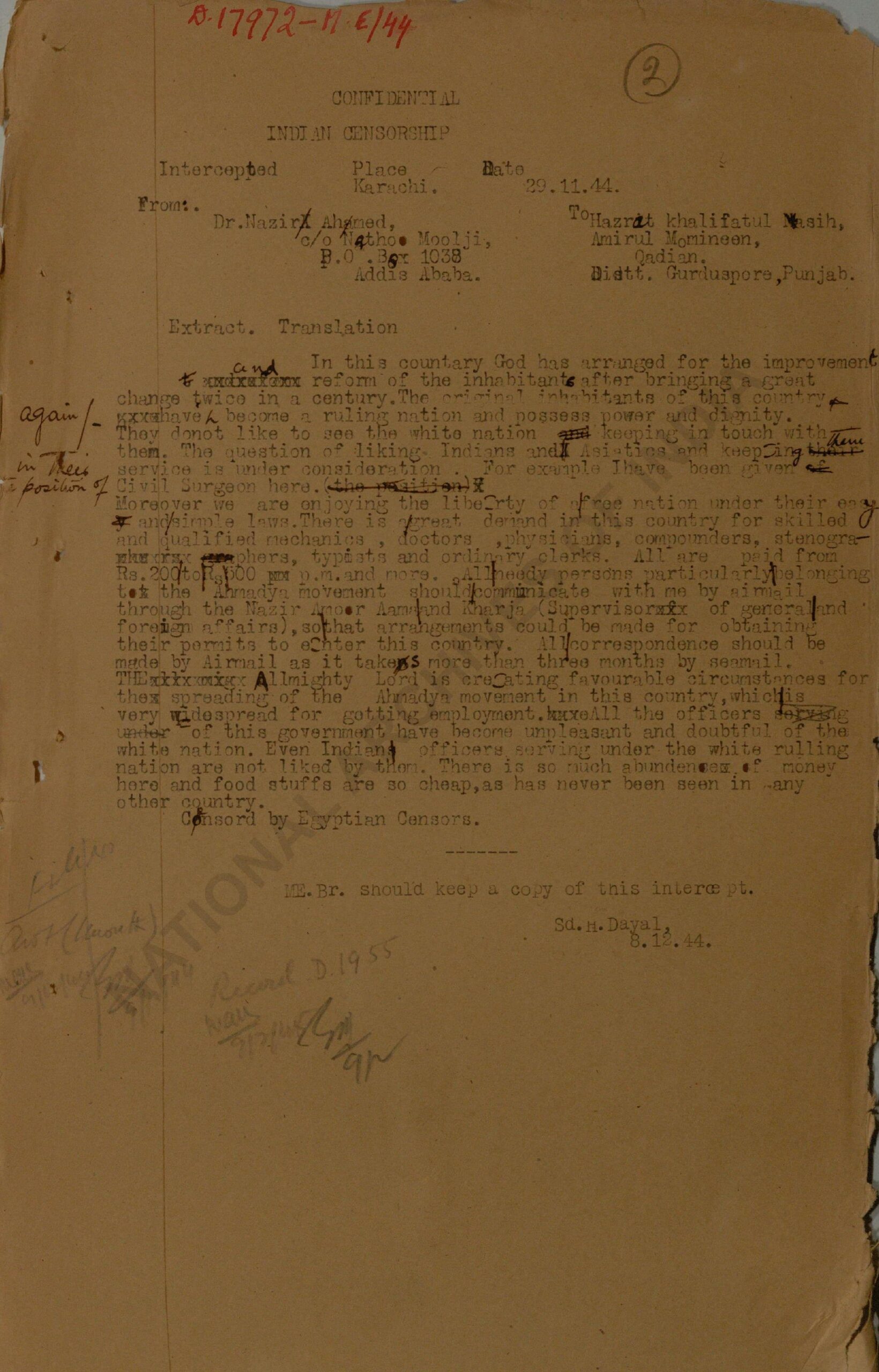
This censorship has been mentioned in Shobana Shankar’s book (pub. 2021), An Uneasy Embrace: Africa, India and the Spectre of Race.9 Shobana Shankar is Associate Professor of History at the Stony Brook University, New York.
In her book, she wrote that through this letter, Dr Nazir Ahmed Sahib “appeared to invite Ahmadi missionaries to evangelise in Ethiopia.”10
The details of this letter will be narrated later in this article.
It is noteworthy that Shobana Shankar had the honour of meeting Hazrat Khalifatul Masih Vaa during the 2022 visit to the USA.11
In 1934, Tahrik-e-Jadid was launched, and in 1935, a war had erupted between Italy and Abyssinia (Italo-Ethiopian War of 1935-1936). The people of Abyssinia were in dire need of medical help. Thus, Hazrat Musleh-e-Maudra sent Dr Sardar Nazir Ahmed Sahib to Abyssinia for two objectives:
- Propagation of the message of Islam Ahmadiyyat
- Providing medical assistance to the people in need
Hazrat Musleh-e-Maudra instructed Dr Nazir Sahib to present his services to the Red Cross organisation serving in Abyssinia.12
Huzoorra emphasised that it is our duty to help the Abyssinians who are injured or have faced any loss during the war, considering the fact that the Holy Prophet’s Companionsra had migrated to Abyssinia and were given very good treatment by the natives there. It was for this reason, Huzoorra said, the Muslim world has always been grateful to them.13
On one occasion, in 1949, Hazrat Musleh-e-Maudra stated that due to the Abyssinian King’s just treatment at the time of the Holy Prophetsa, the Muslims continued to treat that country with kindness and maintained good relations. During the time when Muslims conquered a significant part of Africa and Europe, they did not harbour any ill intentions towards the small government of Abyssinia. However, Huzoorra asked, how did the major Christian nations treat Abyssinia – another Christian country? Italy, itself a Christian country, invaded Abyssinia and occupied it after carrying out huge oppression.14
Despite challenging circumstances during the war, Dr Sardar Nazir Ahmed Sahib remained determined and zealously served both of the objectives – tabligh and serving humanity – for which he was sent there.15
The New York Times of 28 January 1936 reported that “Ethiopian Ambulance Unit 3, stationed near Makale and staffed by two Irishmen, Captain Brophil and Dr. Hickey; a British Indian, Dr. Ahmed, and an Austrian, Dr. Schuppler, was bombed twice on Jan. 18 by Italians, according to telegrams from these three doctors, received at northern headquarters at Dessye yesterday.”
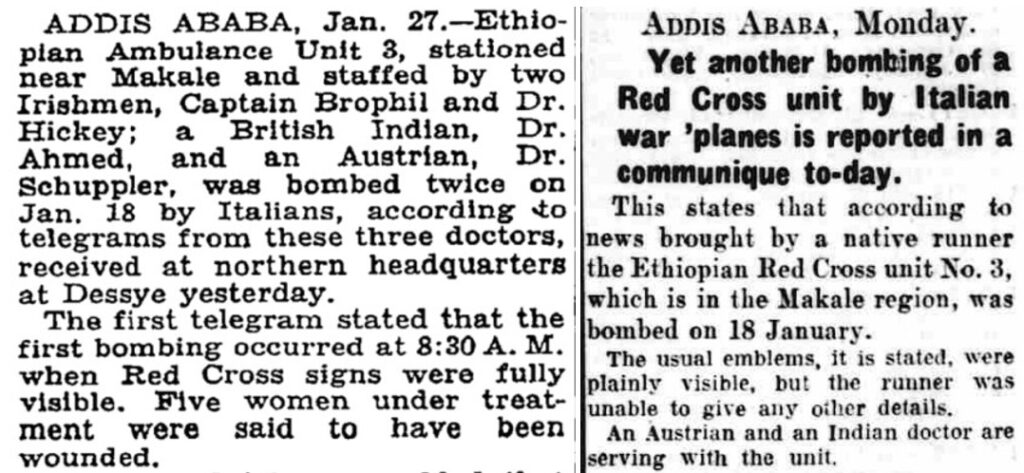
Furthermore, the Evening Telegraph and Post of 18 February 1936 reported:
“Anxiety is felt at Addis Ababa for the safety of the Third Ethiopian Red Cross Ambulance Unit to which the Irishman, Dr Hickey, the Hindu [sic., Indian] Dr Ahmed, and the Austrian, Dr Schupler, are attached.”
A similar news was published by The Daily Mail, Manchester Evening News and Edinburgh Evening News on the same day.
According to Dr Nazir Ahmed Sahib’s own account, recorded in Tarikh-e-Ahmadiyyat, The Hindustan Times published an article along with his photograph.16
In 1936, Dr Nazir Ahmed Sahib sent a letter to Hazrat Musleh-e-Maudra in which he narrated details of the ongoing situation in Abyssinia and the life-threatening circumstances under which he was serving humanity. The transcript of this letter was published in the 13 May 1936 issue of Al Fazl.
After preaching the message of Islam Ahmadiyyat in Abyssinia for two years, Dr Nazir Sahib was instructed to go to other countries, such as Palestine, Egypt and Syria, where he propagated the message of Ahmadiyyat. Afterwards, he went to Kenya in 1937 and remained there until 1939.17
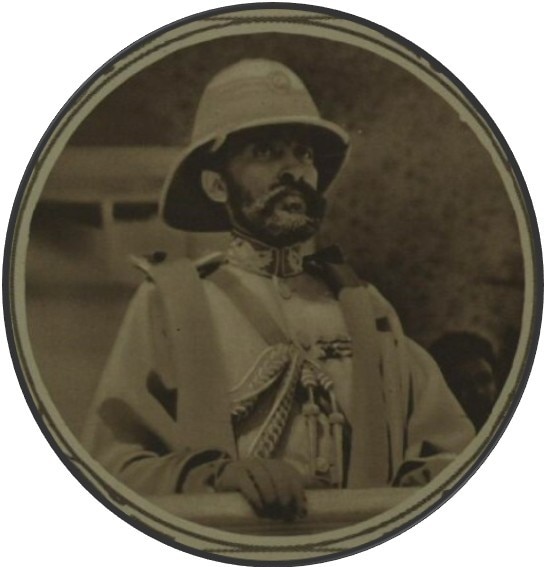
After spending several years in India, he returned to Abyssinia in August 1944 and served there for nine years. During that period, he had multiple meetings with the Emperor of Abyssinia, Haile Selassie, and conveyed to him the message of Islam Ahmadiyyat.18
Dr Nazir Sahib’s first meeting with Haile Selassie took place on 9 January 1945, during which he conveyed the teachings of Islam Ahmadiyyat. He also told the emperor that during the 1935-36 war, Hazrat Musleh-e-Maudra had sent him to serve the people of Abyssinia.19
As indicated above, Dr Nazir Ahmed Sahib wrote a letter to Hazrat Musleh-e-Maudra in 1944, that was intercepted by the authorities. The address from where it was sent was: “c/o Natho Moolji , P.O.Box 1038, Addis Ababa”.20
Mentioning the details of this letter, Shobana Shankar has stated in one of her works:
“In a communiqué from 1944 intercepted by the Egyptian censors, an Indian identified as Dr Nazir Ahmed appeared to invite Ahmadi missionaries to evangelise in Ethiopia.”21
In this letter, Dr Nazir Ahmed Sahib stated:
“In this country God has arranged for the improvement and reform of the inhabitants after bringing a great change twice in a century. The original inhabitants of this country have become a ruling nation and possess power and dignity.”
He stated that considering the recent war with Italy, the Abyssinians “do not like to see the white nation and keeping in touch with them. The question of liking Indians and Asiatics and keeping their service is under consideration.”
After mentioning that “I have been given the position of Civil Surgeon here”, he wrote that “we are enjoying the liberty of a free nation under their easy and simple laws.”
He further wrote that “all correspondence should be made by Airmail as it takes more than three months by seamail” and that “the Almighty Lord is creating favourable circumstances for the spreading of the Ahmadya movement in this country.”22
Dr Nazir Sahib would send reports about his preaching activities in Abyssinia, which would be published in Al Fazl. For instance, a lengthy report was published in the 12 January 1946 issue of Al Fazl.
Young students from Abyssinia would come to the Markaz for religious education and to further acquaint themselves with the teachings of Islam Ahmadiyyat. Mentioning the blessings of Tahrik-e-Jadid during his Friday Sermon on 28 November 1952, Hazrat Musleh-e-Maudra stated that many foreign students were gaining religious education at the Markaz under this scheme, including from Abyssinia as well.23
According to an announcement in Al Fazl of 1949, the then postal address of Dr Nazir Ahmed Sahib was “P.O. Box 230, Addis Ababa, Ethiopia”.24
In 1953, with the permission of Hazrat Musleh-e-Maudra, he came to the Markaz in Pakistan to spend a month’s time.25 A month later, he returned to Abyssinia; however, in July 1953, the local priests complained about his preaching activities. Upon this, Huzoorra instructed him to go to Kenya, where he stayed until 1960.26
In short, during his time in Abyssinia, Dr Sardar Nazir Ahmed Sahib had to endure challenging circumstances; however, he remained loyal to his cause and zealously served both of the objectives – tabligh and serving humanity – for which he was sent there by Hazrat Musleh-e-Maudra under the Tahrik-e-Jadid scheme.
Endnotes
1. For more details: www.ahmadipedia.org
2. “Address welcome Ahmadia community”, British Library, EAP535/3/8/2/14
3. The Missionary Review of the World, Vol. 59, November 1936, p. 539
4. Life, 9 May 1955
5. The Sunday Times, 25 May 1958, p. 20
6. The Ministry, March and April 1967
7. Al Fazl, 9 October 1935, p. 6
8. “Censorship intercept regarding Ahmadya movement in Abyssinia”, National Archives of India
9. An Uneasy Embrace: Africa, India and the Spectre of Race, International African Institute, UK, 2021, pp. 57-58
10. Ibid.
11. “This Week With Huzoor – USA 2022 Tour Special [Part 3]”, www.youtube.com, 14 October 2022
12. Tarikh-e-Ahmadiyyat, Vol. 7, pp. 288-289
13. Ibid.
14. “Nobel laureate Dr Arthur H Compton meets Hazrat Musleh-e-Maud”, alhakam.org, 15 December 2023
15. Tarikh-e-Ahmadiyyat, Vol. 7, pp. 288-289
16. Ibid., p. 289
17. Ibid., p. 290
18. Ibid., pp. 291-292
19. Al Fazl, 20 February 1945, p. 11
20. “Censorship intercept regarding Ahmadya movement in Abyssinia”, National Archives of India
21. An Uneasy Embrace: Africa, India and the Spectre of Race, International African Institute, UK, 2021, pp. 57-58
22. “Censorship intercept regarding Ahmadya movement in Abyssinia”, National Archives of India
23. Khutbat-e-Mahmud, Vol. 33, p. 326
24. Al Fazl, 6 September 1949, p. 7
25. Tarikh-e-Ahmadiyyat, Vol. 7, p. 292
26. Ibid., p. 293