
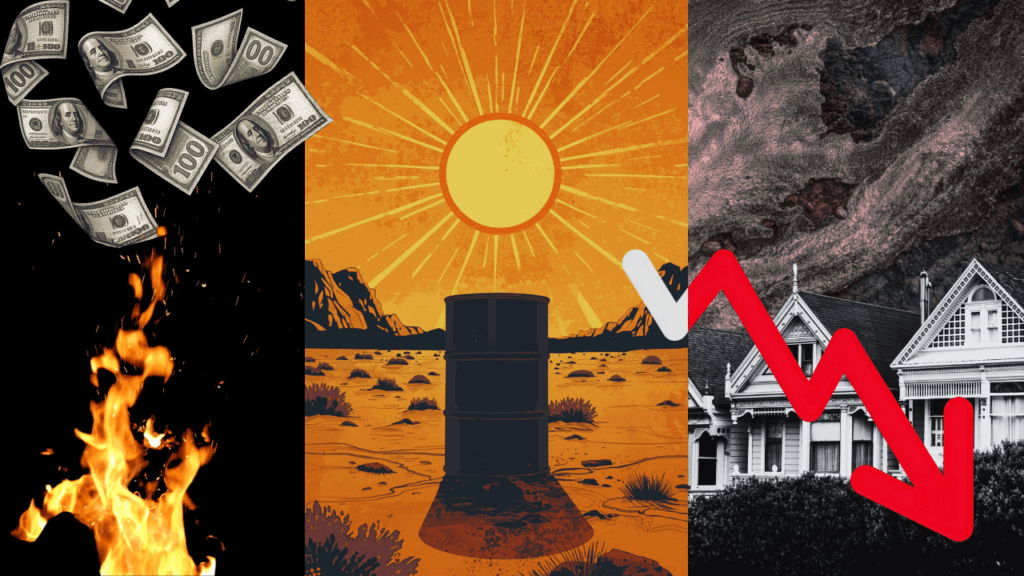
The US-Israel war against Iran is already being felt far beyond the region. In both the West and the East, the effects are showing up in everyday life – most immediately in our wallets, as rising oil and gas prices push up fuel and energy bills.
For more than two decades, Hazrat Mirza Masroor Ahmad (aa), the current Caliph of the Ahmadiyya Muslim Community, warned of the growing risk of a global war – often dismissed as pessimistic. Today, however, talk of “World War Three” is no longer fringe; it is becoming part of mainstream political discourse.
Alongside this, he consistently emphasised a crucial point: that even smaller, regional conflicts would not remain contained but would have far wider consequences in an interconnected “global village”.
That warning went largely unheeded and is now playing out in real time, as the effects of the US-Israel war against Iran are being felt far beyond the region.
Thirteen years ago, in the Houses of Parliament, London, His Holiness (aa) warned:
“The world has become a global village and so a lack of mutual respect and a failure to join together to promote peace will not only harm the local area, city or country but in fact will ultimately lead to the destruction of the entire world.” (World Crisis and The Pathway To Peace, 2017, p. 149)
He said: “[…] it is essential that they always keep in mind the critical point that it is from local wars that devastation and destruction spreads far and wide.” (Ibid., p. 162)
His Holiness (aa) had stressed that in an interconnected world, distance offers no protection. Conflict in one region inevitably spreads until its effects are felt far beyond its origin.
Speaking on modern warfare in 2015 in Tokyo, Japan, he said:
“Conflicts in one part of the world do not remain limited or local, rather their effects and consequences spread much further afield. […] In the olden days, it was possible for a war to remain confined to those who were directly involved, but now the consequences of each conflict and each war are truly global. In fact, for many years I have been warning that the world should realise that the effects of a war in one region can and will affect the peace and harmony of other parts of the world.” (Ibid., p. 191)
Events have followed that exact pattern.
Within days of the US-Israel attacks on Iran, Iran moved to restrict the Strait of Hormuz – a global chokepoint through which roughly a fifth of the world’s oil and gas passes; disrupting around 20% of global energy flows.
As a result, petrol and diesel prices rose sharply. According to the IMF, oil prices have jumped by more than 50%, climbing above $100 per barrel amid the disruption.
World leaders are now warning of wider consequences. Spain’s Prime Minister, Pedro Sánchez, stated:
“We stand at a global tipping point. Further escalation could trigger a long-term energy crisis for all humanity. The world should not pay the consequences of this war.”
The disruption is not limited to shipping routes. Israeli strikes have hit key Iranian energy sites, including the South Pars gas field, while US attacks targeted infrastructure around Kharg Island, Iran’s main oil export hub.
Iran retaliated by launching strikes on Gulf energy infrastructure and warned that regional oil and gas facilities could become targets.
The escalation has already spread further. Damage to LNG infrastructure in Qatar – one of the world’s largest gas exporters – forced production halts, placing a significant share of global supply at risk.
These shifts are already being felt in everyday life. Gas prices in Europe have surged, with the UK market hitting three-year highs.
For households, this means higher heating and electricity bills. For businesses, it means higher production and transport costs – costs that are ultimately passed on to consumers.
The global food supply may also be severely affected. Modern farming runs on fertiliser and fertiliser is made using natural gas. When gas prices rise or supplies are disrupted, fertiliser becomes more expensive and harder to produce.
At the same time, supply is being physically choked as around one-third of the world’s fertiliser trade passes through the Strait of Hormuz, so any disruption there means less fertiliser reaching global markets.
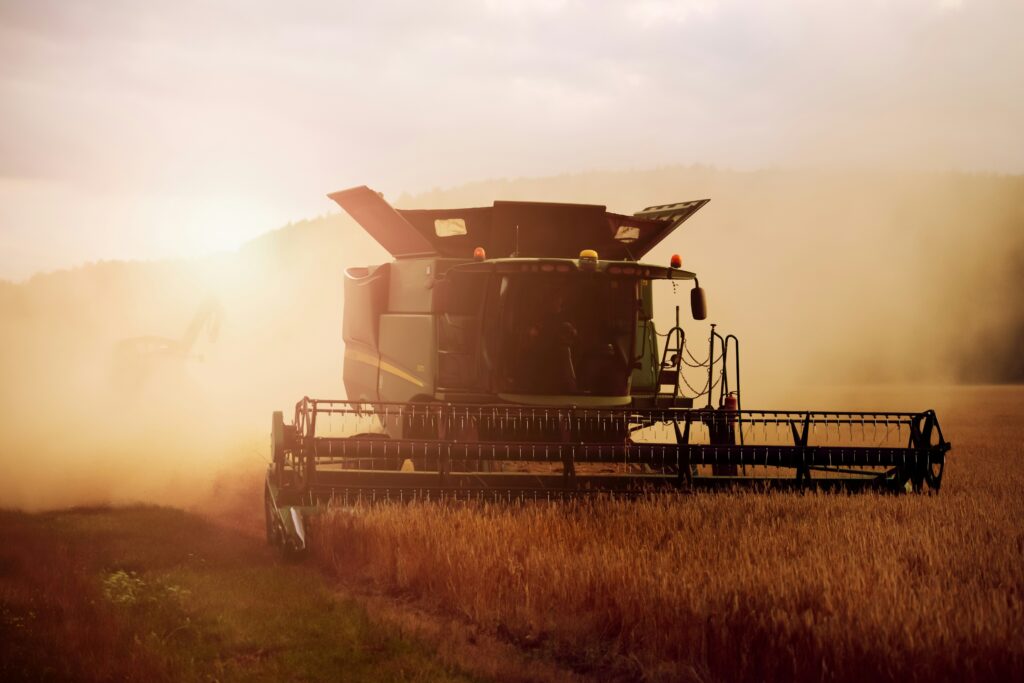
Supply of fertiliser is tightening further as major producers like China restrict exports:
The result is simple. Farmers get less fertiliser and pay more for it. They use less. Crops produce less. Food becomes more expensive.
This is precisely the pattern Hazrat Mirza Masroor Ahmad (aa) has warned about for years. But his warning did not stop at pointing out what could happen, but he also pointed to a cause.
He repeatedly emphasised that global instability is rooted in a failure of justice. In his words:
“[…] the requirements of justice are only fulfilled when all parties and all people are treated equally.” (World Crisis and The Pathway to Peace, 2017, p. 163)
And he warned clearly:
“If the requirements of justice are not fulfilled, the conflagration and flames of these local wars can escalate and embroil the whole world.” (Ibid., p. 12)
It’s clear that the US-Israel attacks on Iran were outside the bounds of justice and the consequence is a lack of peace for the whole world.
What leaders need to understand is that in a globalised world, wars do not stay where they start, they spread through our global village whether through supply chains or even sophisticated long-range weapons.
And as was warned: no one is insulated from the consequences.