
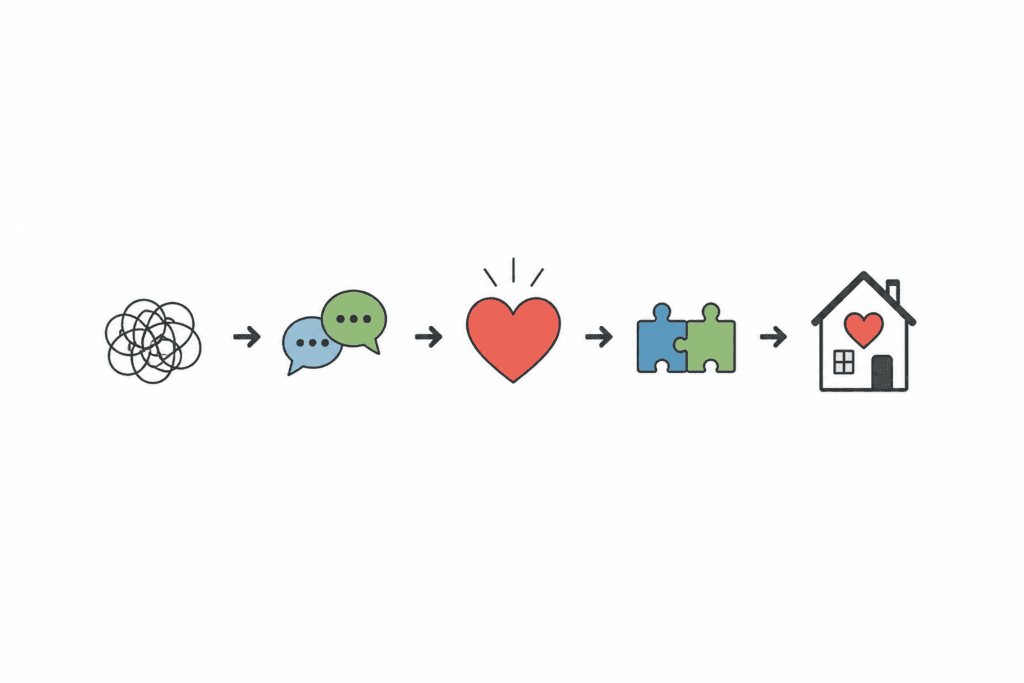
“Communication is the lifeline of any relationship. Without it, the relationship will starve itself to death.” – Elizabeth Bourgeret
Communication is a fundamental survival tool that is gifted to humans. It is a unique thread that weaves the human race together. The magic of language helps us express feelings across personal and professional domains, allowing us to connect meaningfully with people, collaborate on critical problem-solving, share vital information and build relationships that are essential for our survival and societal progress.
What is effective communication?
Ask yourself: how many times have our good talks turned into quarrels? How many times have you felt that your message has been misunderstood? Have you ever regretted making a statement which you later realised that you didn’t even mean? Has anyone informed you that you never listen to what they have to say to you?
These questions help you ponder over the level of effective communication implemented in your day-to-day human encounters.
Effective communication is more than just information exchange; it is a foundational skill that enables us to successfully understand the intentions and emotions behind our conversations. Its primary goals are to eliminate ambiguity and misunderstandings, build trust to foster clear, empathetic interactions and to facilitate constructive conflict resolution.
The most commonly perceived problems in marriage can be divided into core relationship struggles and lifestyle choices:
- Poor and ineffective communication: Frequent misunderstandings, turning disagreements into personal attacks, lack of trust, respect and empathy and blaming each other instead of finding an effective solution together; the silent treatment and defensiveness can seriously block accountability and leave the original problem unaddressed.
- Loss of intimacy and emotional expression: Lack of physical closeness, emotional neglect/distance and under-expression of appreciation and care can make a marriage feel mechanical and boring.
- Misalignment of values, core beliefs and expectations regarding marriage, health, kids and faith.
- Materialism and financial stress: Disagreements related to savings, over expenditure, poor money choices and wrong focus on valuables and objects can make a partner feel lonely, unloved and unwanted. Furthermore, chasing wealth robs away the time that is vital for bonding and sharing.
- Parenting differences: Clashes over child-rearing practices, discipline and daily routines.
- Work stress and busy schedules (that do not allow quality time with each other): Drifting into separate lives due to work-related load and deadlines or losing shared interests can severely hamper marriage goals.
- Division of labour at home: Uneven sharing of household responsibilities adds to the feeling that all household chores unfairly fall on one partner.
- In-laws’ unfair treatment and pressures: Poor boundaries with extended family members, controlling and demanding rules and expectations, unresolved arguments and constant interference and criticism create severe emotional stress, anxiety and sadness, causing marital fights and rifts between couples.
Research conducted by the Australian Institute of Family Studies finds communication problems as the primary reason for divorce. In marriage, communication acts as a connective tissue; when it begins to weaken, the entire structure of marriage begins to fray.
Dysfunctional communication can lead to prolonged disagreements, unresolved conflicts and anxieties, stonewalling (when a partner withdraws from conversation altogether – by going silent or physically leaving or by emotionally shutting down), passive-aggressiveness, emotional detachment/disconnection and withdrawal. When partners fail to express their needs, feelings, and frustrations effectively and regularly, then the resentment and dissatisfaction build up and over a period of time it may seem impossible to resolve or reverse.
Some of the ways in which we can try and improve our communication in our day-to-day marriage are as follows
- Become an active listener: Listen not to contradict but to connect. Effective communication begins with improving marital listening skills. It is an intentional practice of giving your partner undivided attention in order to understand and validate their emotional world and avoid building your defence while you listen. Listen to understand and not to retaliate.
- Mirror their words; Practice reflective listening: Acknowledge their emotions to be real and important to them, even if you perceive it differently. Say back what you have heard using phrases or statements like so:
For instance, your partner says to you, “I think you do not understand how exhausted I am at the end of the day.”
A defensive or a dismissive response might be: “I too work hard, sometimes harder”, “It isn’t a big issue”, “We’ve all got problems, so get over it.”
A fixing response might be, “You should not be taking it so seriously” or “You should go to bed earlier.”
A reflective response however, looks like, “What I hear you saying is that you feel worn down and I am not really noticing how much you are carrying. And/or “You sound like you got overwhelmed today; did I get that right?” Sentences such as these can set a tone of acknowledgement and understanding, thereby helping in changing the entire emotional climate and facilitating a positive outcome.
- Avoid interrupting and premature fixing: Let your spouse finish his/her thoughts, talk in turns and be respectful. Avoid even subtle forms of abusive language (indirect ways to control, hurt and/or confuse), such as gaslighting, backhanded compliments (praise that has a hidden insult or a demeaning message). Moreover, abstain from fixing the problem prematurely – that is, finding solutions even before fully understanding your partner’s feelings and worries. This leaves the other partner feeling lonely, unheard, invalidated and disregarded.
- Schedule quality time, even if it is for 10 minutes each day: Show interest and curiosity in knowing about your spouse’s day. Ask open-ended questions like “How was your day”? how did that meeting go?” “How are you feeling now”? How’s work today?” Also, talk about how the relationship has evolved and its strengths enhanced, instead of talking only about daily chores.
- Do not take gadgets into your conversations: Remove distractions such as cell phones, television and find a quiet place to communicate. Avoid looking away while your partner speaks and keep constant eye contact; this makes you look approachable, safe, honest and genuinely interested. It is essential practice to build trust between communicating partners.
- Apply mindfulness to the experience of talking: A mindful conversation can minimise pain and stress while maximising understanding and healthy resolutions. Notice gestures and non-verbal cues your partner may be presenting; check the tone of your voice: is it projecting warmth, interest and confidence? And speak slowly without aggression.
Additionally, to make sure they understand, always opt for simple yet descriptive language to communicate. I just remembered a famous saying by Professor Albus Dumbledore which captures the power of words: “Words are, in my not-so-humble opinion, our most inexhaustible source of magic. Capable of both inflicting injury and remedying it.”
Furthermore, stop the adrenaline rush by taking a ten-second pause or taking one deep breath to calm down so you can think clearly or to collect your thoughts before responding to an intimidating remark. If you still don’t find words, then remain silent. Silence shifts the dynamics and is considered a part of effective communication during emotionally charged situations.
- Ignite empathy and practice a non-judgemental attitude: Disarm people using empathetic and non- judgemental phrases at the beginning of the conversation. Use “I” statements to avoid labelling your partner. Phrases such as, “I understand how you feel”, “If I were in your place, I would have felt the same way”, “I am sorry to hear how much pain and stress this must be causing you”, “tell me more about how it affected you”. These statements can dissipate tension and resolve any potential disruption/block in the initial part of the conversation. Also, this makes anyone more inclined to continue to talk with you.
Drop assumptions and presumptions about what your partner might be thinking; instead, always ask clarifying questions to clear doubts and misconceptions. And hide each other’s frailties from people outside the marriage and who might misuse it.
According to a suggestion given to married couples by Hazrat Khalifatul Masih V (aa): “no human being is perfect” (Waqifaat-e-Nau Class, 23 April 2017). We all have weaknesses and shortcomings; hence, we must manage or balance our expectations, not keeping the bar too low or demanding too much from our wives and husbands. And always remember that a bad moment or a bad mistake does not define your spouse as a bad or an evil person.
- Reduce the toll of defensiveness: We all want to defend ourselves. I agree that it is a natural tendency of human beings to defend, but the inevitable fact is that defensiveness is highly destructive to relationships. Making excuses or blaming stops problem-solving and escalates even a minor argument into a hostile one. It hampers the growth of empathy and erodes trust and openness over time. Owning your part and taking accountability for your words and actions and apologising whenever necessary are signs of maturity and strength.
Here are a few phrases that might help you reduce defensiveness and help begin teamwork that reflects- it is not me versus you, rather us versus the problem:
- “Let us solve this problem together”
- “We are on the same team”
- “I may be wrong; let us look at the facts”
- “Help me see it the way you do”/ “Help me understand it better”
- “I value and respect our relationship more than being right”
- “I may be in error, but I want to make it right”
- “I am sorry for dismissing your opinion earlier; will you please forgive me?”
It will be difficult to reach a compromise if we are not open to others’ point of view. Being open to suggestions and deriving feedback helps you choose the best solution to the issues.
- Rekindle the spark: Drop kids off at granny’s and go out on a lunch/dinner date once every week. Break routines and go on a mini vacation (or a long one) once every seven weeks and enjoy friends, hobbies and interests together whenever you can.
Meanwhile, we all know the fact that the art of gifting never goes out of style. Hazrat Abu Hurairah (ra) reported: Prophet Muhammad (sa) said, “Give presents to each other and love each other and enmity will disappear” (Muwatta Imam Malik, Book 47, Hadith 16). Gifts serve as a non-verbal language, acting as physical symbols of love and appreciation. Thoughtful presents create emotional intimacy, joy, happiness and mutual respect.
In addition, showing small gestures on a daily basis can go a long way – a hug, a text, a brief phone call, a bed coffee or a surprise breakfast can do wonders! Do something charming each day. Your relationship is worth working on!
We all have disagreements; we all fight. The above-mentioned strategies should help your relationship to get back on track, but if you think things have gotten too far, then, get help and support from a couple’s counsellor/therapist. The objectivity and skill of a mental health professional can assist you in building new perspectives (or looking at the ones which were missed earlier), managing stress and enhancing emotional intelligence and relational resilience. Individual therapy along with couples therapy can help you turn a breakdown into an opportunity for growth and satisfaction.
Conclusion
We choose to be with our partners, accepting them with all their weaknesses and strengths. We stick with them because we are filled with love and hope!
Because we respect the holy matrimony, which is a spiritual partnership for growth and prosperity. Because we are deeply motivated to succeed in keeping our promises, and to choose intentional commitment and loyalty over conveniences and flings. Because we refuse to give up on something we care about and love!