
Muhammad Abdul Hayee Nasir, Student, Jamia Ahmadiyya International Ghana
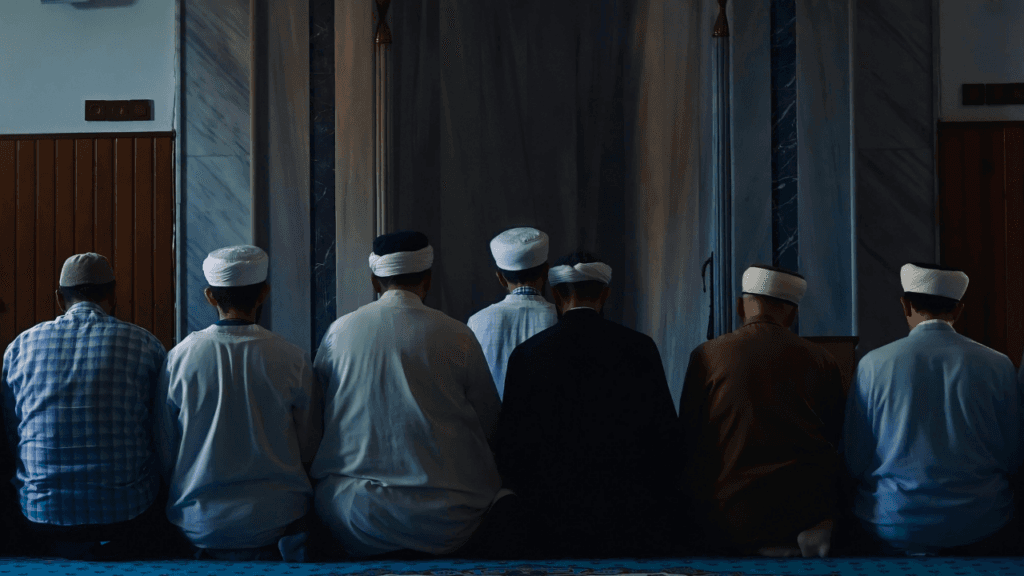
Muslims across the globe await the blessed month of Ramadan throughout the year with deep longing and excitement. As the fast is broken and the day gently fades, the hearts of believers turn towards the mosque, drawn by a special act of worship that has become one of the beloved symbols of this blessed month: the tarawih prayer.
What is tarawih?
Tarawih is a special voluntary prayer performed during the nights of the month of Ramadan after the Ishaobligatory prayer. The tarawih prayer consists of eight rak’aat followed by three rak’aat of witr. Conversely, some also follow the practice of performing 20 rak’aat for the tarawih prayer, while others follow the practice of 36 rak’aat.
The word tarawih comes from the Arabic root word r-w-h (روح). This root carries meanings related to rest, relaxation and comfort.
Hazrat Khalifatul Masih Vaa states:
“Explaining the etymology of the word tarawih, the commentator of Sahih al-Bukhari, Hazrat Ibn Hajar al-Asqalanirh, writes that tarawih is the plural of tarwihah, and tarwihah is a single instance of taking rest. The reason for naming the prayer offered in congregation on the nights of Ramadan ‘tarawih’ is that when the noble Companions first gathered to offer this prayer, they would pause for a ‘tarwihah’, that is, a period of rest, after every two sets of salaams (four rak’aat).” (“Answers to Everyday Issues – Part 85”, alhakam.org, 2 September 2025)
Historical foundation of tarawih
The origin of the tarawih prayer dates back to the blessed time of the Holy Prophetsa, and we know this from authentic narrations in the ahadith. Initially, the Holy Prophetsa performed tarawih in congregation only for a few nights. On the first night, the Holy Prophetsa went out one night at midnight and offered prayer in the mosque, and some men also prayed following him. When people awoke in the morning, they informed one another of it.
So, on the second night, more people gathered and Huzoorsa offered the prayer, and they prayed with him. When the people awoke in the morning, the news spread further among the people. On the third night, those who gathered in the mosque became very numerous and the Holy Prophetsa came out and offered the prayer, and they prayed following him.
When the fourth night came, the crowd became so large that the worshippers could not be accommodated in the mosque. However, on that night, he did not come out for the tarawih prayer until morning came. When he came out for the Fajr prayer and completed the Fajr prayer, he turned toward the people and recited the tashahhud. Then, he said:
“Your presence was not hidden from me, but I feared that this prayer might be made obligatory upon you and that you would become unable to perform it.” (Sahih al-Bukhari, Kitab salat at-tarawih, Hadith 2012)
Thus, the regular congregational arrangement of tarawih did not continue during the time of the Holy Prophetsa. However, Muslims continued praying tarawih in congregation among themselves and in their own groups, while others offered it individually. It was during the time of Hazrat Umarra that he gathered the Muslims to pray tarawih in congregation in the mosque, establishing it as a communal practice.
This is proven from the following narration:
“One night in Ramadan, I went out toward the mosque with Hazrat Umarra ibn al-Khattab, and we saw that people were divided into separate groups. One person was praying individually and another person was praying in such a manner that a few people were following him in prayer.
“So, Hazrat Umarra said: ‘I think that if I gather them together under the leadership of a single reciter, it would be better.’ Then he made a firm decision and gathered them behind Hazrat Ubayy ibn Ka’abra. Then, on another night, I went out with him, and the people were praying behind their reciter.
“Hazrat Umarra said: ‘What a good innovation this is. And that part of the night in which these people sleep is better than the part in which they pray.’ Meaning that the latter part of the night is better, and people used to pray tarawih at the beginning of the night.” (Sahih al-Bukhari, Kitab salat at-tarawih, Hadith 2010)
Hazrat Musleh-e-Maudra while explaining how the tarawih prayer was instituted, states:
“When Islam spread widely and many weak people also began to enter it, Hazrat Umarra realised that many would not be able to perform tahajjud. Therefore, he adopted the method of offering tarawih at the earlier part of the night so that people could hear the Holy Quran in the mosques. Thus, this method was instituted by the Companions, whereas the way of tahajjud is the practice of the Holy Prophetsa.” (Khutbat-e-Mahmood, Vol. 20, pp. 450)
Thus, while the practice began with the Holy Prophetsa individually or in small groups, it became a widespread, systematic congregational tradition during the time of Hazrat Umarra.
Virtues of tarawih prayer
The tarawih prayer holds immense spiritual significance and comes with several virtues. The main ones are as follows:
1. Forgiveness of sins: The Holy Prophetsa said, “Whoever prayed at night in the whole month of Ramadan out of sincere faith and hoping for a reward from Allah, then all his previous sins will be forgiven.” (Sahih al-Bukhari, Kitab salat at-tarawih, Hadith 2009)
2. Recitation and reflection of the Holy Quran: Allah commands Muslims: “Stand up [in prayer] at night except a small portion thereof – half of it, or make it a little less than that or make it a little more than that – and recite the Quran slowly and thoughtfully.” (Surah al-Muzzammil, Ch.73: V.3-5)
Tarawih is usually performed with long recitations of the Holy Quran. Listening to or reciting the Quran during these prayers strengthens one’s understanding, reflection and connection with the words of Allah. This is precisely the reason Hazrat Musleh-e-Maudra attributes the arrangement of tarawih during Ramadan to helping members listen to the Holy Quran. (Khutbat-e-Mahmood, Vol. 20, pp. 450)
3. Spiritual purification: One of the main objectives of Ramadan is to attain spiritual purification and piety (taqwa). Allah the Almighty states in the Holy Quran: “O ye who believe! fasting is prescribed for you, as it was prescribed for those before you, so that you may become righteous.” (Surah al-Baqarah, Ch. 2: V. 184)
The tarawih prayer helps develop taqwa and self-discipline, as it encourages a focus on worship, patience and humility.
Are tarawih and tahajjud two separate prayers?
In essence, they are the same type of prayer, although tahajjud carries a greater significance. The Promised Messiahas once said:
“Tarawih prayer is not a separate prayer. In reality, to offer the eight rak’aat of tahajjud prayer in its earlier time is called tarawih. Both forms mentioned in the question are permissible. The Holy Prophetsa has done it both ways. But most of the time, the practice of the Holy Prophetsa was to offer this prayer in the latter part of the night at home, alone.” (Malfuzat [English], Vol. 10, pp. 24-25)
The Promised Messiahas also stated:
“Tarawih is also Sunnah. Observe it, and sometimes offer it at home by yourself because tarawih, in reality, is tahajjud and not a new prayer.” (Ibid., p. 30)
Similarly, Hazrat Musleh-e-Maudra states:
“Tarawih and tahajjud are the same thing. Some people consider them to be two separate acts of worship and perform both [with this mindset]; this is a mistake.” (Farmudat-e-Musleh-e-Maud, p. 170)
In one of his Friday sermons, Hazrat Musleh-e-Maudra said:
“By tarawih is meant the very tarawih that is established from the practice of the Holy Prophetsa, which in reality is the tahajjud prayer itself.” (Khutbat-e-Mahmud, Vol. 22, p. 476)
How many rak’aat are there in tarawih?
Someone once asked the Promised Messiahas about the tarawih prayer. Specifically, he asked that if tarawih is tahajjud, then what is the Promised Messiah’sas view about twenty rak’aat because tahajjud is only eleven or thirteen rak’aat including witr. The Promised Messiahas said:
“The everlasting Sunnah [practice] of the Holy Prophetsa is only the eight rak’aat and he used to offer them at the time of tahajjud, and this is the preferred method. However, it is also allowed in the earlier part of the night as well. In one narration, it is stated that the Holy Prophetsa offered them at the earlier part of the night. Twenty rak’aat were introduced later, but the Sunnah of the Holy Prophetsa was indeed that which has been stated earlier.” (Malfuzat [English], Vol. 10, p. 143)
With regards to the rak’aat of tarawih, Hazrat Khalifatul Masih Ira states:
“Among the Companions, three practices regarding establishing Ramadan [Qiyam-e-Ramadan] were prevalent: some used to offer twenty rak’aat in congregation, some eight rak’aat and some would perform only tahajjud at home.” (Irshadat-e-Noor, Vol. 1, p. 345)
At another place, Hazrat Khalifatul Masih Ira said:
“Offering tarawih in the blessed month of Ramadan is necessary and it should be performed in congregation because the fear that it might become obligatory no longer remains. There is considerable disagreement among the scholars of Hadith and the jurists regarding tarawih. According to the Malikis, it is thirty-six rak’aat, while among the Hanafis, it is twenty rak’aat.
“Among the scholars of Hadith, more than eleven rak’aat is not established. I myself also prefer eleven rak‘aat, but I do not oppose anyone [who follows another view].” (Irshadat-e-Noor, Vol. 2, p. 489)
Is tarawih a bid’ah (innovation)?
Someone asked Hazrat Khalifatul Masih Ira that it is not proven from the practice of the Holy Prophetsa that he offered the tarawih prayer for more than four days; therefore, some people call it an “innovation” started by Hazrat Umarra.
Huzoorra replied: “Even if the Holy Prophetsa offered the tarawih prayer for only one day, it still became a Sunnah. By not observing it continuously, a Sunnah does not cease to be a Sunnah. Yes, its obligation is not proven, but a Sunnah should still be acted upon.
“And as for calling it an innovation of Umarra, what harm is there in that? Let it be the innovation of Umarra. Allah the Exalted says:‘And [as for] the foremost [among the believers], the first of the Emigrants and the Helpers, and those who followed them in the best possible manner, Allah is well pleased with them and they are well pleased with Him.’ (Surah at-Taubah, Ch. 9: V. 100)
“From this verse, the command to follow Umarra is also derived. The Companionsused to follow hundreds of his directives simply because of the command of Allah […].’” (Irshadat-e-Noor, Vol. 1, pp. 345–346)
Tarawih: Voluntary, but important
Explaining the importance of voluntary sacrifices that are done collectively, Hazrat Musleh-e-Maudra states:
“It is voluntary sacrifices that bring a person close to God the Exalted. As I have already explained, these sacrifices are of two kinds: individual and collective. An example of the individual one is tahajjud – some people rise for it while others do not.
“And an example of collective voluntary sacrifices is tarawih in Ramadan. Everyone knows the enthusiasm that exists for tarawih. In fact, people observe it so regularly that although they do not rise for tahajjud, they still go for tarawih.
“Indeed, we have never seen anyone distribute sweets after offering tahajjud, but at the completion of tarawih, I have seen people even distribute sweets. This is just like the case where a person who offers daily prayers is not called ‘namazi’(the one who prays), but if someone performs Hajj once, he begins to be called a ‘haji.’
“Similarly, the one who fasts and offers tarawih in the mosque for a month begins to consider himself deserving of some recognition, feeling that since he has accomplished such a great act, his mouth should be sweetened. In short, voluntary sacrifices which also have a collective aspect create a magnificent [spiritual] awakening within the community.” (Anwar-ul-Ulum, Vol. 14, pp. 105-106)
Hazrat Khalifatul Masih Ira while explaining the excellence of tahajjud over tarawih prayer, said:
“A person who regularly offers twelve rak’aat of tahajjud should continue to offer the same twelve rak’aat in the latter part of the night during the blessed month of Ramadan; he does not need tarawih. The reward of tahajjud is greater and its excellence is higher. The reward of congregational prayer applies to obligatory or necessary prayers. One who observes the five daily prayers in congregation is not considered to be neglectful of the congregation.” (Irshadat-e-Noor, Vol. 2, p. 56)
In his recent Friday Sermon, Hazrat Khalifatul Masih Vaa advised us that,
“Nowadays, we are passing through Ramadan, and some opportunity for tahajjud does come. Even if it does not, one should still try. No doubt, tarawih is offered in the mosque and it serves as an alternative for the weak, the sick or those who cannot wake up in the morning on time or cannot give more time, but it is not a substitute that can fully fulfil the right.
“The practice of the Holy Prophetsa and of his most ardent servant [i.e. the Promised Messiahas] is that one should rise at night and offer tahajjud. Therefore, even if one has offered tarawih, one should still try to pray tahajjud, even if it is only two or four voluntary rak’aat.” (Friday Sermon, 20 February 2026)
Conclusion
Thus, tarawih is a blessed means through which the nights of Ramadan come alive with the remembrance of Allah and the recitation of the Holy Quran. While it provides ease and a collective opportunity for worship, the true spirit of this practice is to lead a believer towards the deeper, more rewarding prayer of tahajjud.
By following the beautiful example of the Holy Prophetsa and the guidance of the Promised Messiahas and his Khulafa, we should strive to make these nights a source of lasting spiritual transformation. May this Ramadan enable us not only to stand in prayer, but to rise in nearness to Allah and carry this light beyond the month itself. Amin!