
Many people feel that working for peace in another country is like watering the neighbour’s plants – something noble perhaps, but unnecessary and unrelated to one’s own life. People often ask, “Why should we worry about conflicts elsewhere when we have enough problems at home?”
In today’s interconnected world, this thinking is deeply flawed. Conflict and injustice do not remain confined within national borders. A war in one part of the world quickly affects others through rising energy prices, economic instability, refugee movements, food insecurity, climate stress, and global political uncertainty. Peace is not a regional concern; it is a shared global responsibility.
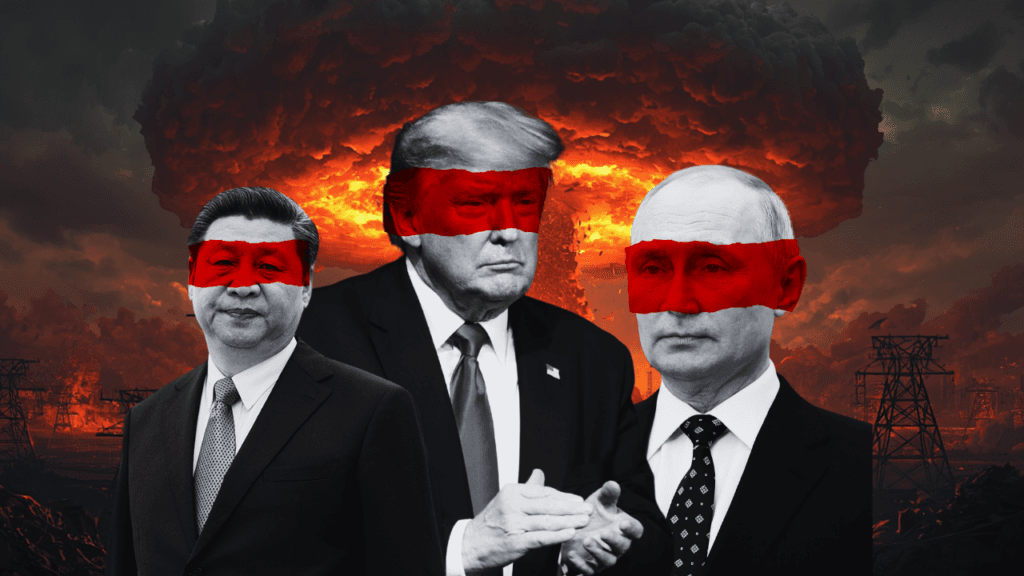
The world is entering one of its most dangerous periods since the Cold War. The gradual dismantling of nuclear arms control agreements between major powers has significantly increased the risk of a catastrophic conflict. With the expiry of the last remaining treaty limiting strategic nuclear weapons between the United States and Russia, humanity has entered an era with no legally binding constraints on the largest nuclear arsenals.
These agreements were never merely about reducing numbers; they ensured transparency, predictability, and communication. Their absence creates uncertainty, and uncertainty in nuclear affairs is profoundly dangerous. Nuclear war is fundamentally different from conventional warfare. Its consequences do not end with destroyed cities or immediate casualties.
Radiation contaminates land, water, and air, rendering vast areas uninhabitable for generations. Agricultural systems collapse, food chains are disrupted, and long-term health crises emerge. Even regions far from the conflict zones suffer through environmental damage, economic shockwaves, and global instability. The most disturbing consequence lies in what nuclear war does to the future of humanity. Radiation exposure damages genetic material, increasing the likelihood of severe physical and developmental impairments in children born long after the conflict has ended.
Reflecting on this moral responsibility, Hazrat Mirza Masroor Ahmad, Khalifatul Masih V (aa), has warned:
“If we want our children and future generations to look back at us fondly, rather than with anger that we left them disabled and handicapped, we must act in accordance with the standards of equity I have spoken of. If we fail to do so, then there will be nowhere left to hide and no escape from destruction.
“I purposely used the word ‘disabled’ in terms of the legacy we leave to our future generations. This is because it is extremely likely that if a world war takes place, nuclear weapons will be used. The effects of atomic warfare are beyond our imaginations and will last for generations to come.
“Therefore, the standard of justice I have described needs to be implemented across the board, not just by Muslims, but also by non-Muslims and all nations. No one will be spared the effects of a nuclear war, which will be devastating, because its path of destruction will be impossible to contain. The people of the East, and the people of the West, will be affected.”
These realities should deeply concern all societies striving for stability and development. A global nuclear conflict would destabilise economies, disrupt food systems, alter climate patterns, and overwhelm public health infrastructure worldwide. The burden of such devastation would fall most heavily on vulnerable populations, regardless of their involvement in the conflict.
There is also a profound moral dimension to this crisis. Scientific advancement without ethical responsibility becomes a danger rather than a benefit. Weapons created in the name of security now threaten the very survival of civilisation. History shows that meaningful progress in arms control has often emerged only when leaders confronted the human cost of nuclear war, not merely its strategic calculations.
In this context, Hazrat Mirza Masroor Ahmad (aa) has further observed:
“The threat of a world war is the biggest threat to today’s civilisation. It is a real threat and to prevent such an outcome we will have to think in a fair and just way, so that we can save the world from ruin.”
Preventing a nuclear catastrophe requires fairness in international relations, sincere dialogue among rival powers, and a willingness to place humanity above narrow national interests. Restraint, transparency, and cooperation are no longer idealistic aspirations; they are urgent necessities.
Peace is not sustained through fear, but through justice, trust, and moral clarity. If the present generation fails to act responsibly, future generations will not judge humanity by its technological achievements or political strength, but by the disabled lives it leaves behind as a legacy.