
Imagine for a moment a person sitting in deep contemplation, searching for meaning and considering their future against their past. For an hour, they wrestle with the questions of life. Then, all of a sudden, in pin-drop-intense silence, they notice their phone has reached 100% charge. The future could wait, but their scrolling could not.
This may seem like a mere joke, but it is simply the reality of the world we exist in today. Nearly every instant of our lives is umpired by screens. We can barely even check the weather without being drawn into a stream of notifications and content all demanding and vying for our attention.
What was once a clear task has become an opportunity for distraction. The devices we depend on for convenience are designed to grab and hold our focus, making it more difficult than ever to be present or even simply “free” for a moment.
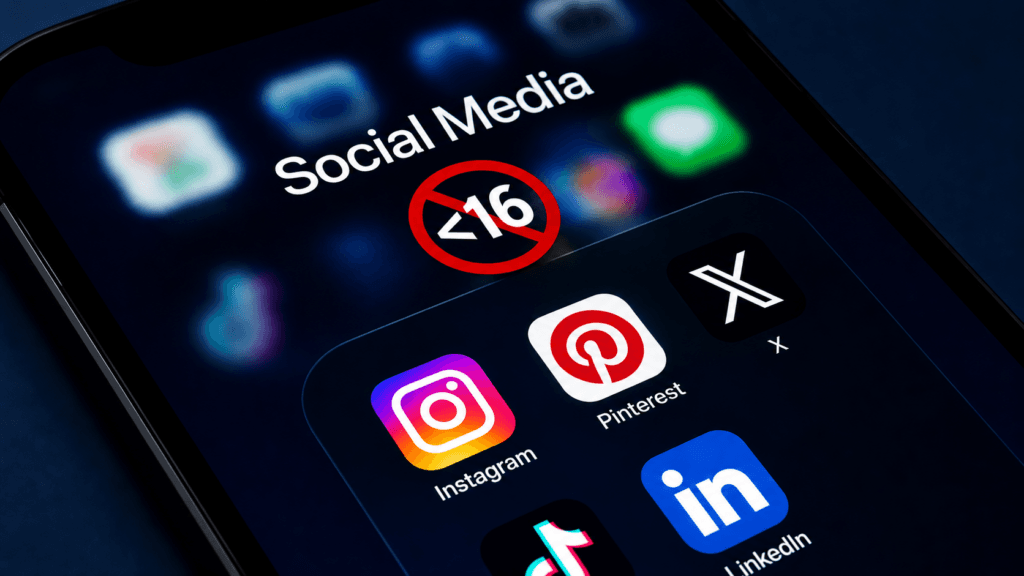
And so, it seems the UK has finally done it. Australia was the first to introduce such measures, and now the UK is set to follow suit. Social media platforms are soon to be banned for under-16s. Messaging services such as WhatsApp and Signal are not expected to be included in the ban, as they are generally viewed as communication tools rather than social media platforms. The changes are expected to come into effect by Spring 2027.
Whether one agrees with the policy or not, it marks a significant shift in how governments are approaching the relationship between young people and social media.
The problem we’ve built: How we got plugged into this algorithm
The first question I had after hearing this news was: how did the UK get here? Or, perhaps more accurately, how did the world get here? It’s no mystery that the world of social media is, to put it bluntly, addictive. Not just for children, but for adults alike. Even the BBC reported back in 2018 that “social media companies are deliberately addicting users to their products for financial gain.”
When we ponder and reflect on this, anything that continuously demands our attention inevitably distracts us from other, more meaningful things. Imagine being unable to complete your daily commitments solely because 3-4 hours of your day are spent in front of a screen.
The question, then, is not whether this ban is good or bad. The real question is, how did we get here?
Even after recognising how addictive social media can be, we have persisted down this path. Kids nowadays are more likely to opt for screens over playgrounds and scrolling over exploring. The effects of screens are not limited to the mind; they extend to physical health and, perhaps more importantly, to the very experience of childhood itself.
Imagine reaching your 30s after spending 3-4 or more hours a day on screens during one’s youth, only to learn that all those years spent on social media came at the expense of real-life experiences. You watched countless videos of sunsets, but rarely stopped to watch one yourself. You never went fishing, never climbed a tree, never followed a stream to see where it led, never cycled through the countryside or hiked to a viewpoint and earned the view, or even pitched a tent under the stars.
Yes, social media does offer a window into the world, but for many, it has slowly replaced the experience of actually living in it.
Are parents at fault? When children no longer know what to do without screens
The BBC posted a video in which a reporter asked a young schoolgirl how much screen time she had over the weekend. She replied that she had spent 9 hours on screens.
The reporter then, alluding to the social media ban, suggested that she would now have plenty of free time to do other things and asked what she planned to do instead. Her response was simple: “Stare at a wall.”
For many of us, especially the youth, screens have become the go-to to fill free time. Without them, even relaxation can feel strangely empty. It seems that the cost of constant screen usage is far greater than we often realise, not just in the time we spend on devices but also in how it shapes our ability to enjoy time away from them.
As parents of the next generation, it seems as though we often underestimate the importance of raising children with purpose and care.
In Islam, we are taught that the upbringing of children should equip them to thrive in the society they live in while remaining grounded in good character and values. The goal is to enable them to make a positive impact not only in their own lives but also in the lives of those around them.
The Promised Messiah (as), Hazrat Mirza Ghulam Ahmad, the founder of the Ahmadiyya Muslim Jamaat, has given a very beautiful explanation that I wish to share. Although the explanation is regarding the acceptance of prayer, we can also learn a lesson from it in this scenario. He says:
“One may observe how dear a mother holds her child. She desires that no harm should come to her child. But if a child should cry and insist upon the absurd idea that they be handed a sharp dagger or a bright and glowing piece of coal, would the mother, despite her true love and compassion, ever approve of her child taking hold of a flaming piece of coal and subsequently burning their hand, or cutting their hand on the sharp blade of a dagger? Of course not.” (Malfuzat [English], Vol. 1, p. 102)
After understanding the dangers of social media and its impact on young people, would any parent willingly put a tablet in their child’s hands, knowing what it can do to their developing minds?
Whether it is the effect on the brain’s reward system, the way it shapes attention and concentration or its influence on overall lifestyle and habits – the risks are becoming increasingly difficult to ignore. If we are to guard our children from physical harm, should we not be just as concerned about the things that may impact their mental well-being?
Protecting the family from harm
There is no doubt that social media also has its advantages. It connects us to the world and we can learn a great deal from it. So, it is not completely negative. However, a more balanced and monitored approach is necessary when it comes to its use.

In Islam, the principle that preventing harm takes precedence over pursuing benefit is well established. If there is evidence that free and full access to social media exposes children to risks such as bullying, exploitation, addictive behaviour, inappropriate content or mental health challenges, then reasonable restrictions can be seen as a fair protective measure.
The Holy Quran makes it clear that anything that can lead to misbehaviour or is unsuitable for one’s family must be stopped or, at the very least, controlled. Hence, we read in the Quran that Allah says:
“O ye who believe! Save yourselves and your families from a Fire” (Surah at-Tahrim, Ch.66: V.7)
This means it becomes the duty of the parent to safeguard their family, starting with themselves, from all vices, including those that may lead them astray. As we know, excessive and unmonitored use of social media is known to impact children’s well-being and brain development.
Islam places great value on guarding one’s speech, gaze, time and heart. Each of which shapes a person’s character and spiritual well-being. In many ways, these are exactly the areas social media aims to capture and influence.
What we say is often shaped by what we hear, what we see influences what we desire and how we spend our time shapes the direction of our lives. Prolonged and excessive screen use can, therefore, impact not only our habits but also our attention and emotional state, eventually affecting the heart itself.
This is why safeguarding oneself from harmful influences is such an important principle.
A message to those growing up in a digital age
However, when all is said and done, it is clear that many young people are unhappy with this new ban. Any parent knows how challenging it can be to take a screen away from a child, and after becoming so attached to them, many youngsters may initially wonder: what do we do now?
Yet this moment can also be seen differently. If used well, it could become a chance for growth and self-improvement. Without the constant influence of social media, you may begin to shape yourself intentionally, rather than being shaped by an algorithm that feeds you endless content.
Here, a verse from the Holy Quran comes to mind and is good to reflect on situations like this:
“It may be that you dislike a thing while it is good for you, and it may be that you like a thing while it is bad for you.” (Surah al-Baqarah, Ch.2: V.217)
With the right approach, this change could have a meaningful and lasting positive impact. I would also be interested in hearing your honest point of view on it. Do you see yourself benefiting from this, or do you also feel like you might struggle at first with not knowing how to spend your free time?