
Guidance regarding basic Islamic issues that Hazrat Amirul Momineen, Khalifatul Masih Vaa, has given on various occasions in his written correspondence and during MTA programmes is being published officially below for everyone’s benefit.
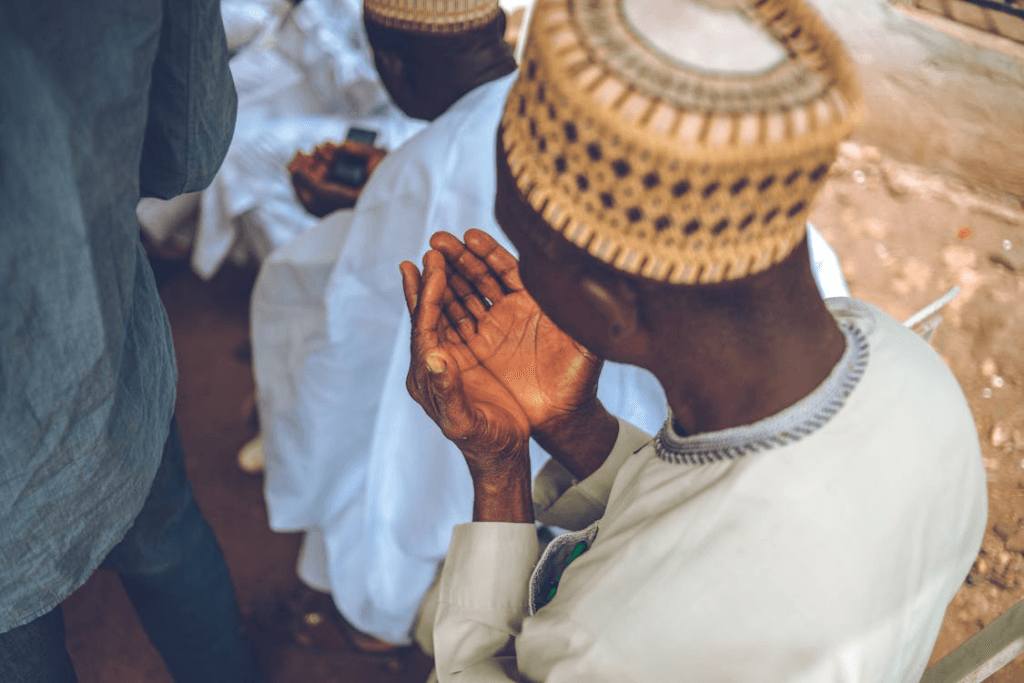
Is making a vow (nazr/mannat) permissible in Islam?
Someone from the UK wrote to Hazrat Amirul Momineen, Khalifatul Masih Vaa, asking whether it is permissible to make a vow, i.e., nazr or mannat, in Islam.
Huzoor-e-Anwaraa, in his letter dated 16 October 2023, provided the following answer to this question:
“It is proven from ahadith that the Holy Prophetsa did not view the making of vows [nazr] with much favour. (Sahih Muslim, Kitab an-nazr, Bab an-nahyi ‘ani n-nazri wa annahu la yaruddu shay’an) He also prohibited making vows regarding sinful acts, unnecessary and vain things and matters beyond one’s capacity. Accordingly, Hazrat Aishara narrates that the Holy Prophetsa said, ‘Whoever vows to obey Allah, let him obey Him; and whoever vows to disobey Allah, let him not disobey Him.’ (Sunan Abi Dawud, Kitab al-ayman wa n-nuzur, Bab an-nazri fi l-ma‘siyah) Similarly, it is narrated by Hazrat Ibn Abbasra that while the Holy Prophetsa was delivering a sermon, his gaze fell upon a man who was standing in the sun. He enquired about him and the people replied, ‘This is Abu Isra’il; he has vowed that he will remain standing and not sit, nor will he come into the shade, nor will he speak, but he will fast.’ The Holy Prophetsa said, ‘Command him to speak, to come into the shade and to sit, but let him complete his fast.’ (Sunan Abi Dawud, Kitab al-ayman wa n-nuzur, Bab man ra’a ‘alayhi kaffaratan iza kana fi ma‘siyah)
“Hazrat Musleh-e-Maudra states regarding vows:
“‘It is evident from ahadith concerning vows that the Holy Prophetsa did not approve of them. (Sahih Muslim, Kitab an-nazr, Bab an-nahyi ‘ani n-nazr) Yes, if a vow is made, then it is obligatory to fulfil it. The Holy Prophetsa disapproved of vows because they become a sort of contract with God Almighty and making a contract with God Almighty is not a desirable act. Instead of this, one should resort to charity [sadaqah] and prayers. However, if a person makes a vow as a token of gratitude [shukranah] along with charity and prayers, there is no harm in it. I deduce this from a practice of the Promised Messiahas. Sometimes, he would say to those who requested him for prayers, ‘I shall pray. You should determine a certain amount in your heart for the service of the faith, which you will give in the way of Allah upon the fulfilment of this task.’ This shows that if a vow is made as a token of gratitude, there is no harm in it, so long as the vow is accompanied by prayers, heartfelt entreaty with tears [before God] and acts of charity.’ (Tafsir-e-Kabir, Vol. 3, UK, 2023, pp. 488-489)”
What is the meaning of ‘bringing the living out of the dead’ mentioned in the Quran?
A lady from the UK wrote to Hazrat Amirul Momineen, Khalifatul Masih Vaa, regarding verse 28 of Surah Aal-e-‘Imran, “Thou bringest forth the living from the dead and bringest forth the dead from the living,” and verse 29, “Let not the believers take disbelievers for friends in preference to believers.” She asked about the meaning of the first verse and, regarding the second verse, whether Allah the Exalted completely forbids friendship with disbelievers and whether “disbelievers” refers to those who do not believe in the Holy Prophetsa or those who do not believe in Allah the Exalted.
Huzoor-e-Anwaraa, in his letter dated 17 October 2023, provided the following guidance regarding this:
“Several meanings have been ascribed to verse 28 of Surah Aal-e-‘Imran, that Allah the Almighty is the Being Who brings forth the living from the dead and the dead from the living. Here, the spiritually living and dead are also meant. One meaning given for this verse is that Allah brings forth a believer from a disbeliever and a disbeliever from a believer. Accordingly, it is written in Quranic commentaries that the Holy Prophetsa came to his family and found a woman sitting there. Upon the Holy Prophet’ssa enquiry, the blessed wives informed him that she was Khalidah bint al-Aswad bin Abd Yaghuth. Upon this, the Holy Prophetsa said:
سُبْحَانَ الَّذِي يُخْرِجُ الْحَيَّ مِنَ الْمَيِّتِ
“‘Holy is Allah, Who is free from all defects, Who brings forth the living from the dead.’
“Hazrat Khalidah bint al-Aswad bin Abd Yaghuth was a pious and righteous woman, whereas her father was a disbeliever. (Tafsir al-Qurtubi, under the above-mentioned verse)
“In other words, a believer is spiritually alive, whereas a disbeliever is spiritually dead. Similarly, a righteous person is spiritually alive and an evil person is equivalent to the spiritually dead. Thus, interpreting this verse, Hazrat Khalifatul Masih Ira states:
“‘If He wills, He makes good people out of bad ones and bad people out of good ones.’ (Haqaiq-ul-Furqan, Vol. 1, p. 460)
“So, several meanings have been given for this verse, but the essence is to make humans understand that the Being of Allah the Almighty is the Owner of everything in the universe and everything in this entire universe is within His grasp of power. He can do whatever He wills. If He wishes, He can turn gold into dust and if He wishes, He can turn dust into gold. In effect, the subject of ‘اِنَّ اللّٰہَ عَلٰی کُلِّ شَیۡءٍ قَدِیۡرٌ’ [‘Surely, Allah has the power to do all that He wills’] has been expressed in this verse in another manner.”
Does the Quran forbid friendship with non-Muslims?
“As for verse 29 of Surah Aal-e-‘Imran, if you read it carefully, you will find the answer to your question within it:
“‘Let not the believers take disbelievers for friends in preference to believers.’
“It means, do not make disbelievers your friends against the interests of believers. This commandment specifically concerns such disbelievers who were staunch enemies of Islam, who were constantly at war against Muslims and Islam and who were bent on causing harm to the Holy Prophetsa. Regarding such enemies of the truth, the advice was given not to make them friends but to make believers friends instead. Otherwise, in Mecca as well as in Medina, there were many such noble-natured people who, although not Muslims, did not oppose the Muslims; hence, the Holy Prophetsa and the Companions maintained relations with them.
“Thus, in this verse, Muslims have not been forbidden from having relations with non-Muslims; rather, they have been forbidden from forming intimate friendships with disbelievers who are enemies of Islam, so that they may not cause harm to Muslims under the guise of ‘friendship’.”
Did an angel or a human kill Lekh Ram?
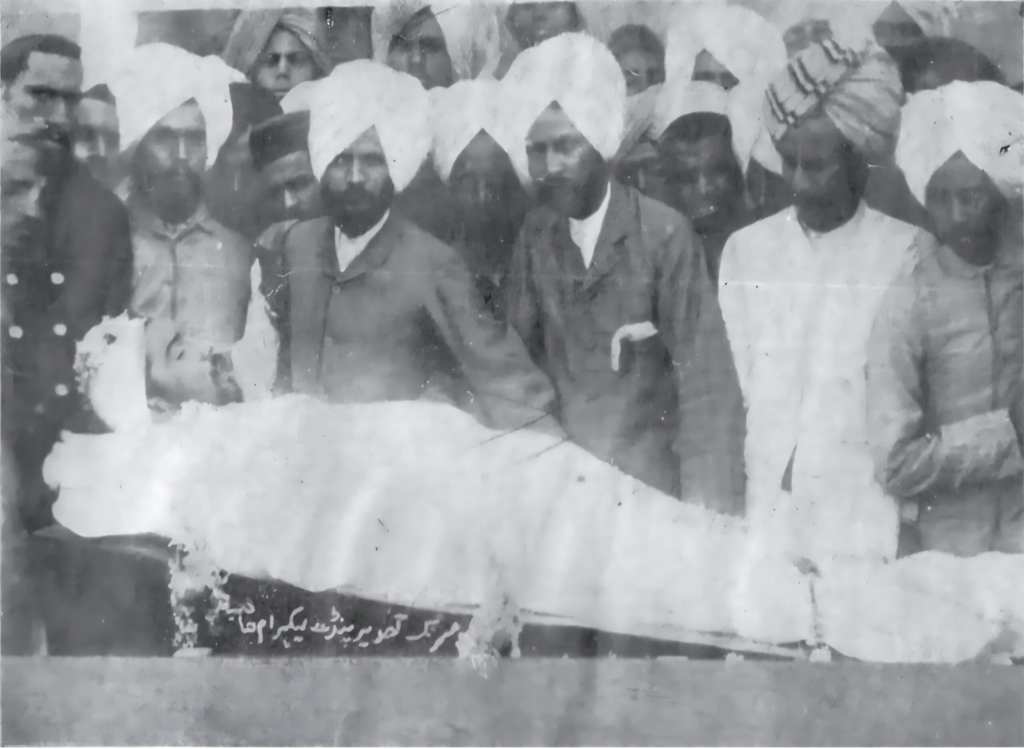
Someone from Rabwah wrote to Hazrat Amirul Momineen, Khalifatul Masih Vaa, stating that in the book Deeni Ma‘lumat [Basic Religious Knowledge] published by Khuddam-ul-Ahmadiyya, it is written regarding the murder of Lekh Ram that Allah the Almighty made him the prey of the “Sword of Muhammadsa” through an angel. Similarly, an Ahmadi friend wrote a narration on the internet stating that Lekh Ram’s killer murdered him, went into a room, which was bolted from the outside. There was only a small vent in that room and when the room was opened, the killer had vanished. However, in light of the writings of the Promised Messiahas, it is my view that Lekh Ram’s killer was a human being and not an angel. I request guidance from Huzoor.
Huzoor-e-Anwaraa, in his letter dated 17 October 2023, provided the following answer to this question:
“Your point is correct. Regarding the murder of Lekh Ram, it is absolutely not the belief of the Ahmadiyya Muslim Jamaat that he was killed by an angel. Rather, the belief of the Ahmadiyya Jamaat in this regard is that this was a mighty divine sign which Allah the Almighty manifested out of His protective zeal [ghayrat] for the Holy Prophetsa and to demonstrate the truthfulness of his spiritual son, the Promised Messiahas. He granted the Promised Messiahas news of this beforehand and then fulfilled it exactly in accordance with this prophecy. Thus, the Promised Messiahas writes regarding this sign:
“‘Second, there was the promise in these revelations in Barahin-e-Ahmadiyya, that He would manifest those Signs which would involve the actions of human beings. So, the prophecy related to Lekh Ram occurred in accordance with this because this Sign was manifested by means of someone who killed Lekh Ram. It is apparent that for this prophecy, God roused the heart of someone to want to murder him and created every opportunity for him to be able to complete his task.’ (Siraj-e-Munir, Ruhani Khazain, Vol. 12, p. 32)
“Similarly, mentioning this sign in Malfuzat, Huzooras states:
“‘In the matter of Lekh Ram, the hidden hand of God can clearly be seen at work. The fact that the murderer had come to be made a Hindu; the fact that Lekh Ram trusted him to the extent that he took him home without hesitation; the fact that on the evening of the murder, all of Lekh Ram’s other guests returned to their homes and he was left alone with the assailant; the fact that the murderer resolved to do the deed on exactly the second day of Eid; the fact that Lekh Ram stopped writing and stretched his arms, thus exposing his stomach; the fact that a clean strike was made with the knife; the fact that God silenced Lekh Ram such that despite being conscious and despite knowing that I had made a prophecy against him, his not expressing even for a moment that: ‘I am suspicious of Mirza Sahib’; furthermore, the fact that to this day, the whereabouts of his murderer are unknown; all of these are the actions of God Almighty, which shed light on His awe-inspiring power and strength.’ (Malfuzat, Vol. 1, p. 257, Published 1988)
“I am writing to Khuddam-ul-Ahmadiyya for the correction in Deeni Ma‘lumat. However, if someone has written such a narration on the internet that is not in accordance with the Jamaat’s belief, it cannot, in any case, be called the stance of the Jamaat.”
Which 12 rak‘ats lead to a house in Paradise?
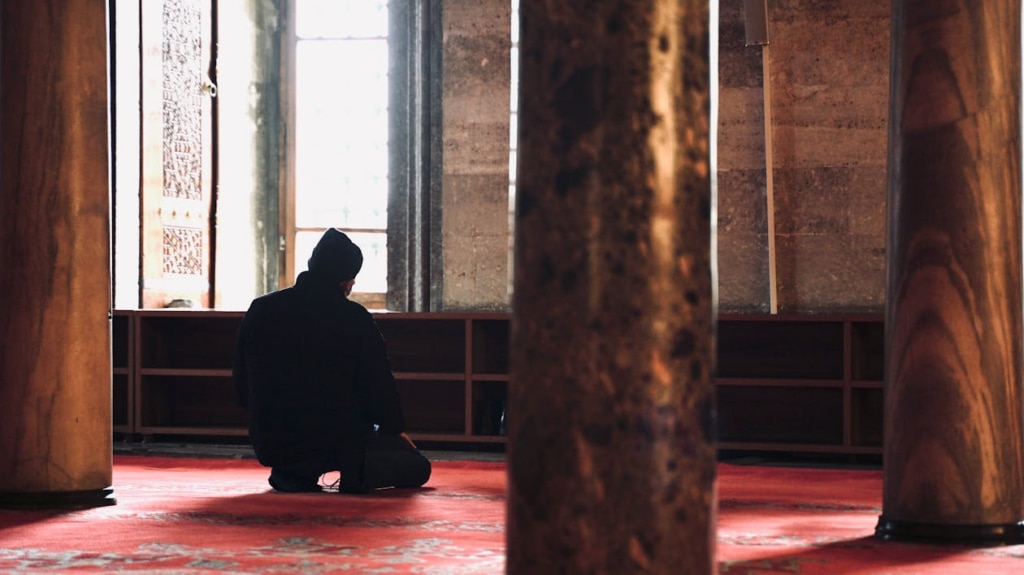
A lady from the USA wrote to Hazrat Amirul Momineen, Khalifatul Masih Vaa, regarding his address to the ladies at Jalsa Salana Germany, wherein he said that whoever offers 12 voluntary prayers every day builds a house in Paradise. He also drew the attention of women towards becoming brave and learning self-defence. In this regard, she asked whether the voluntary prayers of tahiyyat-ul-wudu are included in these 12 voluntary prayers and whether learning to shoot a gun can attain the pleasure of Allah the Exalted.
Huzoor-e-Anwaraa, in his letter dated 1 November 2023, provided the following guidance regarding this issue:
“In my speech to Lajna at Jalsa Germany, when I spoke about the one who offers 12 voluntary prayers entering Paradise, it was based on the saying of the Holy Prophetsa narrated by Hazrat Aishara that whoever perseveres in offering 12 rak‘ats of sunnah during the day and night, Allah the Exalted builds a house for him in Paradise: four rak‘ats before Zuhr, two rak‘ats after it, two rak‘ats after Maghrib, two rak‘ats after Isha and two rak‘ats before Fajr. (Sunan at-Tirmidhi, Kitab as-salah, Bab ma ja’a fiman salla fi yawmin wa laylatin thintay ‘ashrata rak‘atan mina s-sunnah)
“Thus, the 12 rak‘ats mentioned in the aforementioned Hadith are called sunnah mu’akkadah or the emphasised sunnah, which are performed before and after the obligatory or fardh prayers and which the Holy Prophetsa always performed except when travelling. Abandoning these sunnah mu’akkadah without reason is blameworthy because the perpetual observance of our Master and Lordsa upon them is proven. Whereas Tahiyyat-ul-Wudu, etc., fall under the category of non-emphasised or ghair mu’akkadah sunnahs and nawafil. Their performance is at a person’s own discretion; there will be a reward for offering them and there will be no sin for omitting them.
“Furthermore, regarding nawafil, one should also keep in view the saying of the Holy Prophetsa wherein he stated that Allah says, ‘My servant draws so near to Me through constant nawafil that I begin to love him. Then, when I love him, I become his ear with which he hears and I become his eye with which he sees and I become his hand with which he grasps and I become his foot with which he walks. And if he asks Me for something, I give it to him and if he seeks refuge with Me, I grant him refuge.’ (Sahih al-Bukhari, Kitab ar-riqaq, Bab at-tawadu‘)
“Therefore, along with the performance of obligatory prayers and sunnah mu’akkadah, a person should also pay attention to offering nawafil to the best of their ability and capacity, for they are the best means of attaining nearness to Allah.”
What does bravery mean for women in Islam?

“As for becoming brave, it does not only mean that a person knows how to use a bow and arrow, a sword, or a gun and pistol and is therefore brave. Rather, true bravery is that fear should be removed from the heart and one should resolutely combat the evils spreading in society. One should always remember that it is contrary to the dignity of a believer to fall into evil by being overawed by anyone without reason. Yes, if you wish to learn how to shoot a gun, it is a good thing; courage is also instilled through these things. However, to attain the pleasure of Allah the Exalted, it is necessary to follow all His commandments. A believer should strive for this.”
Did Prophet Jesusas marry and have children?
A lady from Canada enquired from Hazrat Amirul Momineen, Khalifatul Masih Vaa, whether Prophet Jesusas had a family.
Huzoor-e-Anwaraa, in his letter dated 2 November 2023, provided the following answer to this question:
“Due to the Israelites repeatedly breaking the covenants made with Allah the Exalted, constantly denying the signs of Allah the Exalted and unjustly and vehemently opposing the Prophets, Allah the Exalted, under His special wisdom, caused Prophet Jesusas to be born from the womb of Mary without a father to give them a final warning. However, Prophet Jesusas had four brothers and two sisters from Hazrat Mary and her husband, Joseph the Carpenter. Accordingly, it is written in the Gospel regarding Prophet Jesusas:
‘“Is not this the carpenter’s son? is not his mother called Mary? and his brethren, James, and Joses, and Simon, and Judas? And his sisters, are they not all with us?’ (KJV, Matthew 13:55-56)
“The Promised Messiahas, who was commissioned by Allah the Almighty as the Just Arbiter [Hakam ‘Adl] for this latter age, states regarding the siblings of Prophet Jesusas:
“‘Christ the Messiah had four brothers and two sisters who were related to Christ by blood and were the children of Joseph and Mary. The names of his four brothers are (1) Judas, (2) James, (3) Simon and (4) Justus. The names of his two sisters are (1) Assia and (2) Lydia. See Apostolic Records by Father John Allen Giles, London, 1886, pp. 159, 166.’ (Noah’s Ark, Ruhani Khazain, Vol. 19, p. 18, footnote)
“As for the marriage and children of Prophet Jesusas, there are two different opinions. One is that Mary Magdalene, who is frequently mentioned in the Gospels, was the wife of Prophet Jesusas and that Prophet Jesusas also had children from her. However, no proof of his marriage and children is found in the Quran, Hadith, or the Gospels. Although a claim made by some later researchers is also that when Prophet Jesusas migrated from Palestine towards Srinagar, he married upon arriving there and also had children. Accordingly, a resident of Srinagar named Sahibzada Basharat Saleem claims to be a descendant of Prophet Jesusas and the genealogical tree he possesses to this day traces his lineage back to Prophet Jesusas. (Times of India, 6 November 1977)
“Whereas the second opinion is that the Mosaic Messiah, Prophet Jesusas, neither married nor had any children. That is why when the Holy Prophetsa gave news of his spiritual son and the Muhammadan Messiah commissioned after him, he also gave the following glad tidings regarding him:
فَیَتَزَوَّجُ وَ یُوْلَدُ لَہٗ
“‘He shall marry and have children too.’ (Mishkat al-Masabih, Kitab al-fitan, Bab nuzuli ‘Isa ‘alayhissalam)
“One interpretation of this hadith is that it does not mean Prophet Jesusas did not marry and did not have children; rather, this hadith actually gave the glad tiding of the extraordinary marriage of the coming Muhammadan Messiahas and his high-ranking, prophesied children. This was fulfilled in the person of the Promised Messiah’sas illustrious son, Hazrat Sahibzada Mirza Bashir-ud-Din Mahmud Ahmad, al-Musleh al-Maw‘ud, Khalifatul Masih IIra.
“In any case, both opinions exist regarding the marriage and children of Prophet Jesusas.”
(Compiled by Zaheer Ahmad Khan, Head of Records Department, Private Secretariat, London and translated by Al Hakam)