

Aneelah Kauser, USA
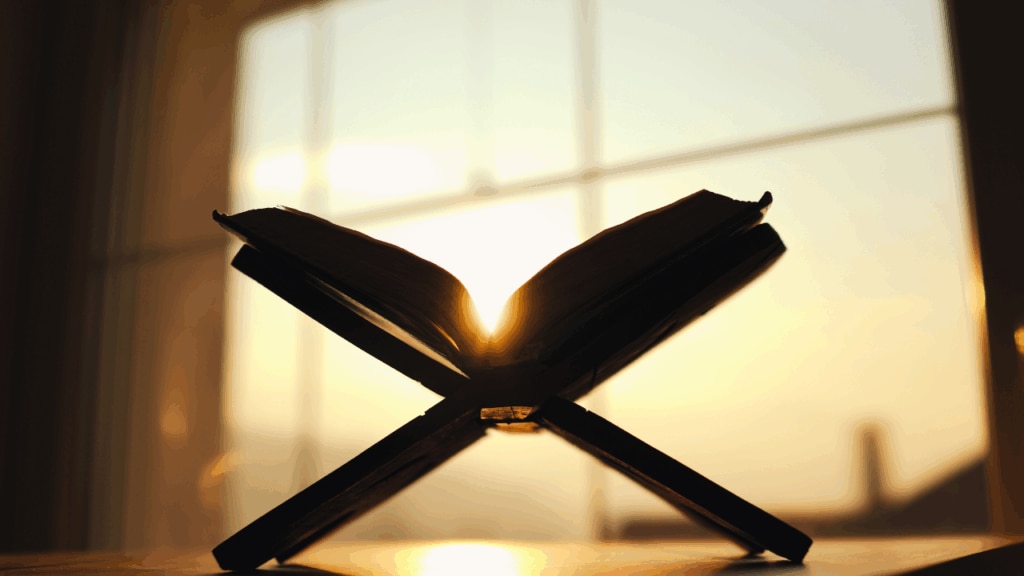
Imagine two books written hundreds of years apart, in two different parts of the world, and in two different languages (at least initially, presented to you 2,000 years later. These two books that I speak of are the Holy Quran and the Bible. These books may have been revealed at different times and to different people, but still they contain many similarities in content and history.
There is no doubt that the bible has been tampered with and updated throughout the centuries, whereas the Holy Quran has remained in its pristine form since it was revealed. However, since the source of both holy scriptures is the same, there are bound to be some similarities between the two.
Brief overview of the two scriptures
In physicality, the Quran has 6,348 verses whereas the Bible has 31,102. The Quran has 114 chapters, and in comparison, the Bible has 73 books. The Bible has different books that were written by about 40 different people, including prophets, historians and poets.
The Old Testament contains Law, History, Poetry, Wisdom, and Prophetic Books, as well as the five books of the Torah. The New Testament contains the Four Gospels, Act of Apostles, Epistoles, and the Book of Revelation.
The books in the Old Testament were composed over about 1000 years. This time started with Mosesas and ended during the time the prophet Malachias lived.
The New Testament was written from about 50 CE to about 95 CE. As a reference point, Jesus was crucified in 30 CE. The Quran was revealed during a period of approximately 23 years, beginning in 609 CE when the Holy Prophetsa was 40 years of age and ending at his death in 632 CE.
The Quran and Bible both have 2 parts, the Quran has chapters revealed before and after the Hijrah (migration from Mecca to Medina), and the Bible has the Old and New Testaments.
Similar teachings
Both books also have some similar content inside of them. The Quran and Bible teach the oneness of God in very alike ways. In Isaiah 46:9 it is said that, “For I am God, and there is none else; I am God, and there is none like me.” These verses are very similar to a chapter in the Holy Quran where it is said that, “Say, ‘He is Allah, the One; ‘Allah, the Independent and Besought of all. ‘He begets not, nor is He begotten; ‘And there is none like unto Him.’” (Surah al-Ikhlas, Ch.112: V.2-5)
The wording is almost identical and conveys the same teaching very clearly.
The way the creation of the universe is described is also much alike. In Exodus 20:11 it says that, “For in six days the Lord made heaven and earth, the sea, and all that in them is, and rested the seventh day: wherefore the Lord blessed the sabbath day, and hallowed it.”
In a similar way, the Quran states: “He it is Who created the heavens and the earth in six periods, then He settled Himself on the Throne.” (Surah al-Hadid, Ch.57: V.5)
Both the Quran and Bible say that God created everything in the world.
Additionally, many stories are also alike. For example, both books contain the story of Adamas and Eve with only minor differences. The Quran and Bible both also have the story of Cain and Able (Qabil and Habil), in which Prophet Adam’sas two sons each made a sacrifice, but Able’s was accepted by Allah whereas Cain’s was not, resulting in the former killing the latter. This story is mentioned in the fifth chapter of the Holy Quran, Surah Al-Maidah, verse 28. The story of Noah’s Ark is also well known in both the Bible and Quran.
The Holy Quran mentions that Noah said, “My Lord, they have disobeyed me, and followed one whose wealth and children have only added to his ruin.” (Surah Nuh, Ch.71: V.23).
Both books possess information about Prophet Ibrahim’sas sacrifice, though the Bible claims it was Isaacas who was saved from being sacrificed, whilst in Islamic scripture it refers to Prophet Ismailas.
Another well-known story is the story of Prophet Yusufas, or Joseph. The main plot and foundational principles remain the same, such as the fact that he had eleven brothers who all hated him for being their father’s favorite and plotted to kill him.
Two other stories that are mentioned in both the Quran and Bible are the story of Prophet Yunusas, and Prophet Ayyubas, both who suffered misfortunes but stayed steadfast.
The metaphor of the camel and the eye of the needle is also mentioned in both books. In the Bible, in Matthew 19:23-24 it says: “Then said Jesus unto his disciples, verily I say unto you, that a rich man shall hardly enter into the kingdom of heaven. And again I say unto you, it is easier for a camel to go through the eye of a needle, than for a rich man to enter into the kingdom of God.’”
And in the Quran in Ch.7: V.41 it says: “Those who reject Our Signs and turn away from them with disdain, the gates of the [spiritual] firmament will not be opened for them, nor will they enter Heaven until a camel goes through the eye of a needle. And thus do We requite the offenders.”
Both lines are nearly identical, with only the difference being the subject. The Bible is talking about rich men specifically, whereas the Quran talks about non-believers.
Another similarity is that both books mention many prophets by name. The Quran mentions over 25 different prophets while the Bible mentions 88.
Besides stories about prophets, the Bible and Quran also have similar rules and guidelines. According to the Promised Messiahas the Gospel “forbids one to look covetously and lustfully at women who are not Mahram but permits it otherwise,” whereas “the Quran instructs against glancing at women under any circumstances, be it covetously or with pure intentions.” (Noah’s Ark [Kashti-e-Nuh], 2018, p.46). Thus allowing us to be guarded against Satan.
The Gospel permits drinking alcohol as long as you “Do not get drunk on wine” (Ephesians, 5:18) while the Quran doesn’t allow people to consume it at all (Surah al-Maidah, Ch.5: V.91-92). Being under the influence of alcohol is seen as bad since people lose control of themselves and would be lost from the path that leads to God. Muslims aren’t allowed to offer salat when they are in an intoxicated state (Surah al-Nisa, Ch.4: V.44).
The Gospel forbids people from being angry with their brothers without due reason (Matthew, 5:22). But the Quran instructs you to suppress your own anger, pardon others and do good. (Surah Al-e-Imran, Ch.3: V.135). Meaning that forgiveness is preferred, but being angry is not a sin, as long as it is controlled.
“Verily, Allah enjoins justice, and the doing of good to others; and giving like kindred; and forbids indecency, and manifest evil, and wrongful transgression. He admonished you that you may take heed.” (Surah al-Nahl, Ch.16: V.91)
This verse teaches us that God wants people to deal equitably with all people and show kindness even to those who have not done you any good.
This means that we should not behave badly with people because of their actions, instead we should have an open and forgiving mindset. “Oppose their actions, not their person’s, and seek to rectify their deeds.” (Noah’s Ark [Kashti-e-Nuh], 2018, p. 49)
The Promised Messiahas advises us to be kind to all people no matter what they have done, and to help them right their misdeeds. “The Gospel teaches that you should seek blessings for those who curse you.” However, the Quran instructs that if it is “instilled into your heart that they are cursed by heaven, do not seek blessings for them.” (ibid., p. 50)
The Gospel also forbids performing good deeds in front of others as to show off (Matthew 6:1). “But, the Quran admonishes against concealing all your actions from others.” 1 “Similarly, the Gospel teaches its followers to supplicate in seclusion. But the Quran instructs you not to pray in seclusion on all occasions.” (ibid., p. 51)
History of both scriptures
Finally, there is a slight comparison between the history of how the Quran and Bible were first written.
According to Hazrat Khalifatul Massih V’saa Friday Sermon on 11 January 2008, many people memorised the Holy Quran and became Huffaz (those who have memorised the Holy Quran), allowing for the exact preservation of this Holy Book. He explained that no book other than the Holy Quran has the claim that every word in it is protected in its original revealed form. Only the Quran has the claim that it is safeguarded in its original revealed form. This creates a distinction between the Quran and other religious books.
In the Holy Quran, Allah the Almighty says that “This day have I perfected your religion for you and completed My favour upon you and have chosen for you Islam as religion.” (Surah al-Maidah, Ch.5: V.4)
Essentially, what is being announced here is that this is the proclamation of God. Now no past Law or book can stand before it. This is the only book that can be called ‘the Book.’ Meaning that Allah has put into the minds of people how to preserve the book, in order to safeguard it from corruption. Allah himself says:
“Verily, We Ourself have sent down this Exhortation, and most surely We will be its Guardian.” (Surah al-Hijr, Ch.15: V.10).
The Quran was preserved in two ways which are hinted at by the words al-Kitab (the book) and Quran. As it has been explained in another article: “First, it was written down since the very beginning, and second, it has been memorised by people in full since its very first revelation.”
Another factor is that the Holy Quran’s verses were written very melodically and in a tune which made it easier to memorise it as it was slowly revealed to the Holy Prophetsa in parts.
As the Holy Quran testifies: “And the Quran We have revealed in pieces that thou mayest read it to mankind at intervals, and We have sent it down piecemeal.” (Surah Bani Isra’il, Ch.17: V.107)
The Holy Quran was revealed over a period of almost 23 years, which corroborates this statement. As one author aptly summarised it: “It prevented it from being forgotten as there was plenty of time to memorise and revise the Quran in small, manageable portions.”
In Arabia, during the time of the Holy Prophetsa, there were scribes who wrote down the verses of the Holy Quran as they were revealed. During the Khilafat of Hazrat Abu Bakrra the Holy Quran was compiled into a single volume. Also during the time of Hazrat Uthmanra, copies of this cannon were made and distributed to different Muslim lands as official, standardised copies of the Quran. This occurred due to complaints that some words were being pronounced differently, so Hazrat Uthmanra decided to create a single pronunciation.
Similarly, in the Bible, according to the apostle Paul in Romans 3:1-2, the Old Testament was entrusted, along with the oracles of God, to the Jews who meticulously hand-copied their holy Hebrew Scriptures. Their scribes developed intricate methods of counting words and letters to ensure that no errors had been made.
In summary, a similarity between how the Quran and Bible were first written is that they used scribes to write down the verses in order to remember them. But there is a major distinction in that only the Holy Quran was given a promise of everlasting preservation.
Conclusion
Overall, it is clear that the Bible and the Quran are not as different as many people believe. They both originate from the same Divine source, many of the stories have the same undertone, and even their history has some similarities.
By understanding how these two religious scriptures relate, we, as Ahmadis, will be better able to understand our own faith and history, as well as be able to reference the Bible about any questions that are not addressed in the Quran or Hadith.
Looking towards similarities rather than differences is, afterall, what the Holy Quran encourages:
“Say, ‘O People of the Book! come to a word equal between us and you – that we worship none but Allah, and that we associate no partner with Him, and that some of us take not others for Lords beside Allah.’ But if they turn away, then say, ‘Bear witness that we have submitted [to God].’ (Surah Al-e-Imran, Ch.3: V.65)