
Iftekhar Ahmed, Ahmadiyya Archive & Research Centre
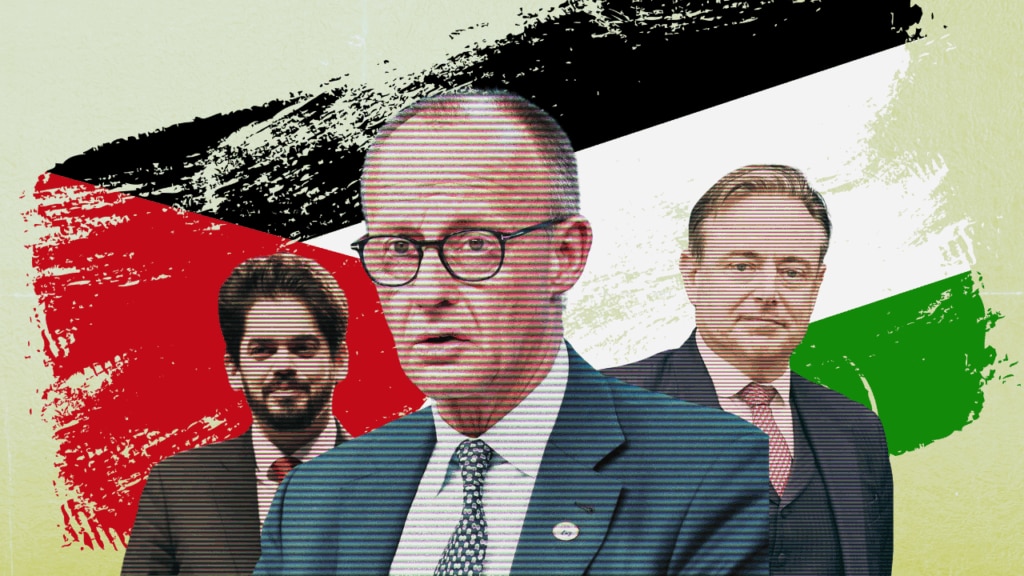
On 11 September 2025, the Flanders Festival in Ghent, Belgium, removed the Munich Philharmonic from its programme. The reason: concerns about the orchestra’s incoming conductor, Lahav Shani, who holds prominent posts, including with the Israel Philharmonic. The festival said it lacked clarity about his political stance and could not provide sufficient information regarding his “attitude to the genocidal regime in Tel Aviv”.
Across Germany, the removal provoked a fierce defence of artistic freedom. The Federal Government Commissioner for Culture called it a “disgrace for Europe”. In an X post, Chancellor Friedrich Merz warned that “we must give no space to this naked antisemitism”. Belgium’s Prime Minister attended a Munich Philharmonic concert in Essen days later, signalling support for Shani.
The episode became a flashpoint carrying resonance beyond any concert hall. When an institution abroad declines to host an Israeli conductor, the reaction is righteous denunciation. However, when German museums, theatres and universities refuse to host Palestinian writers, poets and scholars, the moral alarm is muted or couched in procedural language about “security”.
This pattern must be examined as a moral and theological test. Islam requires that we speak for the oppressed within lawful channels. The Quran reminds believers:
يَا أَيُّهَا الَّذِينَ آمَنُوا كُونُوا قَوَّامِينَ لِلَّهِ شُهَدَاءَ بِالْقِسْطِ وَلَا يَجْرِمَنَّكُمْ شَنَآنُ قَوْمٍ عَلَىٰ أَلَّا تَعْدِلُوا اعْدِلُوا هُوَ أَقْرَبُ لِلتَّقْوَىٰ
“O ye who believe! be steadfast in the cause of Allah, bearing witness in equity; and let not a people’s enmity incite you to act otherwise than with justice. Be [always] just, that is nearer to righteousness.” (Surah al-Ma’idah, Ch.5: V.9)
Thus, if hatred or fear causes a cultural organisation to silence one side’s suffering, it is clear that justice is not being observed.
What the record shows
Germany has seen a series of cancellations since 7 October 2023; at least 200 people or events have been cancelled for criticising Israel or showing solidarity with Palestinians. These involve major festivals, national museums, universities and broadcasters. Many cultural figures have decried the nation’s “McCarthyist policies,” equating criticism of the Israeli government with antisemitism.
For example, Palestinian novelist Adania Shibli was due to receive a prize at the Frankfurt Book Fair in October 2023 when the organisers postponed, citing the war that began on 7 October. More than 600 authors and publishers signed a letter condemning the postponement.
Another example is when the Saarland Museum cancelled an exhibition by Jewish artist Candice Breitz after she criticised Israel’s military campaign and expressed solidarity with Palestinian civilians. Breitz wrote that Germany had become a place where even Jewish artists were silenced for speaking about Palestinian suffering.
Police in Berlin also shut down a Palestine gathering in April 2024. The image of police entering a lecture hall and ending a programme became a symbol of the state’s willingness to use coercion rather than adjudicate contested speech.
The University of Cologne withdrew a visiting professorship offered to philosopher Nancy Fraser after her name appeared on a letter critical of Israel’s policies. Fraser responded that German academia had chosen fear over intellectual freedom.
The pattern extends further. American artist Laurie Anderson resigned her guest professorship after backlash for signing a letter supporting Palestinian rights. Berlin’s House of Poetry postponed the launch of an anthology co-edited by Syrian-Palestinian poet Ghayath Almadhoun. Events with UN Special Rapporteur Francesca Albanese were curtailed at German universities. The list goes on.
Modes of erosion
This erosion of open cultural debate has taken multiple forms. Direct cancellation on security grounds functions as suppression. Administrative pressure through funding threats produces self-censorship. The conflation of legitimate critique with antisemitism is weaponised to shut down speakers.
Germany’s history obliges special sensitivity to antisemitism. That obligation might be necessary, but it becomes dangerous when deployed to suppress commentary on Gaza. If antisemitism is rightly condemned, the same energy must protect Palestinians from dehumanisation and allow debate about the conduct of war.
German ministers decried the Flanders Festival’s “cultural boycott,” yet German institutions have quietly removed platforms for Palestinian testimony – showing a striking asymmetry.
Who loses when the conversation narrows?
The immediate victims are artists and scholars whose platforms are removed. Secondary victims are students and citizens who lose exposure to dissenting accounts. Over time, the culture itself is impoverished. A theatre that refuses work humanising an enemy; a university that brushes aside contested lectures; a museum that cancels exhibitions after political complaints – all contribute to a risk-averse public sphere.
For Muslims in Germany, and especially Palestinians, the repeated cancellations have felt like exclusion.
The Muslim perspective
Cultural institutions must attend to universal justice and procedural fairness. Islam teaches that universal justice means treating each person’s dignity as equal. As quoted earlier, the Holy Quran insists that believers must not let hatred sway them from justice. If cultural institutions champion one victim group’s memory, they must not use it to silence another’s suffering.
Procedural fairness requires transparent rules about cancellation to be applied consistently. Without transparent regulations, those with louder political allies will prevail.
Islam insists on lawful protest and rejection of violent rebellion. Accordingly, the message of the Promised Messiahas and his Khulafa is firm: stand for truth within the law. Islam teaches a threefold method of resisting wrong. The Holy Prophet’ssa guidance is clear:
مَنْ رَأَى مِنْكُمْ مُنْكَرًا فَلْيُغَيِّرْهُ بِيَدِهِ، فَإِنْ لَمْ يَسْتَطِعْ فَبِلِسَانِهِ، فَإِنْ لَمْ يَسْتَطِعْ فَبِقَلْبِهِ وَذَلِكَ أَضْعَفُ الإِيمَانِ
“Whoever among you sees an evil, let him change it with his hand; if he cannot, then with his tongue; if he cannot, then with his heart, and that is the least of faith.” (Sahih Muslim, Kitab al-iman, Hadith 49a)
The counsel insists on action within lawful bounds. We are commanded to speak, petition and protest lawfully through channels that obligate institutions to listen.
The cost of partial memory and the structure of selective outrage
Artists and cultural leaders function as interpreters of meaning. That status imposes moral obligations. If a public figure uses his platform to justify state violence, that carries consequences. If an institution shuts out a Palestinian poet for fear, it practises moral abdication.
Asking artists to sign political declarations as the price of representation is coerced confession. The middle course: institutions should refuse incitement when present and protect legitimate critique when absent.
Europe’s Holocaust memory is noble and necessary. Memory requires universalising “never again” into empathy for all victims of atrocity. When cultural policy privileges one party’s trauma while denying access to those speaking of another’s pain, the moral circle narrows.
What unites Germany’s cultural exclusions is inconsistency. When Palestinian voices are excluded, officials speak of security. When an Israeli conductor is excluded abroad, officials roar about freedom and antisemitism. This selectivity betrays the Quranic injunction to impartial justice:
وَتَعَاوَنُوا عَلَى الْبِرِّ وَالتَّقْوَىٰ وَلَا تَعَاوَنُوا عَلَى الْإِثْمِ وَالْعُدْوَانِ
“And help one another in righteousness and piety; but help not one another in sin and transgression.” (Surah al-Ma’idah, Ch.5: V.2)
The Prophet Muhammadsa warned:
إِنَّمَا أَهْلَكَ الَّذِينَ قَبْلَكُمْ أَنَّهُمْ كَانُوا إِذَا سَرَقَ فِيهِمُ الشَّرِيفُ تَرَكُوهُ، وَإِذَا سَرَقَ فِيهِمُ الضَّعِيفُ أَقَامُوا عَلَيْهِ الْحَدَّ
“Those before you were destroyed because when a noble person committed theft they left him, but when a weak person committed theft, they punished him.” (Sahih al-Bukhari, Kitab ahadith al-anbiyaʾ,Hadith 3475)
Germany risks this hypocrisy. The strong are defended; the weak are silenced. Selective justice is no justice at all. The Prophet Muhammadsa taught:
انْصُرْ أَخَاكَ ظَالِمًا أَوْ مَظْلُومًا
“Help your brother whether he is the oppressor or the oppressed.” When asked how to help the oppressor, he replied:
تَحْجُزُهُ أَوْ تَمْنَعُهُ مِنَ الظُّلْمِ
“By restraining him from oppression.” (Sahih al-Bukhari, Kitab al-Mazalim, Hadith 2444)
Thus, cultural institutions must restrain oppression by permitting its critique. To cancel dissent is to assist oppression.
What institutions can do now
Institutions can take practical steps to restore integrity: Defend academic freedom by establishing panels evaluating contested invitations on substantive grounds rather than political expediency. Provide context and counter-arguments rather than cancelling wholesale.
Protect minority cultural programming by ring-fencing funding for projects bringing marginal voices into public view. Public funders should allocate grants to diverse programming without political interruption. Distinguish between hate speech and criticism of state policy. Institutions should publish guidelines parsing content rather than reflexively labelling critical speech as hateful.
These measures require courage but are necessary if culture is to be more than a mirror for comfortable certainties.
A call to consistency
The Ghent decision to exclude Shani was proportionate: a conductor who champions a genocidal campaign cannot claim neutrality. Germany’s systematic exclusion of Palestinian voices is, on the other hand, anything but proportionate.
The morally defensible removal of the Munich Philharmonic from the Flanders Festival in Ghent forced a public conversation about how cultural platforms can legitimise state violence. Ministers who decried the Flanders Festival’s decision should apply equal energy to defending Palestinian novelists, poets and scholars when their platforms are removed.
If Germany mourns for one people, it must mourn for another. If it defends one narrative, it must hear all narratives. Justice demands universality.
Closing exhortation
My purpose is to insist that ethical demands of faith and conscience apply across the board. When cultural arbiters choose convenience over courage, they damage trust and betray memory. The Quran warns:
وَلَا تَرْكَنُوا إِلَى الَّذِينَ ظَلَمُوا فَتَمَسَّكُمُ النَّارُ
“And incline not toward those who do wrong, lest the Fire touch you.” (Surah Hud, Ch.11: V.114)
If Europe wishes to defend cultural values credibly, it must practise them. That means scrutinising those using cultural platforms to justify violence and defending those speaking truth to power. It means protecting institutions from political pressure and strengthening safeguards permitting difficult debates. It means remembering justice is not a commodity to be rationed.
If Germany wishes integrity, it must extend freedom equally. Let the Palestinian novelist receive her prize. Let the Jewish artist criticise Israel without fear. Let the Syrian-Palestinian poet read his verse. But do not defend those championing genocide whilst silencing victims.
The Holy Quran asks us to always be just; that is nearer to righteousness. The Holy Prophet’ssa teaching tells us to restrain oppression. The Ahmadi Muslim message is to resist injustice lawfully.
Cultural institutions must become spaces where difficult stories are told, entire histories heard, and conscience made to work. Until Germany applies justice without partiality, its conscience will remain dissonant. The silenced voices of Gaza will haunt every performance until their testimony is heard.