

Musleh Mahmood, Student, Jamia Ahmadiyya UK
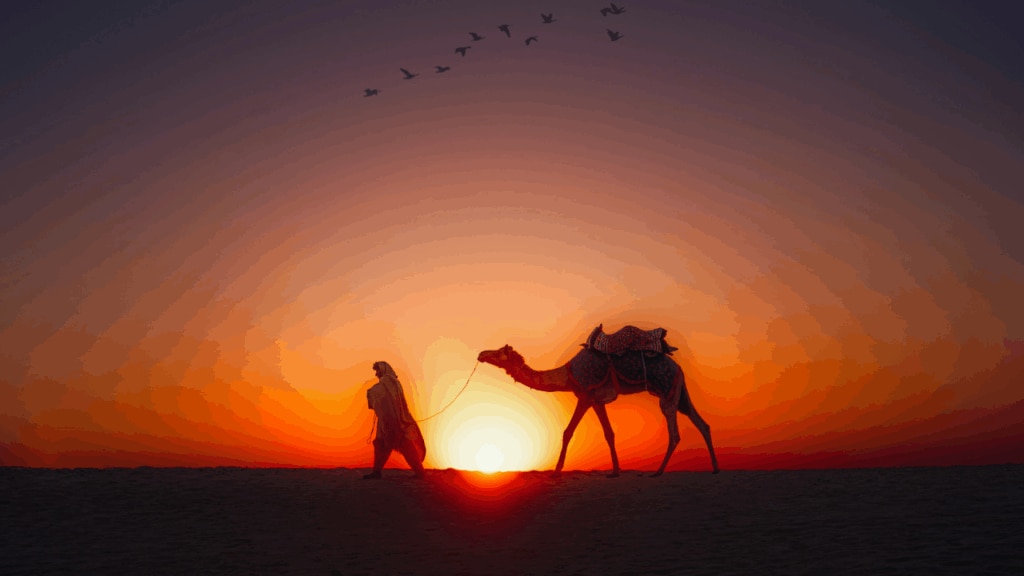
In the Holy Quran, Allah the Almighty declares:
إِنَّ ٱلَّذِينَ كَذَّبُوا۟ بِـَٔايَـٰتِنَا وَٱسْتَكْبَرُوا۟ عَنْهَا لَا تُفَتَّحُ لَهُمْ أَبْوَٰبُ ٱلسَّمَآءِ وَلَا يَدْخُلُونَ ٱلْجَنَّةَ حَتَّىٰ يَلِجَ ٱلْجَمَلُ فِى سَمِّ ٱلْخِيَاطِ ۚ وَكَذَٰلِكَ نَجْزِى ٱلْمُجْرِمِينَ
“Those who reject Our Signs and turn away from them with disdain, the gates of the [spiritual] firmament will not be opened for them, nor will they enter Heaven until a camel goes through the eye of a needle. And thus do We requite the offenders.” (Surah al-A‘raf, Ch.7: V.41)
This verse speaks of the devastating fate of those who deny truth and live arrogantly. Allah speaks of a parable in this verse too – that the disbelievers will not enter heaven “until a camel goes through the eye of a needle”.
Interestingly, this vivid imagery – of a camel passing through the eye of a needle – also appears in the Bible. In the Gospel of Matthew (19:24), Jesusas is recorded to have said, “It is easier for a camel to go through the eye of a needle than for a rich man to enter the kingdom of God.”
So what does this phrase actually mean?
How classical commentators understood it
Most classical commentators of the Quran have explained this verse literally – that entry into Paradise for disbelievers is as impossible as a camel squeezing through a needle’s eye.
In Ma‘arif-ul-Quran, an Urdu commentary by a famous Jurist and Mufti of the Deoband, Maulana Muhammad Shafi, we find:
“[…] The meaning, therefore, is that these people will not enter Paradise until a large animal like a camel can go through the hole of a needle. In other words, just as it is impossible for such a large creature to pass through the eye of a needle, in the same way their entering Paradise is also impossible.” (Ma‘arif-ul-Quran, 2008, Vol. 3, p. 560)
Similarly, the famous commentary, Tafsir al-Jalalayn says:
“Those who deny Our signs and scorn them not believing in them indeed the gates of heaven shall not be opened for them […] nor shall they enter Paradise until the camel passes through the eye of the needle which is impossible and so is their entry into Paradise.” (Surah al-A‘raf, Ch.7: V.40, Tafsir al-Jalalayn, altafsir.com)
Losing extra weight on the soul: The Promised Messiah’s insightful explanation
While traditional scholars viewed the verse as an absolute statement about the impossibility of a disbeliever to leave hell, the Promised Messiah and Mahdi, Hazrat Mirza Ghulam Ahmadas explained this verse to be a profound spiritual insight.
Under the commentary of this verse, the Promised Messiahas stated:
“‘And they shall not enter Paradise until a camel passes through the eye of a needle.’
“The commentators have generally taken this verse in its literal sense, but I say that whoever seeks salvation upon the path of God must subdue the unrestrained camel of the self through [spiritual] effort and discipline, until it [the soul] becomes so refined and lean that it can indeed pass through the eye of a needle.
“So long as the soul remains bloated with worldly pleasures and sensual desires, it cannot traverse the pure and narrow path of the sharia, nor can it enter the Garden of bliss.
“Bring death upon your worldly indulgences and let your being grow lean through the fear and awe of God – only then will you be able to pass through. And this very passing through shall lead you into Paradise and become the means of your eternal salvation.” (Tafsir Hazrat Masih-e-Maud, Online Edition, Vol. 4, p. 206)
In his profound wisdom, the Promised Messiahas explains that the “camel of the self” must be tamed and purified until it becomes fit to walk the narrow path that Allah has set for His true servants. Only by casting off the extra weight of worldly desire does the soul grow light enough to pass through the way that leads to Allah.