Religion & Theology
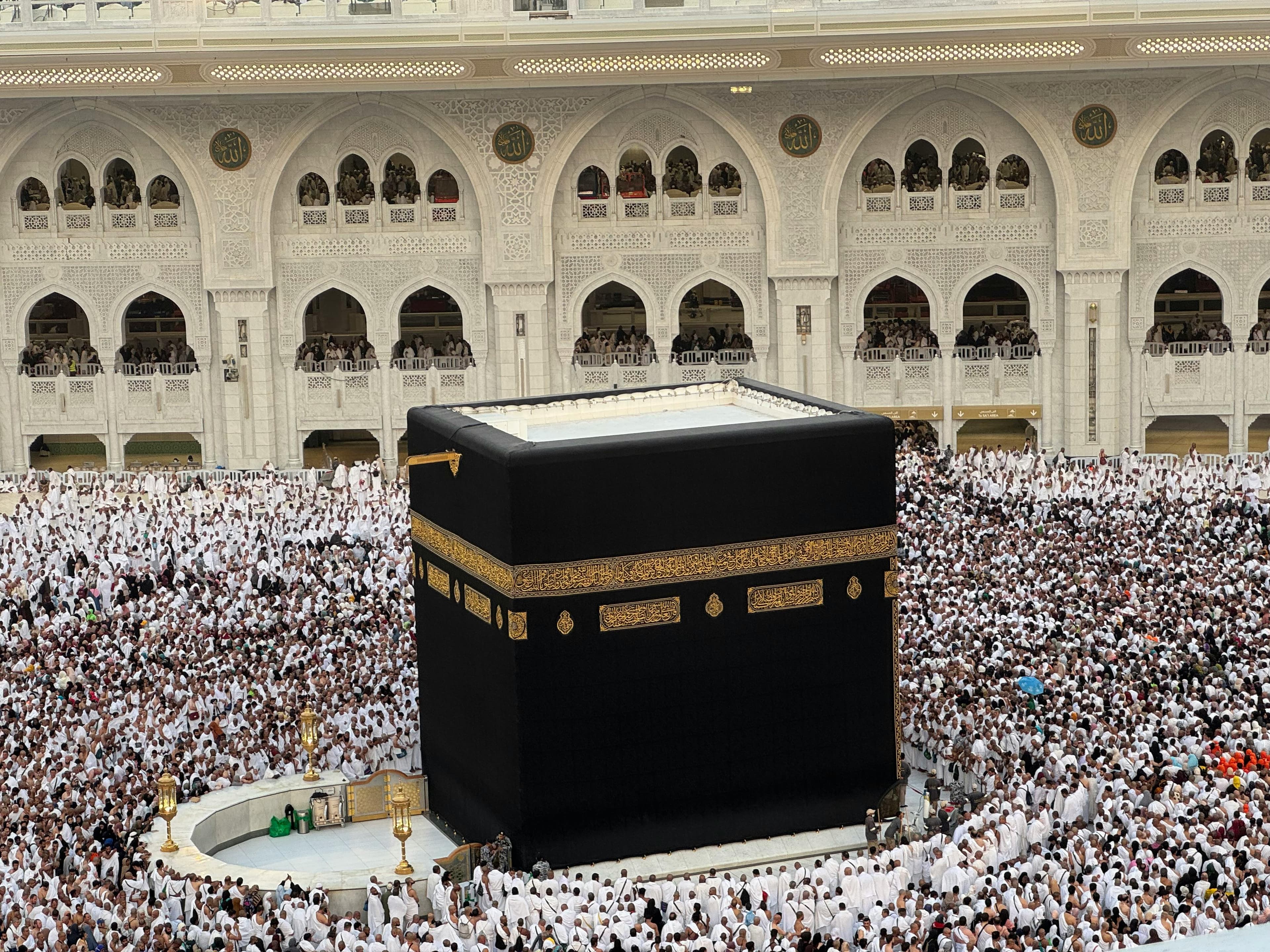
My struggle with Umrah: How everyone experiences spirituality differently
Answers to Everyday Issues
Answers to Everyday Issues – Part 105: Nushuz, mi‘raj of Prophet Moses, women’s congregational salat and bearing witness vs concealing faults

Science & Technology
The neuroscience of prayer: How prayer rewires our brain
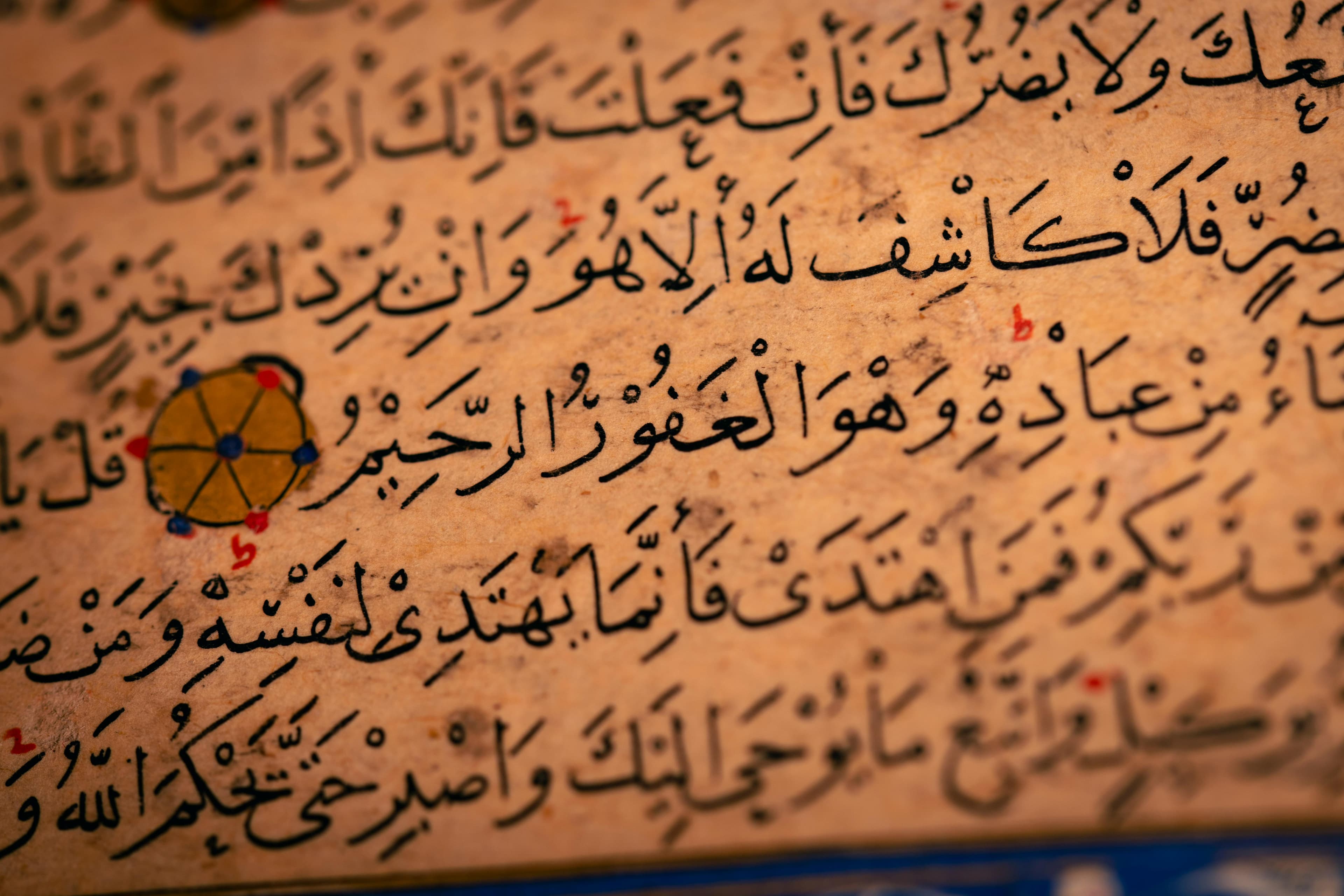
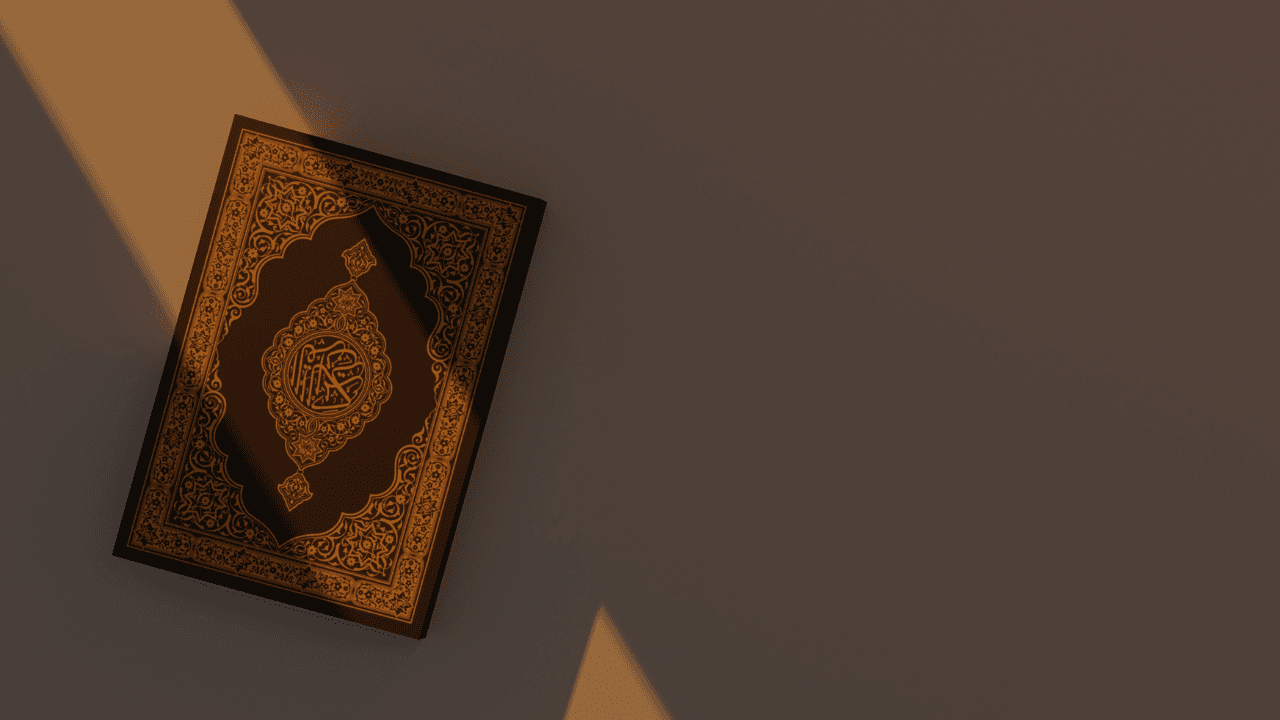
Muslim scholars throughout history have grappled with the doctrine of abrogation, frequently seeking to resolve apparent contradic…
Religion & Theology
My struggle with Umrah: How everyone experiences spirituality differently
Answers to Everyday Issues
Answers to Everyday Issues – Part 105: Nushuz, mi‘raj of Prophet Moses, women’s congregational salat and bearing witness vs concealing faults
Science & Technology
The neuroscience of prayer: How prayer rewires our brain
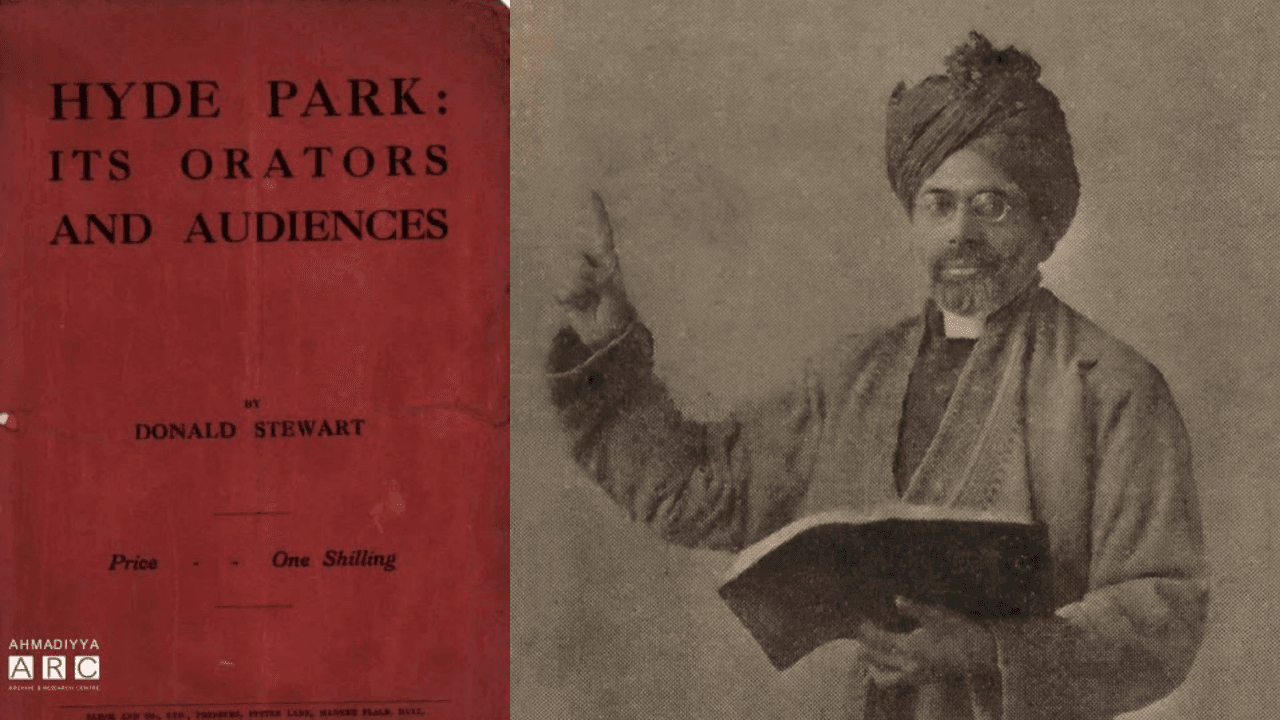
The Khalifa’s warning, the League of Nations crisis and Hyde Park tabligh through Western eyes (1926)
How the West viewed the Ahmadiyya Movement in Islam (1926)
We must point out that the Ahmadiyya Movement is not in any sense a national movement. It is, on the other hand, above politics and all-comprehensive. It does not recognise any distinction of caste, colour or country. It is pure Islam in its original form.
Talim-ul-Islam School in Saltpond and news of Islam Ahmadiyyat in Algemeen Handelsblad, Holland (1926)
The ceremony of the laying of the foundation stone of the Talim-ul-Islam Ahmadiyya School, Saltpond, took place on 8 February 1926.
The Khalifa’s warning, the League of Nations crisis and Hyde Park tabligh through Western eyes (1926)
How the West viewed the Ahmadiyya Movement in Islam (1926)
We must point out that the Ahmadiyya Movement is not in any sense a national movement. It is, on the other hand, above politics and all-comprehensive. It does not recognise any distinction of caste, colour or country. It is pure Islam in its original form.
Talim-ul-Islam School in Saltpond and news of Islam Ahmadiyyat in Algemeen Handelsblad, Holland (1926)
The ceremony of the laying of the foundation stone of the Talim-ul-Islam Ahmadiyya School, Saltpond, took place on 8 February 1926.
Women’s iftar held in Windsor, Canada
1 min read
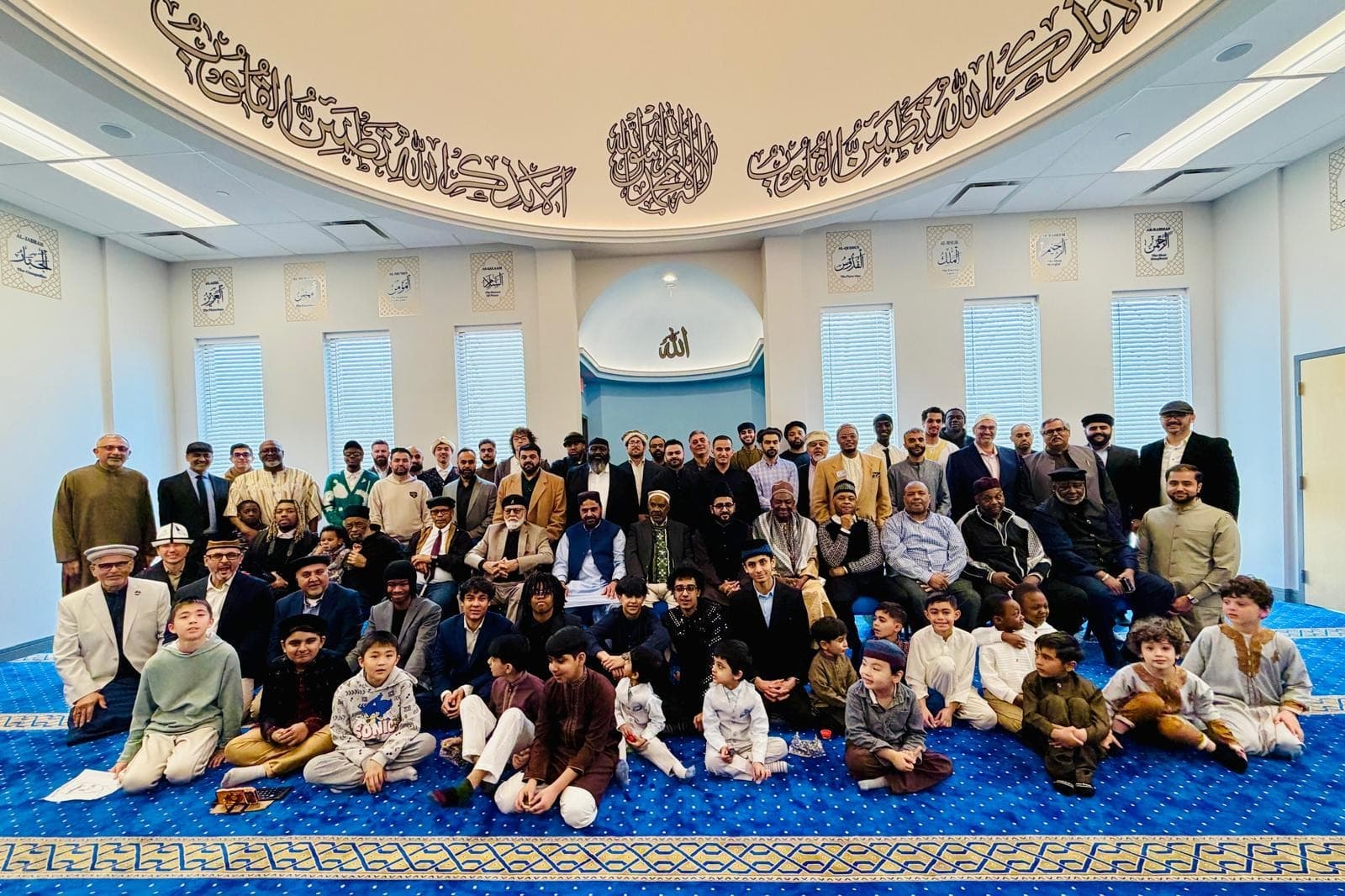
Zion Jamaat observes Ramadan and Eid-ul-Fitr
1 min read

Mayor of Niamey Council Number 1 visits Jamaat’s centre
1 min read
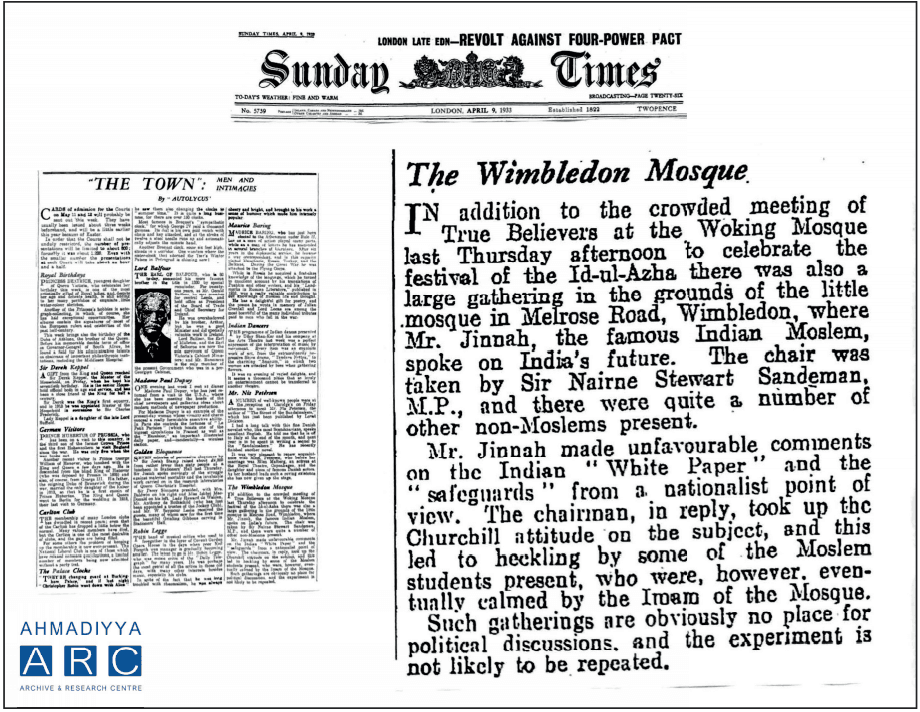
This Week in History: 3-9 April
5 min read
The Khalifa’s warning, the League of Nations crisis and Hyde Park tabligh through Western eyes (1926)
10 min read
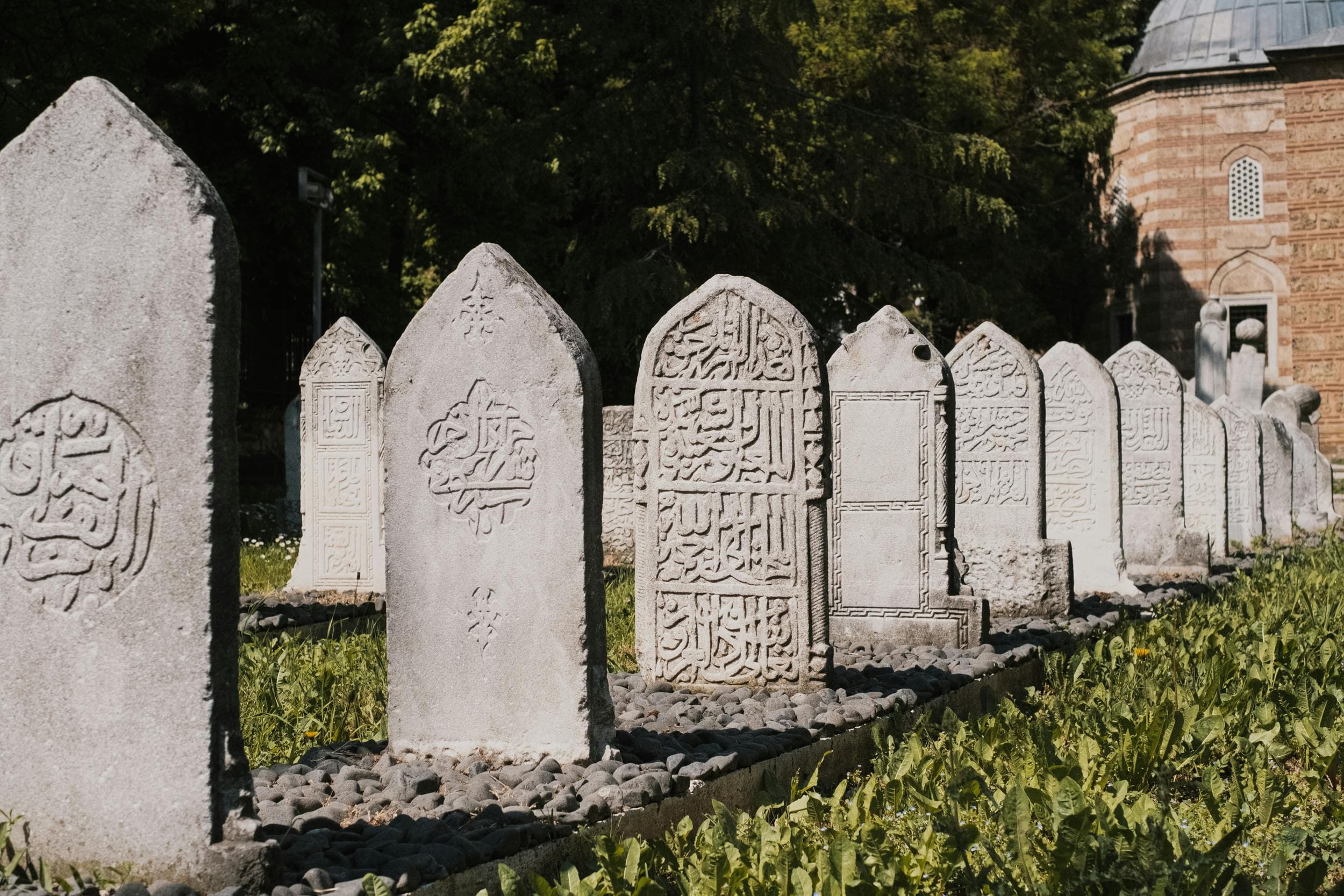
Standing up for a funeral procession
1 min read
Good conduct towards the authorities and relatives
1 min read
Friday Sermon – Unity and prayers: The shield of the Ummah (6 March 2026)
33 min read
The five ‘abrogated’ verses: Evolution of the naskh (abrogation) theory in the Quran and its resolution in Ahmadiyya thought
55 min read
My struggle with Umrah: How everyone experiences spirituality differently
13 min read
Answers to Everyday Issues – Part 105: Nushuz, mi‘raj of Prophet Moses, women’s congregational salat and bearing witness vs concealing faults
15 min read
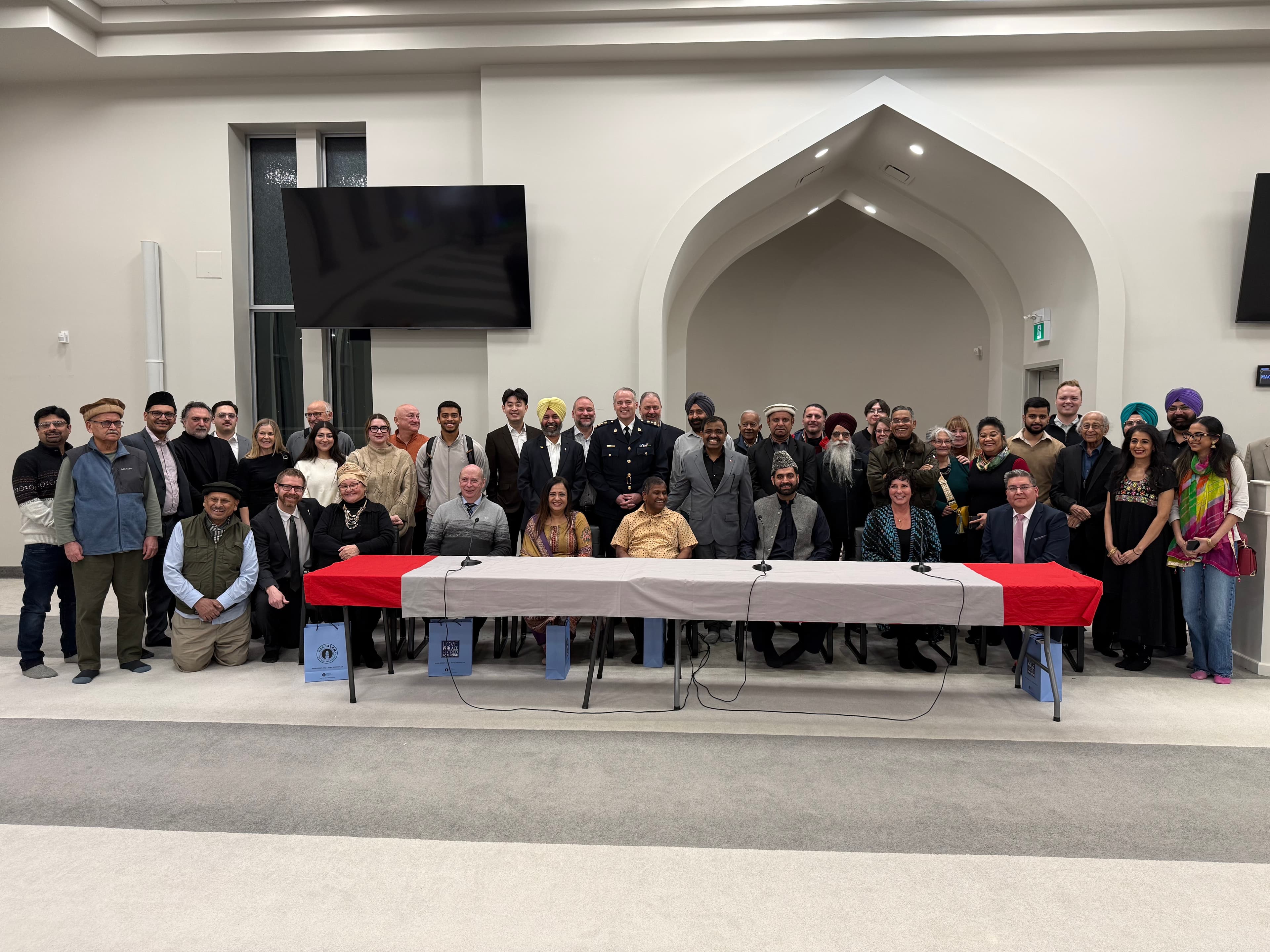
Saskatoon Southwest Jamaat hosts interfaith symposium on ‘peaceful coexistence’
1 min read
Women’s iftar held in Windsor, Canada
1 min read
Zion Jamaat observes Ramadan and Eid-ul-Fitr
1 min read
Mayor of Niamey Council Number 1 visits Jamaat’s centre
1 min read
This Week in History: 3-9 April
5 min read
The Khalifa’s warning, the League of Nations crisis and Hyde Park tabligh through Western eyes (1926)
10 min read
Standing up for a funeral procession
1 min read
Good conduct towards the authorities and relatives
1 min read
Friday Sermon – Unity and prayers: The shield of the Ummah (6 March 2026)
33 min read
The Khalifa’s warning, the League of Nations crisis and Hyde Park tabligh through Western eyes (1926)
How the West viewed the Ahmadiyya Movement in Islam (1926)
We must point out that the Ahmadiyya Movement is not in any sense a national movement. It is, on the other hand, above politics and all-comprehensive. It does not recognise any distinction of caste, colour or country. It is pure Islam in its original form.
Talim-ul-Islam School in Saltpond and news of Islam Ahmadiyyat in Algemeen Handelsblad, Holland (1926)
The ceremony of the laying of the foundation stone of the Talim-ul-Islam Ahmadiyya School, Saltpond, took place on 8 February 1926.
Women’s iftar held in Windsor, Canada
1 min read
Zion Jamaat observes Ramadan and Eid-ul-Fitr
1 min read
Mayor of Niamey Council Number 1 visits Jamaat’s centre
1 min read
This Week in History: 3-9 April
5 min read
The Khalifa’s warning, the League of Nations crisis and Hyde Park tabligh through Western eyes (1926)
10 min read
Standing up for a funeral procession
1 min read
Good conduct towards the authorities and relatives
1 min read
Friday Sermon – Unity and prayers: The shield of the Ummah (6 March 2026)
33 min read
The five ‘abrogated’ verses: Evolution of the naskh (abrogation) theory in the Quran and its resolution in Ahmadiyya thought
55 min read
My struggle with Umrah: How everyone experiences spirituality differently
13 min read
Answers to Everyday Issues – Part 105: Nushuz, mi‘raj of Prophet Moses, women’s congregational salat and bearing witness vs concealing faults
15 min read
Saskatoon Southwest Jamaat hosts interfaith symposium on ‘peaceful coexistence’
1 min read
Women’s iftar held in Windsor, Canada
1 min read
Zion Jamaat observes Ramadan and Eid-ul-Fitr
1 min read
Mayor of Niamey Council Number 1 visits Jamaat’s centre
1 min read
This Week in History: 3-9 April
5 min read
The Khalifa’s warning, the League of Nations crisis and Hyde Park tabligh through Western eyes (1926)
10 min read
Standing up for a funeral procession
1 min read
Good conduct towards the authorities and relatives
1 min read
Friday Sermon – Unity and prayers: The shield of the Ummah (6 March 2026)
33 min read
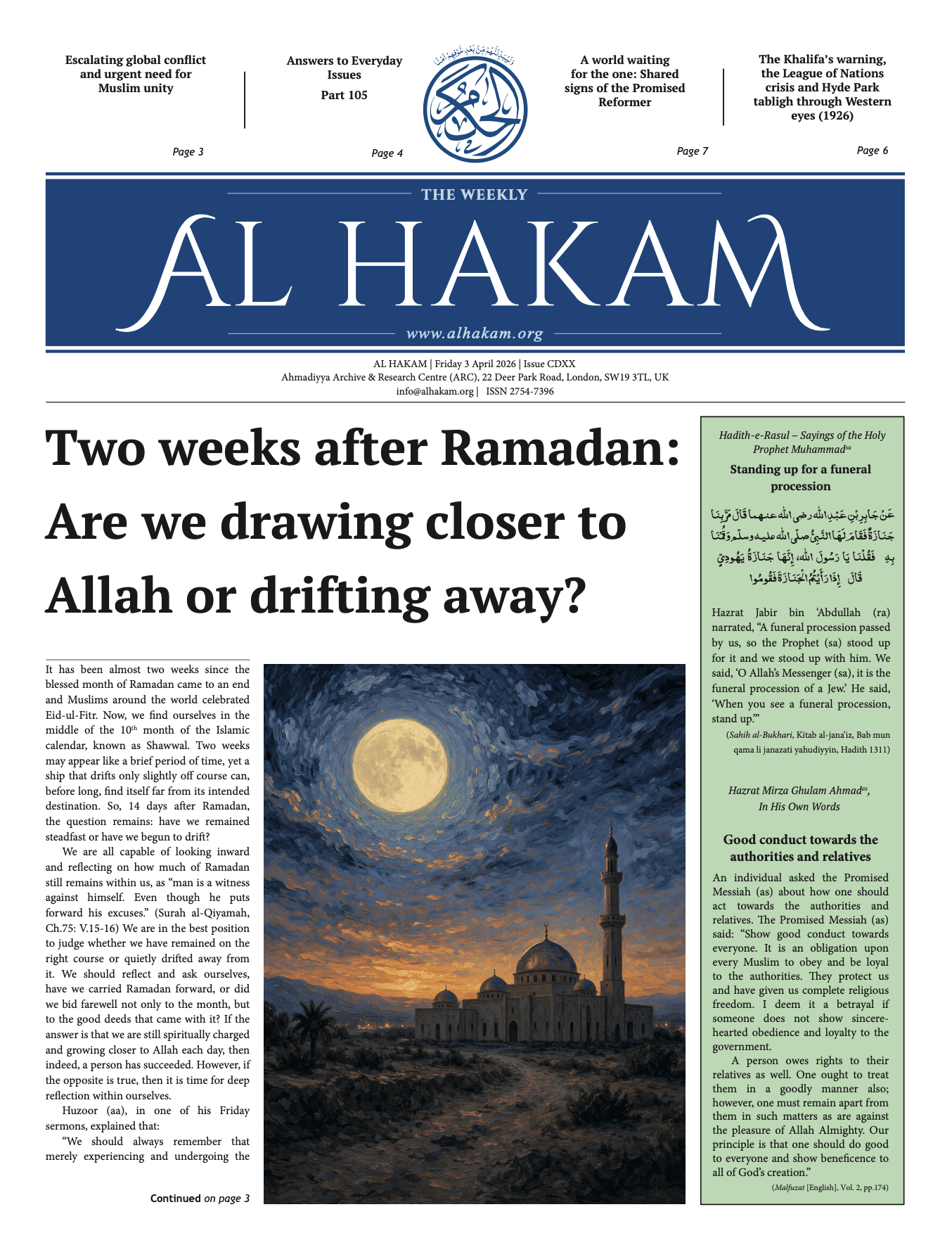
Edition: 3 April 2026
Two weeks after Ramadan: Are we drawing closer to Allah or drifting away? (Al Hakam – 3 April 2026)
Read our Newspaper!Edition: 3 April 2026
Two weeks after Ramadan: Are we drawing closer to Allah or drifting away? (Al Hakam – 3 April 2026)
Women’s iftar held in Windsor, Canada
1 min read
Zion Jamaat observes Ramadan and Eid-ul-Fitr
1 min read
Mayor of Niamey Council Number 1 visits Jamaat’s centre
1 min read
This Week in History: 3-9 April
5 min read
The Khalifa’s warning, the League of Nations crisis and Hyde Park tabligh through Western eyes (1926)
10 min read
Standing up for a funeral procession
1 min read
Good conduct towards the authorities and relatives
1 min read
Friday Sermon – Unity and prayers: The shield of the Ummah (6 March 2026)
33 min read
The five ‘abrogated’ verses: Evolution of the naskh (abrogation) theory in the Quran and its resolution in Ahmadiyya thought
55 min read
My struggle with Umrah: How everyone experiences spirituality differently
13 min read
Answers to Everyday Issues – Part 105: Nushuz, mi‘raj of Prophet Moses, women’s congregational salat and bearing witness vs concealing faults
15 min read
Saskatoon Southwest Jamaat hosts interfaith symposium on ‘peaceful coexistence’
1 min read