

Guidance regarding basic Islamic issues that Hazrat Amirul Momineen, Khalifatul Masih Vaa, has given on various occasions in his written correspondence and during MTA programmes is being published officially below for everyone’s benefit.
Is it permissible to deliver a dars or an exhortation during the rest breaks of Tarawih prayers in Ramadan?
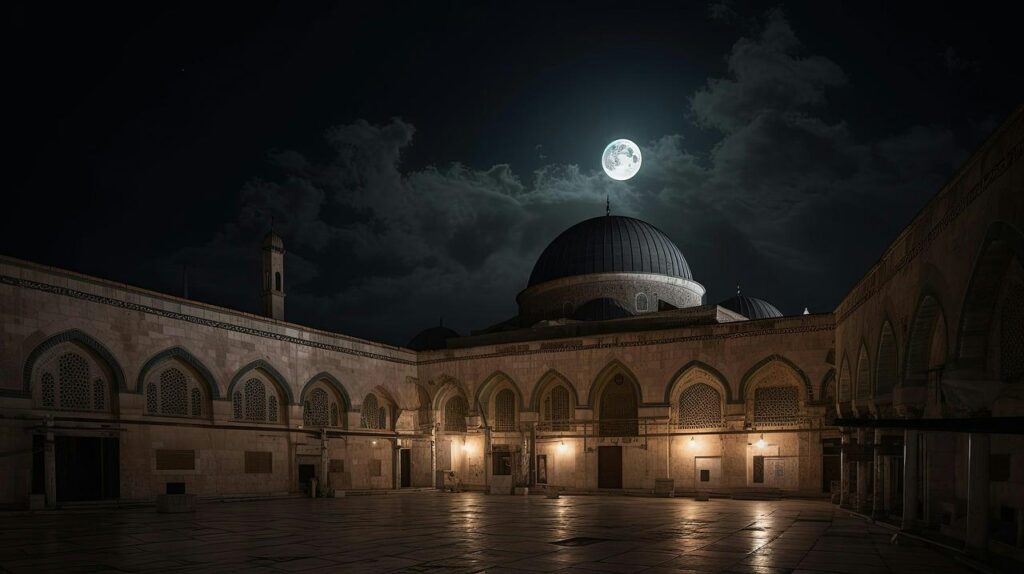
The President of Jamaat-e-Ahmadiyya Egypt wrote to Hazrat Amirul Momineen, Khalifatul Masih Vaa, stating: “Here in Egypt, after praying four rak‘at of the Tarawih prayer, a short rest is taken, during which a brief exhortation is delivered. Is it correct to do so?
“It is mentioned in the book Fiqh-ul-Masih that the Promised Messiahas never performed i‘tikaf in his life, upon which some non-Ahmadis raise an objection. We have offered the reasoning that his entire life was, in fact, in a state of i‘tikaf, because his whole time was spent engrossed in the service of the faith. Is our reasoning correct?”
In his letter dated 16 April 2023, Huzoor-e-Anwaraa provided the following reply:
“The Tarawih prayer, which is offered during the blessed month of Ramadan, is in fact a more accessible form of the Tahajjud prayer. Regarding the Tahajjud prayer of the Holy Prophetsa, there is a narration from Hazrat Aishahra that the Holy Prophetsa would offer four rak‘at at night and then rest. He would then prolong the prayer to such an extent that I would feel compassion for him and say, ‘May my father and mother be your ransom; Allah the Exalted has forgiven all past and future shortcomings attributed to you (so why do you undergo such exertion?)’. To this, he would reply, ‘Should I not be a grateful servant of Allah?’ (Al-Bayhaqi, As-Sunan al-Kubra, Kitab as-salat, Bab ma ruwiya fi ‘adadi raka‘ati l-qiyami fi shahri ramadan)
“Explaining the etymology of the word ‘tarawih’, the commentator of Sahih al-Bukhari, Hazrat Ibn Hajar al-Asqalanirh, writes that ‘tarawih’ is the plural of ‘tarwihah’ and a ‘tarwihah’ is a single instance of taking rest. The reason for naming the prayer offered in congregation on the nights of Ramadan ‘Tarawih’ is that when the noble Companions first gathered to offer this prayer, they would pause for a ‘tarwihah’, that is, a period of rest, after every two sets of salams [four rak‘at]. (Fath al-Bari, Kitab salati t-tarawih]
“Thus, while there is mention of taking a short pause after praying four rak‘at during the Tarawih prayer, there is no mention of delivering an exhortation during this interval. The purpose of this pause is, firstly, to allow the imam some rest after a long recitation of the Holy Quran and, secondly, to allow any among the congregation who may need to drink water or use the lavatory to avail themselves of this interval.”
Did the Promised Messiahas perform i‘tikaf?
“As for the matter of the Promised Messiahas performing i‘tikaf, your reasoning in this regard is absolutely correct. On the one hand, in defence of Islam, he wrote powerful rebuttals with his pen against the multi-pronged attacks of its opponents and he became so engrossed with painstaking diligence in this scholarly jihad that Allah the Exalted informed him by way of revelation, ‘Your deeds are more exalted than your Prayers.’ (Tadhkirah, Fourth Edition, 2004, p. 685) On the other hand, acting upon the tradition of the family of the Holy Prophetsa, he observed continuous fasts for many months. Furthermore, to prove the truth of Islam and the veracity of the Holy Prophetsa, he undertook a forty-day spiritual retreat. All these acts of worship were a form of i‘tikaf.
“Moreover, during the month of Ramadan, he used to engage in prayers with great abundance day and night. Accordingly, to reassure the members of the Jamaat who were ever eager to be blessed by his company, the Promised Messiahas once stated, ‘These days, I sit less with friends and spend a greater portion of my time alone. This is of the utmost benefit for the members. In solitude, I supplicate with great freedom and a significant part of the night is spent in prayers.’ (Malfuzat, Vol. 1, UK: 2022, p. 424)
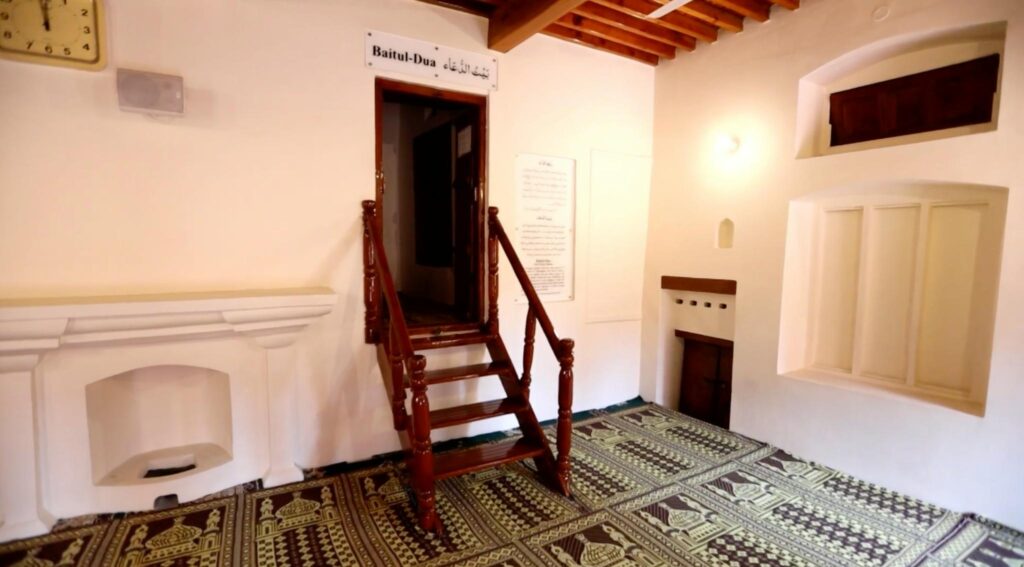
“Similarly, to pray with complete concentration, he had the Bait-ud-Dua, a prayer room, built in a part of his home, in which he would engage in supplication with earnest and tearful entreaty before Allah the Exalted for the progress of Islam throughout the entire year. All these works of his were, in fact, a lifelong i‘tikaf.”
Can a person remove their father’s name from their own due to his abusive behaviour?

A lady wrote to Hazrat Amirul Momineen, Khalifatul Masih Vaa, mentioning the cruelty and oppression her father inflicted upon her mother and the sacrifices her mother made and wrote that for these reasons, she wished for permission not to use her father’s name with her own.
In his letter dated 16 April 2023, Huzoor-e-Anwaraa provided the following guidance on this matter:
“Both the father and the mother have an equal share in the birth and upbringing of a child. It is for this reason that the Holy Quran has attributed a child to both the father and the mother. As Allah the Exalted states:
لَا تُضَآرَّ وَٰلِدَةُۢ بِوَلَدِهَا وَلَا مَوۡلُودٞ لَّهُۥ بِوَلَدِهِ
“‘No mother shall be made to suffer on account of her child, and no father shall be made to suffer on account of his child.’ (Surah al-Baqarah, Ch.2: V.234)
“In this verse, the child has been attributed to both the mother and the father. However, where the matter of calling a child by someone’s name is concerned, the Holy Quran has clearly stated:
اُدۡعُوۡھُمۡ لِاٰبَآئِہِمۡ ھُوَ اَقۡسَطُ عِنۡدَ اللّٰہِ
“‘Call them by [the names of] their fathers. That is more equitable in the sight of Allah.’ (Surah al-Ahzab, Ch.33: V.6)
“Thus, although your father may have taken no part in your upbringing and, in your view, he inflicted a great deal of cruelty and oppression upon your mother, if he has indeed been guilty of this, then he will certainly be held accountable before Allah the Exalted. However, as far as worldly matters are concerned, you will be known as his child. Therefore, from a Shariah perspective, your father’s name will be recorded as your parentage in your documents.
“However, alongside this, it is not necessary for a child to have their mother’s or father’s name written as a prefix or suffix to their own. If you wish to change your name to the extent that your father’s name does not appear before or after your name, there is no religious prohibition on doing so; you may do so. But wherever your parentage is mentioned, or when it comes to writing your parentage in documents, it is your father’s name that will be written and spoken. Your parentage cannot be attributed to any other name, because the Holy Prophetsa has given a very stern warning in this regard. Accordingly, Hazrat Wathilah ibn al-Asqa‘ra narrates that the Holy Prophetsa said, ‘Whoever knowingly attributes himself to someone other than his own father has committed an act of disbelief. And whoever claims to belong to a people to whom he does not belong, let him prepare his seat in the Hellfire.’ (Sahih al-Bukhari, Kitab al-manaqib, Bab nisbati l-yamani ila isma‘il)”
How can a person join someone already praying to form a congregation without speaking?
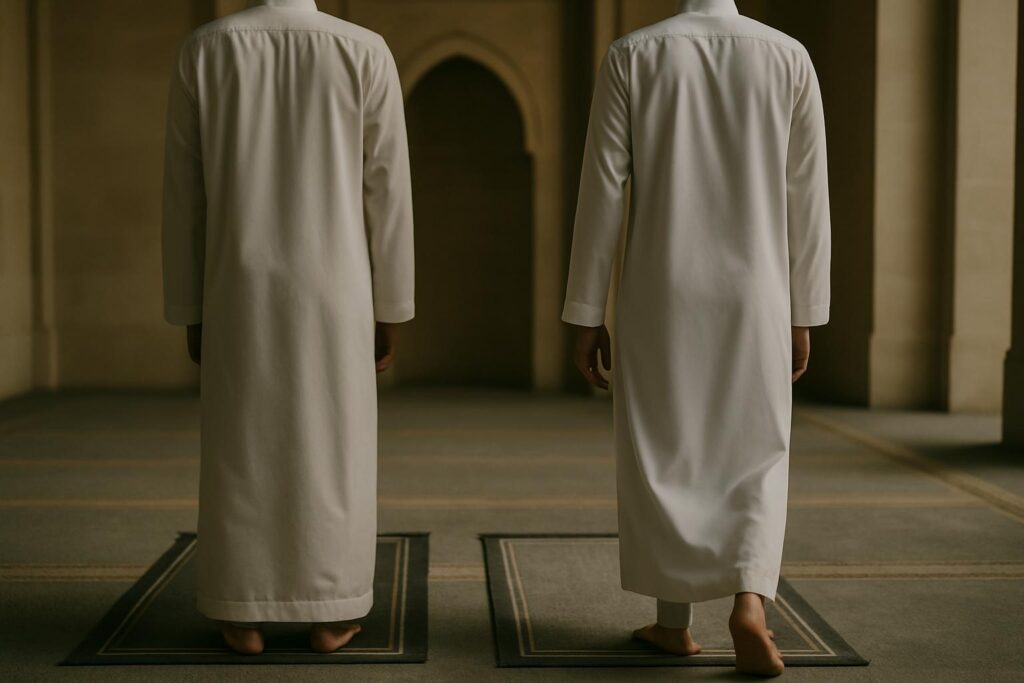
Someone from Indonesia wrote to Hazrat Amirul Momineen, Khalifatul Masih Vaa: “If a person is offering their prayer and another person arrives, can the second person tap them on the shoulder, make them the imam and pray in congregation?”
In his letter dated 16 April 2023, Huzoor-e-Anwaraa provided the following answer to this matter:
“There is no need to tap the shoulder, as this would be an act that needlessly disturbs a worshipper’s prayer. Yes, if the person who arrives later stands to the right of the first worshipper and begins to follow his movements and pauses, the first worshipper will himself understand that the second person has made him his imam and in this way, the congregational prayer of both will take place. An incident of this nature is also found in the hadith, from which the permissibility of this method can be derived. Accordingly, Hazrat Abdullah ibn Abbasra narrates that one night he stayed at the house of his maternal aunt, Hazrat Maymunahra, the wife of the Holy Prophetsa. The Holy Prophetsa was also in that house that night. When a portion of the night had passed, the Holy Prophetsa arose, performed ablutions and stood for prayer. Hazrat Ibn Abbasra narrates, ‘I too performed ablutions just as the Holy Prophetsa had done and joined the prayer with the Holy Prophetsa on his left side. But the Holy Prophetsa took hold of me and moved me to his right side and then the Holy Prophetsa prayed as much as Allah willed.’ (Sahih al-Bukhari, Kitab al-wudu’, Bab at-takhfifi fi l-wudu’)
“In such a situation, the Islamic jurists have held discussions concerning the intention [niyyah] of the imam and the follower. However, in my view, the prayer of the person who arrives later will be counted in accordance with the intention of the first worshipper, because one prayer cannot be offered with two different intentions.”
What is the difference between a Nabi [Prophet] and a Rasul [Messenger] in Islam?
Someone from Canada asked Hazrat Amirul Momineen, Khalifatul Masih Vaa: “When we mention all the prophets, we use the word ‘Nabi,’ whereas with the name of the Holy Prophetsa, the word ‘Rasul’ comes to mind. What is the reason for this?”
In his letter dated 16 April 2023, Huzoor-e-Anwaraa gave the following answer to this question:
“If it comes to your mind, you should correct it yourself. No such thought comes to us, because in our view, there is no difference between a Rasul [Messenger] and a Nabi [Prophet]. These are two titles bestowed by Allah the Exalted upon the same personage in view of his two separate functions. A being who receives news from Allah the Exalted and conveys it to the people is called a Nabi and the word Rasul is used for a being whom Allah the Exalted sends for the guidance and direction of mankind. And both these functions and offices are granted to every prophet and messenger. Accordingly, the title of Rasul has also been used in the Holy Quran for Hazrat Nuhas, Hazrat Hudas, Hazrat Salihas, Hazrat Lutas, Hazrat Shu‘aibas, Hazrat Musaas, Hazrat Harunas and Hazrat ‘Isaas, among others. And for the Holy Prophetsa, the word Nabi has been used in some places in the Holy Quran, the word Rasul in other places and, in some places, both titles, Rasul and Nabi, have appeared together.
“Furthermore, the word Nabi has also appeared for Hazrat Ibrahimas, Hazrat Isma’ilas, Hazrat Ishaqas, Hazrat Ya‘qubas, Hazrat Idrisas, Hazrat Musaas and Hazrat ‘Isaas, among others. And with some of these prophets, both titles, Rasul and Nabi, have also appeared.
“The reason the word Rasul comes to your mind with the name of the Holy Prophetsa may be that the word Rasul appears with the name of the Holy Prophetsa in the phrase ‘Muhammad-ur-Rasulullah’ in the Kalimah-e-Tayyibah [i.e., the Shahadah], which we hear and recite in great abundance and in the following verse of the Holy Quran, which we frequently use in our scholastic theology:
وَمَا مُحَمَّدٌ اِلَّا رَسُوۡلٌ ۚ قَدۡ خَلَتۡ مِنۡ قَبۡلِہِ الرُّسُلُ
“‘And Muhammad is only a Messenger. Verily, [all] Messengers have passed away before him.’ (Surah Aal-e-‘Imran, Ch.3: V.145)
“Otherwise, for the blessed personage of the Holy Prophetsa, both titles, Rasul and Nabi, have been used in the Holy Quran and the Prophetic traditions. Likewise, for other prophets as well, the word Rasul has appeared alongside Nabi in the Quran and Hadith.”
What are the sources of Ahmadiyya fiqh?
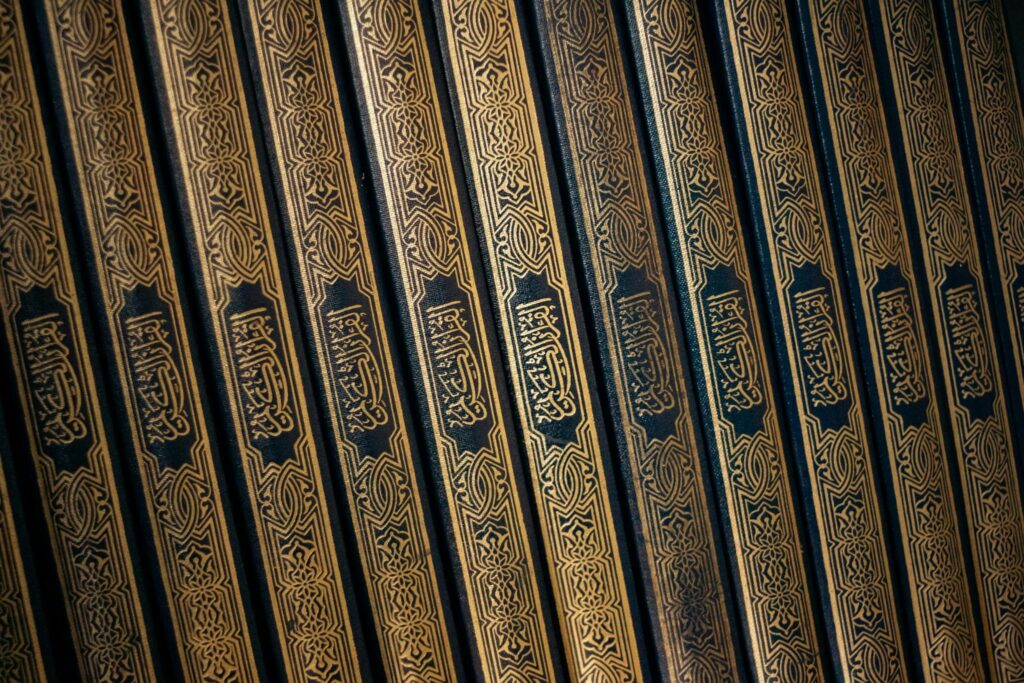
Regarding the use of ‘aqiqah meat for a walimah feast and the performance of ‘aqiqah for a deceased child, the respected Mufti-e-Silsilah issued two fatwas, writing that he had not yet been able to find any hadith concerning them. Hazrat Amirul Momineen, Khalifatul Masih Vaa, in his letter dated 19 April 2023, gave the following principal guidance concerning fatwas and the foundational sources of Ahmadiyya jurisprudence:
“The Promised Messiahas has also stated among the sources of jurisprudence [fiqh] that if a matter is not found in the Quran, sunnah and ahadith, then the Hanafi school of jurisprudence should be consulted. Therefore, if no guidance is found in the ahadith on a particular matter and similarly, no specific reference is found in the literature of the Promised Messiahas and his Khulafa’, then there is no harm in consulting the opinions of the jurists. If they have written something good on the matter, you may also issue a fatwa in accordance with it. However, in such a situation, it should be kept in view that the true spirit of Islamic teachings is not overlooked.
“In my view, there is no harm in holding a walimah with the meat of the ‘aqiqah, because a person can also eat the ‘aqiqah meat themselves.
“Regarding the ‘aqiqah for a deceased child, your fatwa is correct, because the ‘aqiqah is a charity in exchange for a life, the concept of which is not possible after death. As for the rest, if someone performs such an ‘aqiqah voluntarily as a good deed or to convey reward to the deceased and feeds the poor and needy or sends them the meat of this ‘aqiqah, then it certainly cannot be denied that this good deed of theirs will be rewarded in the sight of Allah.”
Is it permissible to buy a car on finance if the total price is higher than the cash price?

A lady from Germany asked Hazrat Amirul Momineen, Khalifatul Masih Vaa: “I am trying to buy my first car and would like to ask if a car can be purchased on interest?”
In his letter dated 25 April 2023, Huzoor-e-Anwaraa provided the following guidance on this question:
“Allah the Exalted and His Messengersa have strictly forbidden the taking and giving of interest. As it is stated:
یَااَیُّھَا الَّذِیْنَ آمَنُوْا اتَّقُوا اللّٰہَ وَذَرُوْامَابَقِیَ مِنَ الرِّبَا اِنْ کُنْتُمْ مُؤْمِنِیْنَ فَاِنْ لَمْ تَفْعَلُوْا فَأْذَنُوْا بِحَرْبٍ مِنَ اللّٰہِ وَ رَسُوْلِہِ
“‘O ye who believe! fear Allah and relinquish what remains of interest, if you are believers. But if you do it not, then beware of war from the side of Allah and His Messenger.’ (Surah al-Baqarah, Ch.2: V.279-280)
“Describing the severity of the prohibition of interest, the Promised Messiahas states:
“‘If a person acts with frugality, they suffer no loss at all. It is a matter of great regret that people displease God the Exalted for the sake of their carnal desires and transient pleasures, which becomes a cause of their destruction. Look! Do they not know how grave a sin interest is? The eating of pork has been permitted in a state of extreme necessity. Thus, He states [about the one who is driven by necessity]:
فَمَنِ اضْطُرَّ غَیْرَ بَاغٍ وَلَا عَادٍ فَلَا اِثْمَ عَلَیْہِ اِنَّ اللّٰہَ غَفُوْرٌ رَّحِیْمٌ
“‘That is, a person who is neither rebellious nor exceeds the limit, for them there is no sin. Allah is Forgiving, Merciful. [Surah al-Baqarah, Ch.2: V.174] However, regarding interest, He did not say that it is permissible in a state of extreme necessity. Rather, for it, the divine command is:
یَااَیُّھَا الَّذِیْنَ آمَنُوْا اتَّقُوا اللّٰہَ وَذَرُوْامَابَقِیَ مِنَ الرِّبَا اِنْ کُنْتُمْ مُؤْمِنِیْنَ فَاِنْ لَمْ تَفْعَلُوْا فَأْذَنُوْا بِحَرْبٍ مِنَ اللّٰہِ وَ رَسُوْلِہِ
“‘That is, if you do not desist from the transaction of interest, then it is a declaration of war from Allah and His Messenger. [Surah al-Baqarah, Ch.2: V.279-280] Our belief is that one who places their trust in God the Exalted does not even face such a need. If Muslims are in this trial, it is a result of their own misdeeds.’ (Badr, No. 5, Vol. 7, 6 February 1908, p. 6)
“Therefore, any sale, purchase, or financial transaction that is mixed with interest is, categorically, forbidden. However, several methods for the sale and purchase of goods on instalments are prevalent in the world under names such as Hire Purchase (HP) and Personal Contract Purchase (PCP), in which goods can be bought by paying a somewhat higher amount in instalments compared to a lump-sum payment. This method does not fall into the category of interest. Accordingly, a question of this nature was presented to the Promised Messiahas and its answer was published in the Badr newspaper of Qadian in the following words:
“‘The smooth running of the newspaper would be facilitated if the subscription price were received in advance. Among those who do not pay in advance and make promises of later payment, some simply delay on the basis of promises alone, while for others, the recovery of payments involves such difficulty – through repeated correspondence and the keeping of records to collect the payments from them – that in order to mitigate this additional labour and loss to some extent and also to receive compensation for it, the price of the Badr newspaper for post-payment has been increased by one rupee; that is, from those who pay afterwards, the price of the newspaper would be collected as four rupees instead of three.
“‘Upon this, a friend from Lyallpur enquired whether this arrangement constituted interest. As this was a matter pertaining to Islamic law, it was presented to the Promised Messiahas with the aforementioned reasons. The reply that he wrote is reproduced below:
“‘‘As-salamu ‘alaykum. In my view, this has no connection to interest. The owner has the right to ask for whatever price he wishes, especially as there is also an inconvenience involved in collecting payment later. If a person wishes to receive the newspaper, they can also pay beforehand. This matter lies within his own choice. Wassalam. Mirza Ghulam Ahmad.’’ (Badr, Qadian, No. 7, Vol. 6, 14 February 1907, p. 4)
“Therefore, if you wish to buy a car on instalments through this method, in which you would have to pay a somewhat higher amount than the lump-sum price, this is not considered interest and it is permissible. The exception is if the one receiving the payment has named it interest.”
(Compiled by Zaheer Ahmad Khan, Head of Records Department, Private Secretariat, London and translated by Al Hakam)