
Qasim Choudhary, Missionary, Marshall Islands
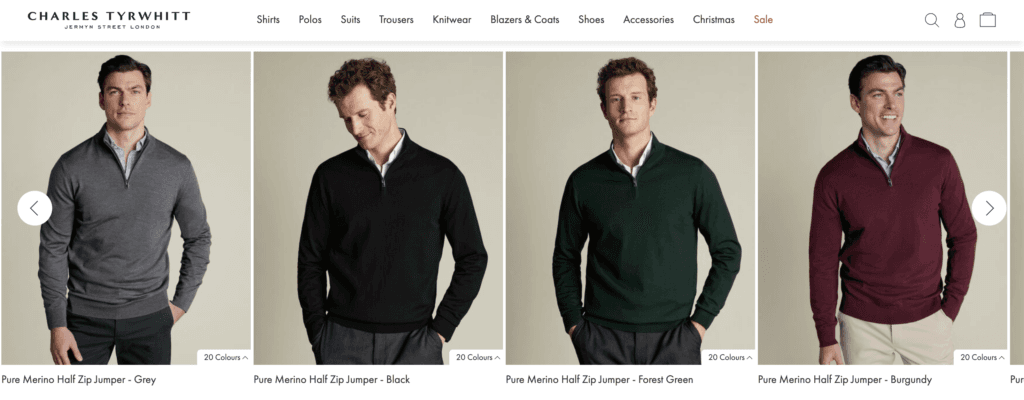
Do you own a Ralph Lauren quarter zip sweater? Or Charles Tyrwhitt? Don’t worry, neither do I… yet.
If you have a TikTok or Instagram account, you will have likely seen the latest social media trend where young men are abandoning their streetwear, such as hoodies and tracksuits, and adopting a classier and more elegant corporate wardrobe.
Cue the quarter zip.
It’s the perfect layering piece – they come in all different colours and materials, and are versatile enough to be worn in the office with a dress shirt, or on your day off with a t-shirt.
What is being pushed online as a humorous way to get more likes and views actually highlights an underlying message that we as Muslims can genuinely benefit from.
What we wear affects how we think
It is well established that clothing affects our psychology and the way we think. Take the white-coat effect, or the term “enclothed cognition.” Studies indicate that wearing a white lab coat can enhance sustained attention and improve performance. (“Enclothed Cognition and Controlled Attention”, Journal of Problem Solving, Vol. 7, 2014)
Interestingly, another study found that patients sometimes experienced elevated blood pressure when faced with a doctor in a white coat. (“Normal Blood Pressure Control and the Evaluation of Hypertension”, Comprehensive Clinical Nephrology, 4th Edition, 2010)
From such studies, one thing becomes clear – how we dress influences not only how our own minds function and how we perceive ourselves, but also how others perceive us.
The Promised Messiahas also explained this principle in The Philosophy of the Teachings of Islam. He wrote that physical conditions have a strong and powerful effect on the soul, and that outward habits shape the inner state of a person (The Philosophy of the Teachings of Islam, pp. 8-9). This beautifully mirrors what modern researchers call “enclothed cognition” and shows that Islam recognised this truth long before it became a scientific discussion.
The Holy Quran on clothing and intention
Islam also guides us on how to think about clothing. Allah the Almighty says:
“O children of Adam. We have indeed sent down to you raiment to cover your shame and to be an elegant dress. But the raiment of righteousness, that is the best.” (Surah al-A‘raf, Ch.7: V.27)
This verse highlights that the real value of clothing lies in righteousness. Whenever we choose a particular style, it is worth asking from which culture or subculture we are drawing inspiration. After all, fashion always imitates something.
Islamic principles on how we present ourselves
A common question people ask is why Muslim men are forbidden from wearing gold. Scholars offer various explanations, but one point is that gold and similar adornments can soften a man’s outward appearance. The Holy Prophetsa encouraged men to maintain a dignified and masculine presence and to avoid styles that are feminine.
Another point to remember is that the Holy Prophetsa cursed men who are effeminate and cursed women who imitate men. In another narration, he cursed men who imitate women and women who imitate men. (Sahih al-Bukhari, Hadith 5886 and 6834)
Hazrat Khalifatul Masih IVrh explained the wisdom behind this teaching. He stated that Islam emphasises maintaining a clear distinction between the sexes. Modern society has blurred these boundaries to the point where men and women are often indistinguishable in both appearance and roles. Islam, on the other hand, stresses that men and women have different natural strengths and responsibilities. Ornaments and adornments do not suit the nature of men, who are expected to lead tougher lives. If men adopt feminine styles, it eventually affects their inner character and makes them less fit for the duties they have been created to fulfil. (“Why are Muslim men prohibited from wearing gold and silk?”, www.alislam.org/askislam)
On a practical level, if you are unsure about a piece of clothing or jewellery, simply reflect on how the noble and respected people of society dress compared to those who are not good influences. As a young man, if you are considering wearing a chain, earrings or excessively baggy jeans, ask yourself how often respected professionals such as teachers, doctors or chief executives dress in this way. A person’s clothing plays a major role in how seriously others take him.
Those who commonly wear such clothing and accessories are often rappers, celebrities or figures associated with pop culture or even crime culture. These are not role models worth imitating.
Islam encourages us to dress in a way that reflects dignity and self-respect. If that means joining the quarter zip trend, so be it. But all jokes aside, wearing clean and presentable clothing is a sunnah.
Once, a man asked the Holy Prophetsa if wearing good clothes and shoes was considered arrogance. The Holy Prophetsa responded, “Allah is beautiful and He loves beauty.” (Riyad-us-Saliheen, Hadith 611)
Islam teaches balance – to look good and dress well, but also to maintain dignity. Do not become arrogant, even if your quarter zip has a tiny Ralph Lauren horse on the chest. Presentation does matter, but humility matters more.
Clear and concise speech
Returning to the trend for a moment, many of the young men embracing the quarter zip also make an effort to clean up their speech. They move away from heavy slang and start using clearer, more thoughtful and more professional language. Interestingly, this too is something our faith places great emphasis on.
The Holy Quran instructs the believers:
“And say to My servants that they should speak that which is best.” (Surah Bani Isra’il, Ch.17: V.54)
The best is not only truthful and free from falsehood, but also calm and respectful. It is narrated that the Holy Prophetsa spoke at such a moderate and composed pace that the listeners could practically count his words as he said them and even memorise them. (Jami‘ at-Tirmidhi, Hadith 3639; Sahih Muslim, Hadith 2493b)
Clear and noble speech reflects a clear heart. Just as neat clothing elevates one’s outward presence, refined speech elevates one’s inner character.
An example for the modern man
An excellent example for young Muslim men navigating our modern era is the great companion of the Promised Messiahas, Hazrat Chaudhry Muhammad Zafrulla Khanra.
He was a man who reached a high rank in both his spiritual and worldly life. He represented nations, sat with world leaders and moved comfortably among the most influential people in society. Yet his style remained simple, clean, dignified and content. His presence commanded respect not because of branded clothing or expensive jewellery, but because of his clean appearance, composed manner and spiritual aura.
And perhaps that is a big lesson for us. Whether the quarter zip trend is a passing fad or something that remains popular, the underlying principle will remain relevant.
A Muslim should be well-groomed, well-presented, inwardly humble and above all, righteous in all endeavours.
This was the way of our Holy Prophetsa and this is what communicates dignity before we even speak.