
Jalees Ahmad, Al Hakam
“Out, damned spot!” cries Lady Macbeth nervously and fearfully as she washes her hands, attempting to rid herself of the imagined bloodstains and, of course, the overwhelming guilt of murdering the king.
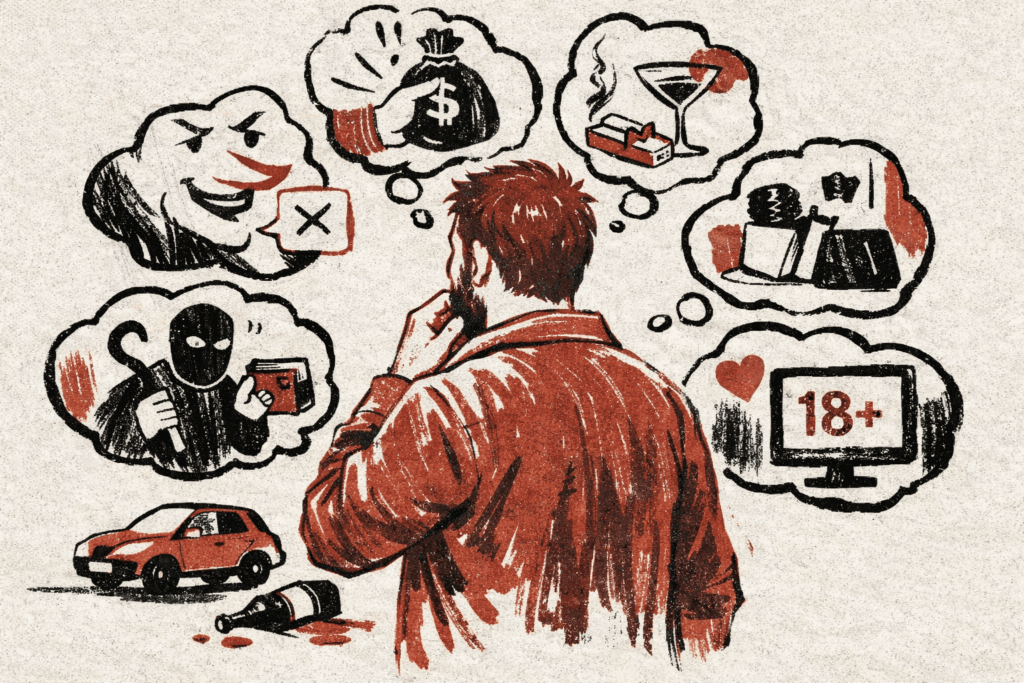
In life, unimaginable actions like murder and rape give rise to guilt. Guilt, in its purest form, is what makes humans just that: human. It is among the best deterrents to committing evil. Yet, what happens when one falls so deeply into sin, into acts so heinous, that even the idea makes one wonder how such people can continue to live in this world?
Murder, rape, and other terrible sins are among the most cruel actions a person can commit, and they have existed since the beginning of humanity. When Adam’s son, Cain, slew his brother, Abel, even then the murderer felt guilt. Guilt, indeed, serves as a reminder of our human nature. No matter how far humans wander into sin, guilt is what pulls people back to humanity, back to their human selves.
However, what happens when one lacks righteousness and a moral compass? What happens when sin and heinous deeds become a habit? Does it still pull us back to our human selves? Does guilt still leave a stain on our conscience?
The stains left by Jeffrey Epstein in the world have and will continue to have a lasting ripple effect. With much that has come to light and some matters still unrevealed, it has left a deep stain on the fabric of society, one so profound that what was once dismissed as conspiracy theories no longer seems theoretical.
This is not an article meant to argue over Epstein’s actions or rationalise them. Rather, it is a brief examination of why people sin. Since the latest release of the files, many might be wondering: “What makes one sink into a sinful life so that it no longer seems like a sin for them?” Here is an Islamic overview and five reasons why humans sin.
The nafs and its nature
Plato said that the soul is like a charioteer with two horses, one noble and the other ignoble. Before we talk about why humans sin or, for that matter, do anything, we must understand that we are not bodies with souls but rather souls occupying a body.
So, to truly understand the self, along with humans’ internal struggles and desires, we are compelled to look at the soul. In the Holy Quran, we are told of three types, or stages, of the soul. The first stage is callednafs al-ammarah. (Surah Yusuf, Ch.12: V.54)
Humans have a nafs, a soul, often understood as the self or ego, which, if left unbalanced, unchecked, and unregulated, can make one lean toward sin. The nafs al-ammarah is defined in the Quran as the self that incites to evil. It provokes and nudges a person to simply satisfy their immediate cravings without moral restraint.
This, in itself, is dangerous to keep unchecked. The Quran quotes Hazrat Josephas: “‘And I do not hold my own self to be free from weakness; for, the soul is surely prone to enjoin evil.’” (Surah Yusuf, Ch.12: V.54) This demonstrates that if the soul is not disciplined through faith, through self-reflection, and through righteous deeds, it can push a person toward evil.
From this, it would not be incorrect to conclude that one of the primary reasons humans sin is their lack of control over, or failure to properly regulate, the soul. So, the soul must be tamed, as it naturally leans toward desire and passion. If it is overlooked and not disciplined, it certainly dominates the heart. This is why spiritual acts and purification are required to restrain it.
When Prophet Mosesas was commanded to go to Pharaoh, he invited him first and foremost toward purification. The Holy Quran states: “Go thou to Pharaoh; he has rebelled. And say [to him], ‘Wouldst thou [like to] be purified?’” (Surah An-Nazi‘at, Ch.79: V.18-19)
Here, it must be kept in mind that if doing religious obligations were always easy, they wouldn’t truly change us. The effort and struggle applied is actually the point. Having to push yourself to do what’s right in turn trains your self-control, shapes your character, and makes you stronger inside.
So the struggle itself is a gift from God, because through it, your soul, your nafs, becomes more disciplined, you grow as a person, and you slowly become better than you were before.
If all acts of worship were easy, they would not, in any way, help to exercise restraint. Take fasting, for example; the very act of abstaining from food exercises self-control, and one begins to realise that if they can abstain from what is lawful and necessary, then they can certainly abstain from that which is sinful and immoral.
Lack of taqwa (righteousness)
A heart that is mindful of God does not follow its desires of the lower and base self. In contrast, the heart that fails to be mindful and forgets God allows it to wander and commit sins. The lack of righteousness is another factor that leads humans to sin.
When we do not fear our Creator, or even the results of our actions, we begin to transgress. It is in this habit of transgression that man leaps forward in sin to such an extent that they no longer see their actions as damaging to their society. God states in the Holy Quran:
كَلَّا إِنَّ الْإِنْسَانَ لَيَطْغَى أَنْ رَآهُ اسْتَغْنَى
“Nay! man does indeed transgress, because he thinks himself to be independent.” (Surah al-‘Alaq, Ch.96: V.7-8)
When one truly follows Islam and has a moral compass, they develop taqwa. The absence of taqwa is, in essence, the absence of awareness of Allah. When a person lacks consciousness of God, when they forget or ignore that Allah is watching and that all will be held accountable, they are left to act solely according to their desires.
As explained above, they will act through the soul that incites towards evil, since the soul is naturally inclined toward evil, the default direction a person will gravitate toward is sinful behaviour and corrupt vices.
The lack of taqwa is fundamentally a state in which a person forgets God. It’s like when one is driving on the highway and knows that there is no camera to catch them speeding; they feel more confident to speed, even if it might be reckless. Thus, we find why having a moral compass, be it religion or morals and ethics, is necessary.
Satan’s influence
The influence of Satan finds mention in all holy scriptures. Satan desires for man to fall. He tempts and lures humans, beautifying the lusts of this world and committing evil deeds. The whispers of Satan only take effect when the first two reasons, the unregulated nafs and lack of taqwa, are left unchecked.
إِنَّ الَّذِينَ اتَّقَوْا إِذَا مَسَّهُمْ طَائِفٌ مِنَ الشَّيْطَانِ تَذَكَّرُوا فَإِذَا هُمْ مُبْصِرُونَ
“[As to] those who are righteous, when a suggestion from Satan assails them, they remember [God]: and behold! they begin to see [things rightly].” (Surah al-A‘raf, Ch.7: V.202)
The Quran also says that Satan stands in the path between man and God, always striving to misguide people. This is why we seek refuge in Allah from Satan when reciting the Quran. (Surah an-Nahl, Ch.16: V.99) Those who lack faith and awareness of God are like individuals with no experience who step into a boxing ring against a heavyweight fighter. Satan himself has voiced that he will do everything in his power to lead human beings away from the straight path. (Surah al-A‘raf, Ch.7: V.18)
Thus, evil actions often begin when a person gives in to the whispers that make sin appear attractive and harmless.
Desire for power
The lust for power has always been a driving force that allows the lower self (i.e. the nafs al-ammarah) and the lack of taqwa to go unchecked, leading to the outbreak of sinful deeds. Whether it is power or greed, ultimately prudence fails to stay afloat, and what remains are simply urges that cloud reason, divert man away from God and lead to pride.
وَإِذَا قِيلَ لَهُ اتَّقِ اللَّهَ أَخَذَتْهُ الْعِزَّةُ بِالْإِثْمِ
“And when it is said to him, ‘Fear Allah,’ pride incites him to [further] sin.” (Surah al-Baqarah Ch.2: V.207)
Everyone eventually learns that the desire for wealth, status, or control can blind a person’s moral sense. Arrogance, referred to in the Quran as kibr, is a disease that eats away at the soul.
The example of Pharaoh and those like him illustrates how arrogance can lead a person to demand worship and view themselves as divine. His pride blinded him to the truth, to the point that he rejected the very messenger who was raised in his own household.
This reveals that arrogance can totally block one from perceiving guidance, much like bats that cannot tolerate light. Such people, like Pharaoh, behave as though they are above ethical principles and even divine law.
Habitual sinner
Habits make us who we are. When we continue to trek a path of good or evil, we ultimately marinate in our doings. Even if a person is not intrinsically evil, their deeds shape them. This is why small, consistent acts of righteousness are often encouraged more than rare grand gestures; continuity matters. We become what we do, just as we become what we eat. And when one continues to commit evil, their heart becomes rusted, as God says:
كَلَّا بَلْ رَانَ عَلَى قُلُوبِهِمْ مَا كَانُوا يَكْسِبُونَ
“Nay, but that which they have earned has rusted their hearts.” (Surah at-Tatfif, Ch.83: V.15)
When an individual constantly engages in an action, it can gradually lose its moral weight, whether that action is good or evil. The constant committing of evil over time brings about a feeling of normalised evil behaviour.
An example of this is evident even in today’s age of social media, where memes and online content often downplay serious offences. For example, racist memes often create the image that such attitudes are acceptable, leading to their “normalisation.” When the rights of others are ignored, evil takes root and grows.
Indeed, wrongdoing often flourishes when it is socially tolerated or even encouraged.
It seems that sin becomes almost unavoidable when faith is neglected and God is ignored. It is no wonder, then, that the first point of belief in Islam is the recognition of one Almighty God. The above five reasons for the depravity of certain people can serve as a warning to us all. We must tread the paths of righteousness and avoid the paths of sin, no matter how small they seem.