
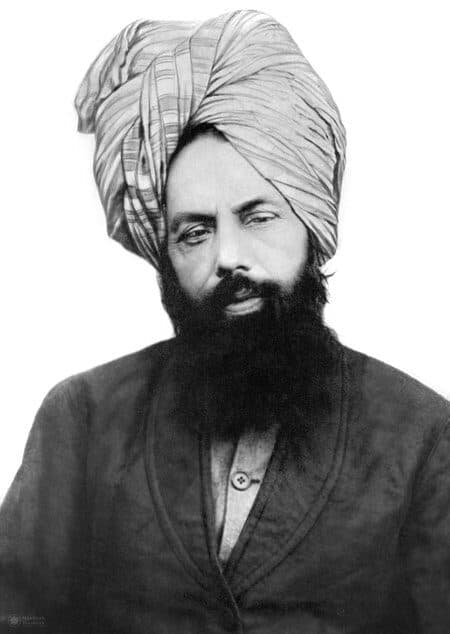
One learns from the Holy Quran that the inner self is subject to three states. Firstly, the state known as the self that incites to evil; secondly the reproving self; and thirdly, the soul at rest. In the state where the inner self incites one to do evil, a person is seized by the clutches of Satan and is overly inclined to him. However, in the state of the reproving self, a person feels shame and embarrassment for his ill actions and turns towards God. In this state, however, a battle ensues: at times a person leans towards Satan and at times they incline towards the Gracious God. When a person reaches the stage where the soul is at rest, they become a part of that class of people who are known as the servants of the Gracious God. This rank is the highest point in contrast to which the lowest degree is that of the self which incites one to evil. Between this spectrum there is a middle state known as the reproving self which may be likened to the needle of a scale. If a person leans more towards the lower point, they are reduced to a state that is below and even inferior to animals. However, the more a person inclines towards the higher point, the closer they come to Allah the Exalted. Such people are freed from the lower, rudimentary states and partake of higher, heavenly grace.
(Hazrat Mirza Ghulam Ahmadas, Malfuzat, Vol. 1, p. 105)