Home Blog Page 608

A call of Islam from the birthplace of atheism

Hazrat Khalifatul Masih Vaa blesses Jalsa Salana France

20191004 130108 51D3A5EC

On the main boulevard of Saint Germain in Paris is seated the life-size statue of Denis Diderot. It was in the salons of Paris that he would hold meetings with the French intelligentsia. It was through these discussions that atheism – as we know it today – was born. He is considered an instrumental figure of what is known as French Enlightenment. How enlightening the historical phase known as French Enlightenment was, we need not go into details here.

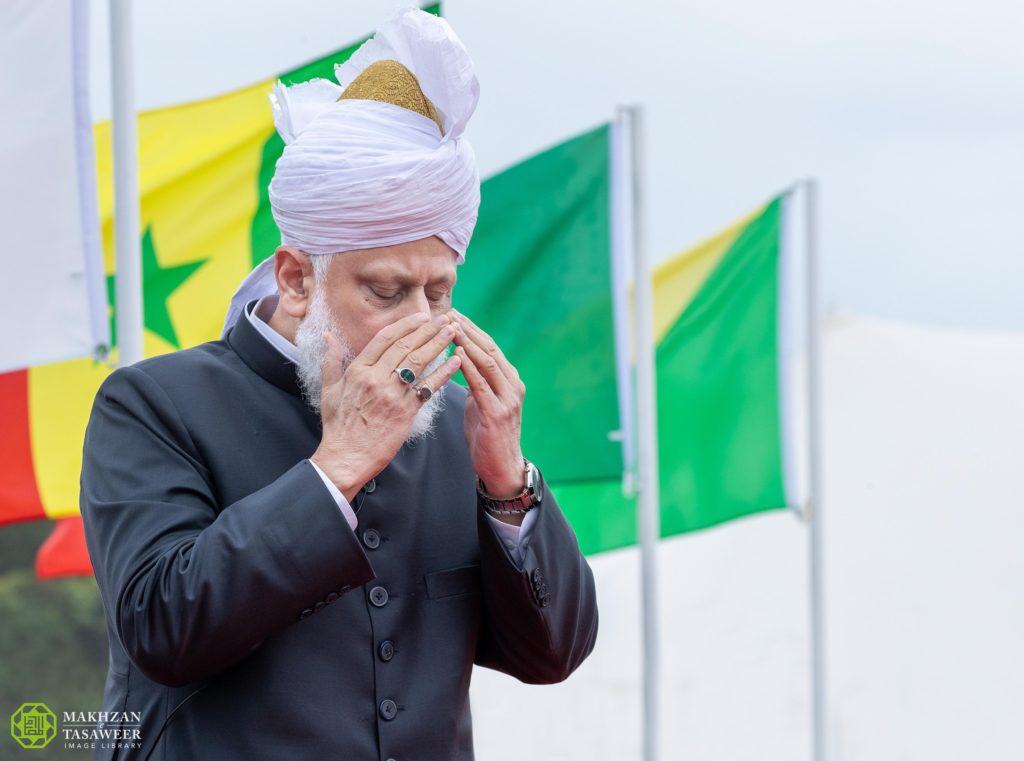
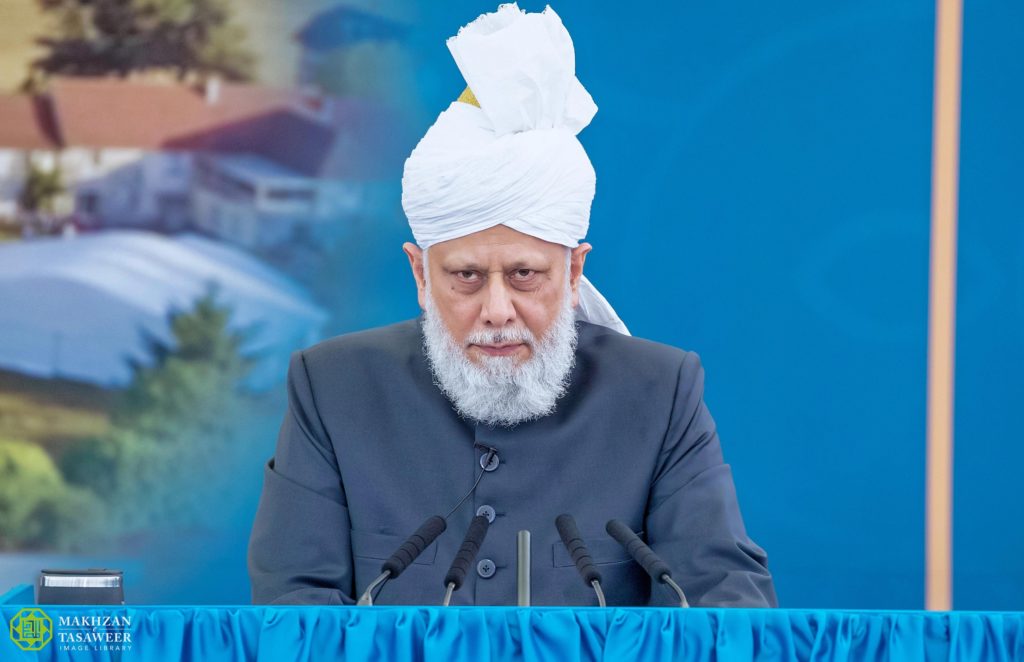
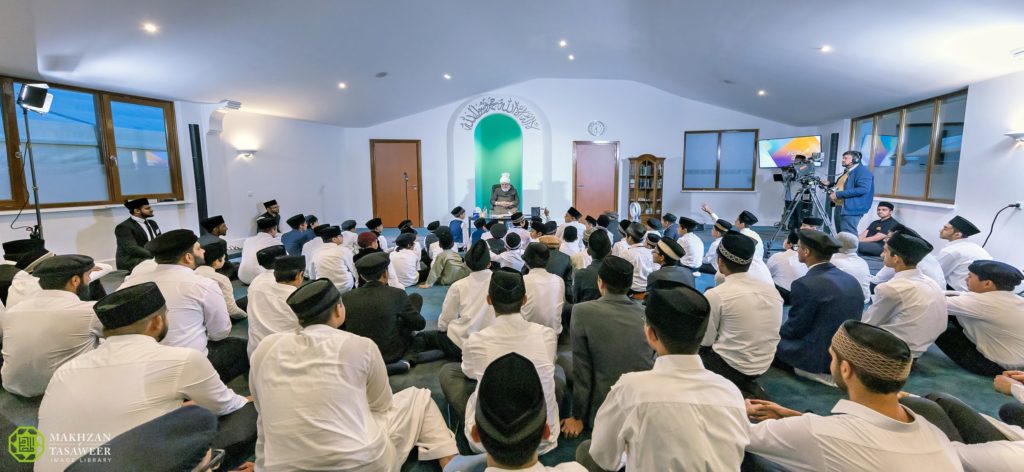
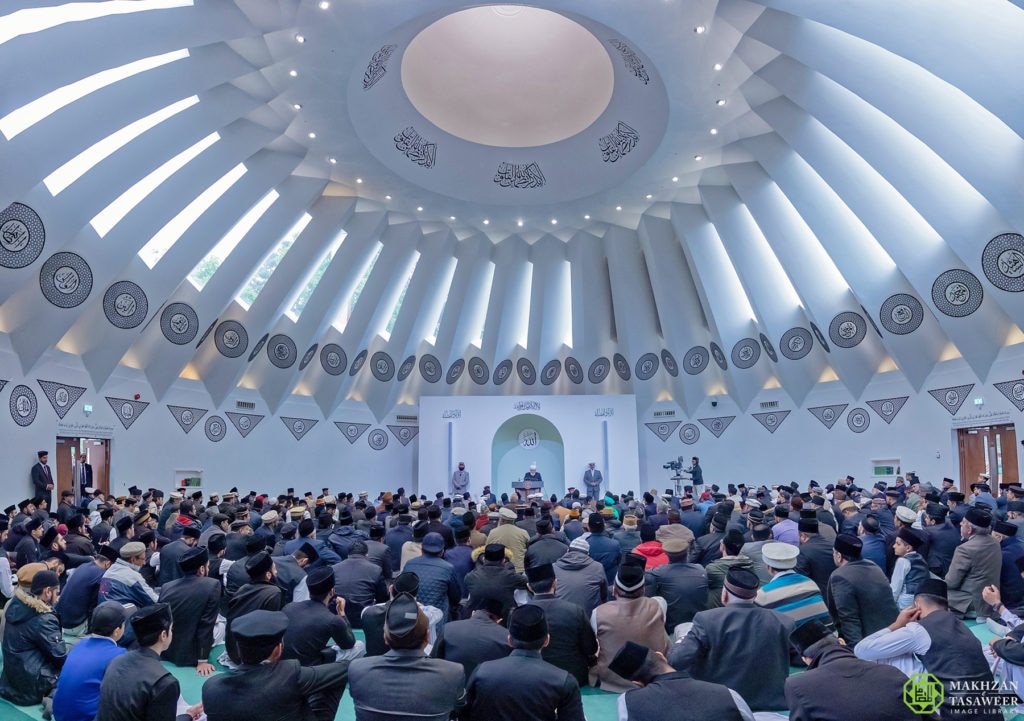
What we know is that the latest episode of true enlightenment has just taken place on the land of France. Earlier this afternoon, at 2pm local time, Hazrat Mirza Masroor Ahmadaa, the worldwide head of the Ahmadiyya Muslim Community opened the annual convention – Jalsa Salana – of the Ahmadiyya Muslim Jamaat, France. Huzooraa had arrived at the scenic countryside of Trie Chateau earlier during the week; it is from here that he has called the world to Islam through his very enlightening Friday Sermon.

20191004 135953 EB61090D

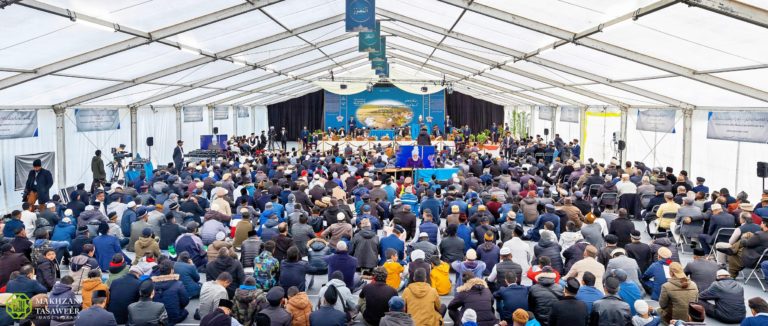
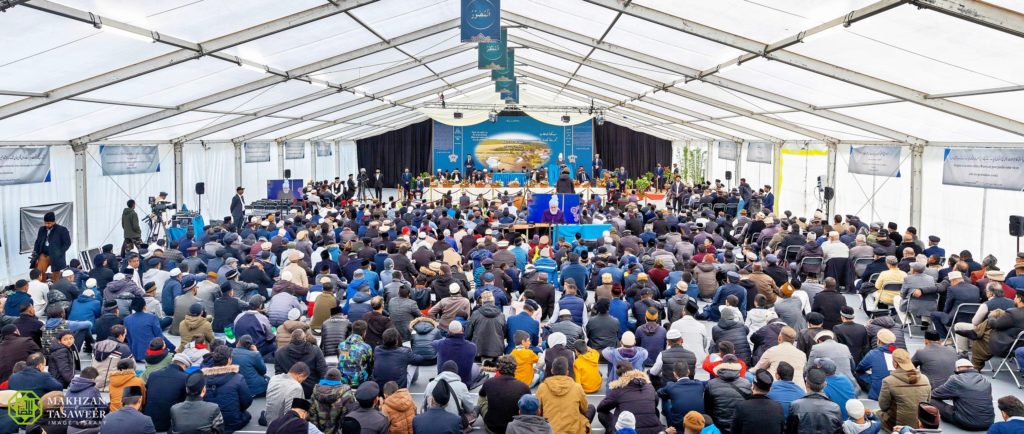
With his Friday Sermon commenced the 27th Jalsa Salana of France.

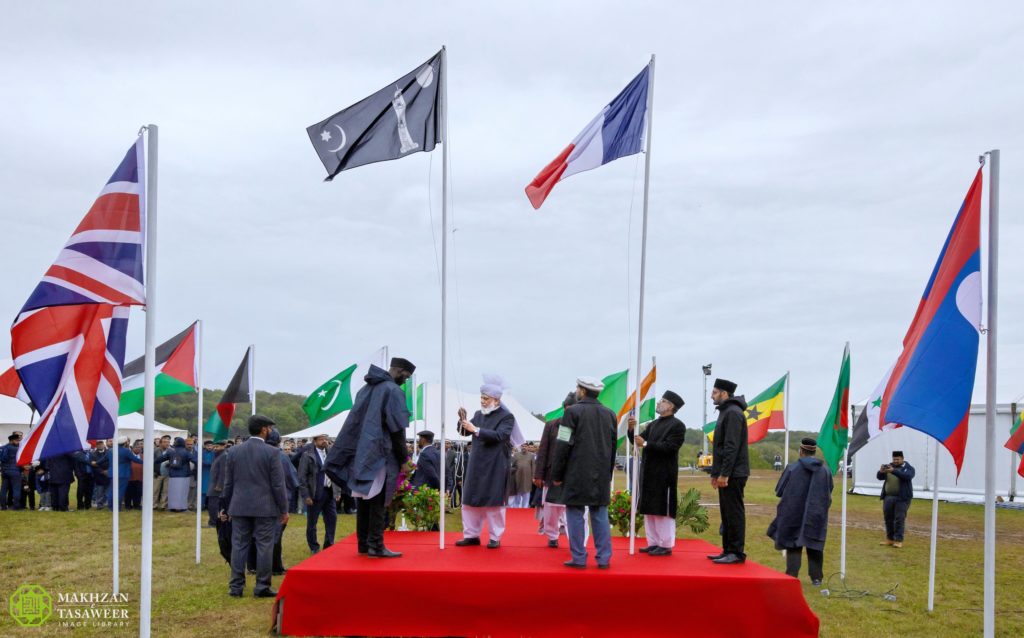
Minutes before the Sermon, Huzooraa hoisted the Liwa-e-Ahmadiyyat to mark the inauguration of Jalsa Salana. 

In his Friday Sermon – globally watched live via MTA International – Huzooraa reminded members of the Jamaat what Jalsa Salana calls for and how important it is to benefit from the three days of Jalsa Salana.

20191004 131715 AAFC3546

The primary message of his Friday Sermon was a reminder of what is expected of a good Muslim. Salat, Huzooraa said, is of primary importance in one’s faith. Offering prayers in congregation, said Huzooraa, is equally important as the offering of Salat itself, hence it is important to offer Salat in mosques as much as is possible for one.

Huzooraa said that the first question to be asked on the Day of Judgement will be about Salat. If, in replying to this question, one falls short, their voluntary prayers will help compensate for it. Huzooraa emphasised that it is only through taqwa that Salat can be offered in its purest form. 

20191004 145033 85BA9484

Allah has made it clear that Salat is obligatory for every believer, and He has also expressed His immense love and mercy for those who offer voluntary prayers.

Taqwa, or the fear of God, also instigates other elements that enable one to become a better person. It is taqwa that encourages one to forgive others and to be loving towards their fellow beings. 

Huzooraa said that Allah has promised his mercy and love for those who love and have mercy on their fellows. The slogan of “Love for All, Hatred for None” will only come true if we start practising it in its true essence from the smallest unit of the society; it is from our homes that this great charity will begin and span over the society at large.

Huzooraa, at the end of his Friday Sermon, prayed that Allah enable us to fulfil our pledge of allegiance to the Promised Messiahas which, in essence, is to live our lives according to the beautiful teachings of Islam.

Huzoor’saa addresses to Jalsa Salana France will be broadcast live on MTA International on Saturday, 5 and Sunday, 6 October.

A reformer in Paris – A leaf from history

0

(Hazrat Bhai Abdur Rahman Qadiani’sra account of Hazrat Mirza Bashiruddin Mahmud Ahmad’sra visit to France in 1924, taken from his diary, published as Safar-e-Europe)

Screenshot 2019 10 03 at 21.42.31
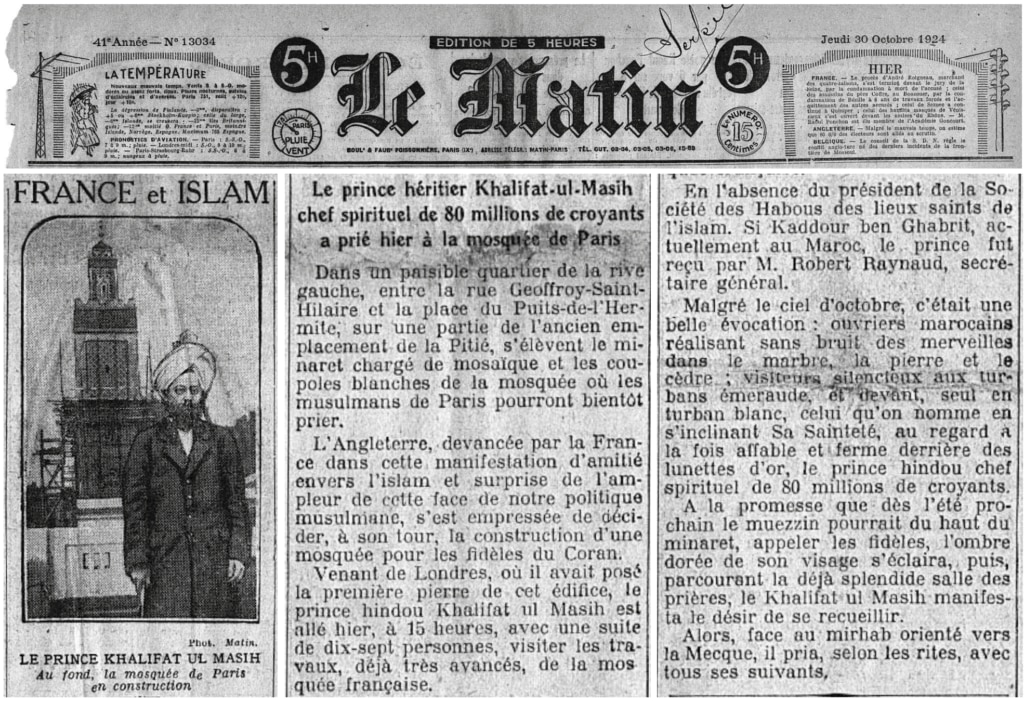
French newspaper, Le Matin published the news of Hazrat Khalifatul Masih II’sra visit to France on 30 October 1924 during his tour of Europe. The Grand Mosque of Paris can be seen in the background.

Paris, 30 October 1924: Hazrat Mirza Bashiruddin Mahmud Ahmad, Khalifatul Masih II[ra] went out for sightseeing in the city of Paris on the morning of 30 October 1924. Hazrat Musleh-e-Maud[ra] left straight after breakfast and was accompanied by Chaudhry Zafrulla Khan Sahiband Khalifah Taqiuddin Sahib. Lunch was served upon Huzoor’s[ra] return to the hotel at around 1:30pm.

Huzoor[ra] had planned to offer Zuhr and Asr prayers at the Grand Mosque of Paris, so he started getting ready to head there straight after lunch. Accompanying Huzoor[ra], we all left the hotel at 3pm for the mosque.

It was raining heavily and in this rain of blessings, Huzoor[ra] entered the Grand Mosque of Paris. Local residents and the administration of the mosque saw the scene of Huzoor[ra] entering the mosque with great excitement and welcomed him with great honour.

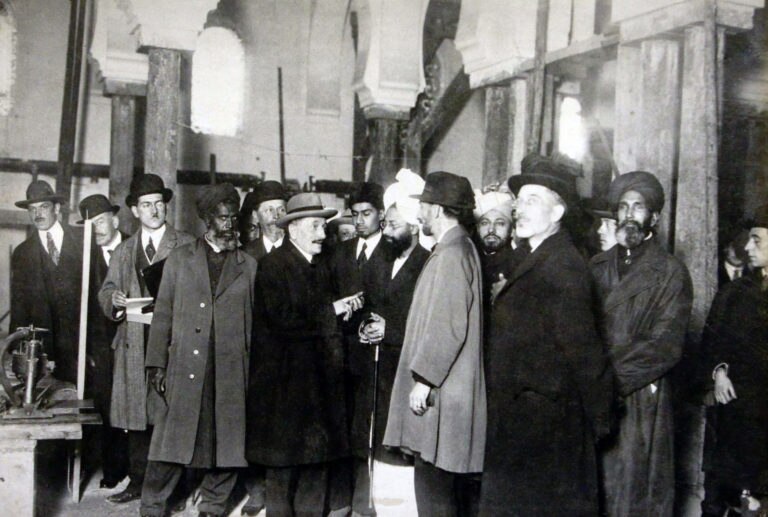
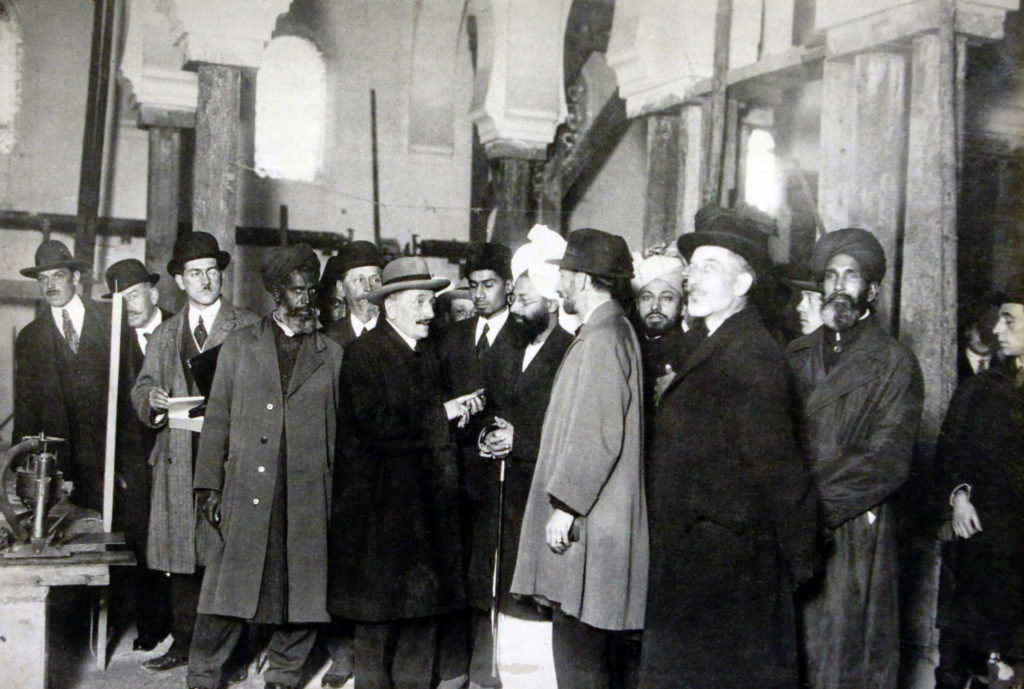
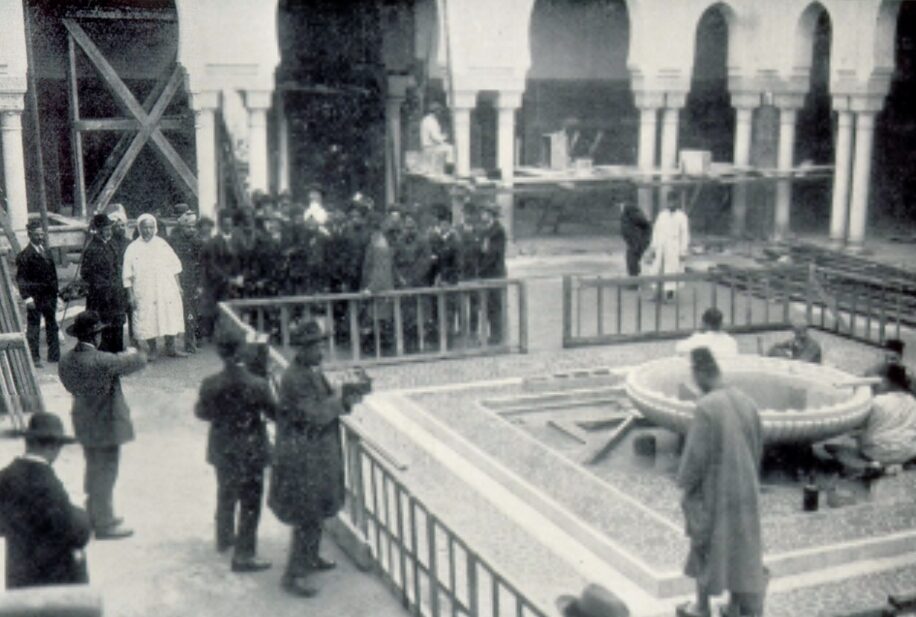
The architect showed Huzoor[ra] around the mosque and led him to the mihrab. As the building is still underway, they moved the rubble aside to clear the area for Salat. They had laid mats and rugs to make the place for prayer as comfortable as possible. Huzoor[ra], standing in the mihrab, asked Hafiz Roshan Ali Sahib to call the Azan. Hafiz Roshan Ali Sahib recited the Azan with such a melody that everyone present was deeply moved. It was as if the universe had just come into being and every soul had bowed before its Creator.

This Azan was the first Azan ever to be called in this mosque and the Salat that followed – led by Hazrat Khaifatul Masih II[ra] – was the first ever salat to be offered in this mosque. Hazrat Khalifatul Masih II[ra] combined both Zuhr and Asr prayers. The following gentlemen were in congregation:

1. Abdur Rahman Qadiani (the author)

2. Chaudhry Zafrulla Khan Sahib

3. Dr Hashmatullah Khan Sahib

4. Chaudhry Ali Muhammad Sahib

5. Abdur Rahim Dard Sahib

6. Malik Nawab Din Sahib

7. Khalid Sheldrake Sahib

8. Misbahuddin Sahib

9. Khalifa Taqiuddin Sahib

10. Hafiz Roshan Ali Sahib

11. Sheikh Yaqub Ali Irfani Sahib

12. Zulfiqar Ali Khan Sahib

13. Hazrat Mirza Sharif Ahmad Sahib

14. Sheikh Abdur Rahman Misri Sahib

15. Chaudhry Fateh Muhammad Sahib

16. Chaudhry Muhammad Sharif Sahib

17. Abdur Rahim Nayyar Sahib

18. Dr Malik Muhammad Ismail Sahib

The administration invited Hazrat Khalifatul Masih II[ra] to tea and Huzoor accepted their offer. The tea was more of an infusion and not the traditional breakfast tea that is served with biscuits. The way they served us the tea expressed their deep love and sincerity.

7jr9nt 7sxIKZ2
Hazrat Khalifatul Masih IIra in the Paris Mosque

During tea, Huzoor[ra] expressed his gratitude for the hosts and prayed that may Allah reward them for the good deed of building the mosque. Huzoor also thanked the French government on the good gesture of allowing the mosque to be built in their country. As the majority of those present were of Moroccan or of other Arabic origin, Sheikh Abdur Rahman Misri Sahib translated Huzoor’s[ra] words into Arabic.

Screenshot 20191004 013835 Drive

The architect of the mosque came out saw him off. It was still raining but as we had to board the train to Italy, Huzoor[ra] walked to his car in the rain. As soon as we arrived at the hotel, we started preparing for the journey that we were to embark upon later that night. Hazrat Khalifatul Masih II[ra] himself packed his luggage and assigned various duties to us all – cargo bookings, train reservations etc.

We arrived at the Gare de Lyon Station of Paris. The clerical staff, the porters and all other railway staff could not understand a single word we spoke in English and we could not grasp a single word of French. The whole situation became very amusing, but we were concerned about missing our train. Something had to be done.

Our train was scheduled to depart at 9:20pm and it was already 8:45pm. Porters had loaded our baggage onto trollies but left without moving the trollies. Finally, Huzoor[ra] arrived and we all felt relieved. Chaudhry Zafrullah Khan Sahib and Khalid Sheldrake Sahib had to do a bit of running around before issues were resolved and we were just about able to catch the train.

As we anxiously ran to catch the train, passengers and bystanders looked on in great excitement. The train was about to set off when we somehow managed to haphazardly throw in our luggage and jump aboard ourselves.

The train had just started to move when someone said that our booked luggage had not been boarded. Abdur Rahim Nayyar Sahib was given a 10-pound note and told to immediately get off the train and come with the luggage the following day. It was later discovered that the luggage had been boarded on our train. It was by the sheer grace of Allah that this near impossible task was accomplished, albeit with great difficulty. It was as if each one of us had a dozen angels as helpers.

As the train started to head towards our destination, putting all the scattered luggage together was a big task. Sheikh Abdur Rahman Misri Sahib supervised this. That done, everyone started to feel hungry, so food was served – this     helped in diverting our attention from the worries of the journey. Having eaten well, we all felt like talking to other passengers and try to do a bit of tabligh to them. After all, this was the primary purpose of the whole tour anyway.

There were four French passengers in the compartment that I sat in, three men and a woman. They had a French newspaper which they would glance at and then start staring at us. We tried to break the ice by talking to them but of course they would not understand a word, sign language also proved to be of no avail.

Finally, they held out the newspaper towards us, showed us a photograph and asked which one of us that was. The photograph was of Hazrat Khalifatul Masih II[ra] that a newspaper had published with the story of Huzoor’s[ra] presence in Paris.

Although with great difficulty, we were able to somehow communicate to them that the person in the photograph is a man of God and is seated in the first-class compartment right now.

We told them that he wears a white turban and that makes him easily recognisable. I am sure that they would have definitely caught a glimpse of Huzoorra when we all disembarked the train as they seemed to be inquisitive. I had a few franks in my pocket which I offered them in exchange of the newspaper. They refused to accept the money but gave us the copy of the newspaper. We were aware of this photograph being published along with the news but had not been able to get it, so by the grace of Allah, we were able to obtain it this way.

Waqifeen-e-Nau Khuddam and Atfal spend time in Huzoor’s company

0
boys classA

On 30 September, after the Waqifaat-e-Nau of Netherlands met Huzooraa, a group of Waqf-e-Nau Khuddam and Atfal also had a class with Hazrat Khalifatul Masih Vaa.

The class started with the recitation of the Holy Quran, followed by translation. Thereafter, the Waqifeen delivered Hadith, Malfuzat and a presentation on the existence of God by two members of Khuddam.

Thereafter, the Khuddam and Atfal asked Huzooraa various questions and sought guidance.

A young Tifl asked Huzooraa why God created the universe. Upon this, Huzooraa lovingly said that it was God’s decision to create the universe. Huzooraa further stated that God had made the universe, then the world and then man. God has stated that He has not created this world in vein, but there is a purpose behind it. Huzooraa stated that when the boy gets older, he would understand.

A Tifl asked how one can spread Ahmadiyyat in schools. Huzooraa stated that we should show a good example, pray five times daily, be good in our daily lives and work and study hard. By doing so, we will attract people through our pious examples.

One young Khadim asked Huzooraa if becoming a missionary was compulsory for Waqifeen-e-Nau.

Upon this, Huzooraa stated that it is not compulsory for Waqifeen to go to Jamia and become missionaries. If a Khadim is interested in becoming a doctor, engineer, architect or lawyer, then they may do so. Huzooraa further stated that Waqifeen should write to him about what they opt for as their future professions.

One young boy asked Huzooraa what prayer he made to God that made him such a pious man of God. Upon this, Huzooraa stated that he should pray that God gives us all the strength to be righteous people and follow the words of the Khalifa. This is what we should actually pray for.

One young boy requested Huzooraa for prayers as his eyes were very weak. Upon this, Huzooraa instructed him to write to Huzooraa and send his medical report.

The last question was on the definition of being unsuccessful.

Huzooraa replied by saying that one should strive hard and pray to God. Then, one should leave it to God and know that the outcome is the result of God’s will. One should not lose hope in God. 

Holland Waqifaat-e-Nau meet Huzoor

0

On 30 September, Lajna and Nasirat of the Netherlands were graced with a class in the presence of Hazrat Khalifatul Masih Vaa.

The class started with the recitation of the Holy Quran, followed by the Translation.

The Lajna Imaillah and Nasirat prepared a presentation on the first five women of the Netherlands to accept Ahmadiyyat.

After the presentations, Nasirat had the opportunity to ask Huzooraa various questions on diverse matters.

One of the Nasirat members asked Huzooraa regarding human nature. She asked that if human nature is pure, then why do people end up doing bad deeds?

Upon this, Huzooraa stated that the Hadith is not that all human nature is pure, but that all humans are born with a pure nature. The environment and surroundings have an impact on his character and modify a person.

Another girl asked Huzooraa why imams, whilst leading the prayer, do not say “Amin” after reciting Surah al-Fatihah.

Huzooraa answered the young girl by saying that there are two ways of saying “Amin”; you can say “Amin” aloud and also silently. Huzooraa explained that it is important to say it from the heart, just as we do when offering the Zuhr and Asr prayers, wherein we do not recite Surah al-Fatihah aloud.

One young girl asked Huzooraa what he thought of Holland. Upon this, Hazrat Khalifatul Masih Vaa lovingly said that Holland is very good.

Another Nasirat member asked Huzooraa regarding the construction of mosques  from an architect’s point of view and what things to bear in mind whilst designing mosques. She also asked about the guidance for mosques’ minarets and domes.

Huzooraa, answering the question, stated that there is no compulsory structure. One may design it how they like. During the time of the Holy Prophetsa, there were no minarets or domes. However, designs should be creative and beautiful.

After asking various questions, the class came to a close.

Extremism in the UK: Threats and challenges – The Democracy Forum at Senate House, University of London

0

Ataul Fatir Tahir, London

Capture 2

Despite constant vows by world leaders to “end” extremism, its spectrum continues to broaden. Right-wing attacks now spread across America to New Zealand, stern governments exercise unjust control, world leaders are seeking to divide between “us” and “them” and extremist religious preachers are gaining support.

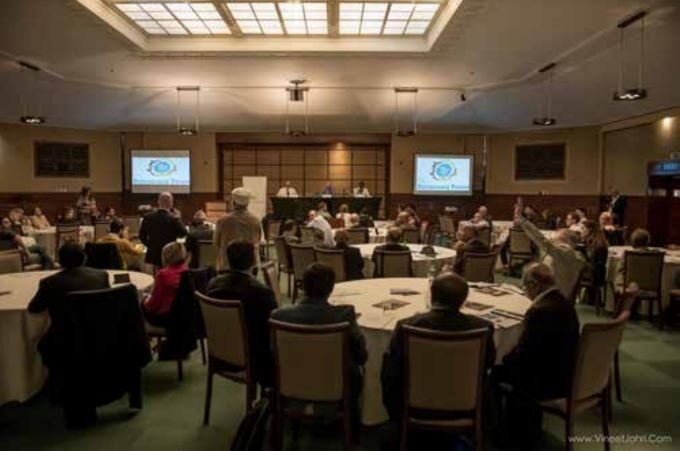
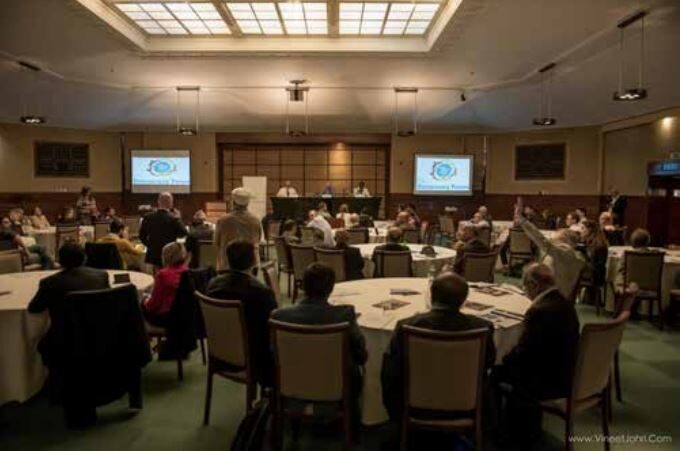
Understanding the causes and solutions to extremism remains a vital discussion and debate. The Democracy Forum, a non-profit NGO aiming to promote ideals of democracy, pluralism and tolerance through public debate, held a seminar on Extremism in the UK: A discussion of threats and challenges.

The seminar took place at the heart of London at Senate House, London University. The day consisted of two sessions where researchers, professors and lecturers detailed their studies on various elements of extremism in the UK.  The whole event was duly chaired by Humphrey Hawksley, former BBC foreign correspondent.

Barry Gardiner MP, Shadow Secretary of State for International Trade welcomed those invited to the seminar and read out a message Lord Bruce had written for the forum attendees, as he could not attend himself due illness.

His message encapsulated the threat of extremism and its causes, calling it a “parasite that feasts off fear and hatred”. Next, Lord Bruce quoted Edward Said’s views (known as the cornerstone of post colonial studies) about modern fragmentation of knowledge on the internet and media that “our students” use. He was also quoted to have said how regrettable statecraft in Washington was, writing, “It is quite common to hear high officials speak of changing the map of the Middle East as if ancient society and myriad peoples can be shaken up like so many peanuts in a jar”.

Next, Humphrey Hawksley spoke of his own experiences as a BBC Asia correspondent. Recalling two occasions, he said that he once covered a massacre by the Sinhalese government of a Tamil village. The government justified the slaughter saying that if they had not done so, the Sinhalese people would have been taken over by the Tamil Tigers. On another occasion, he read a news report of a Sinhalese village massacred by the Tamil Tigers. Upon interviewing the Tamil Tiger representatives in London, the answers he received were similar, they said, “Don’t you understand we have to. We have to show them that they can’t massacre our villages and we won’t massacre theirs”.

Hawskley then mentioned a demonstration several years later by the Tamil representatives in London. He said that he observed the very man who he had interviewed, shoulder to shoulder with British MPs. Acknowledging the human rights concern of the MPs, Hawskley also noted that the MPs needed Tamil votes and funding for their election campaigns.

Hawksley opined that extremism develops when one feels the system does not work for them anymore and then the vested interests at work “will find those people who think the system does not work for them” and then make them into a militia force.

“Masculinity and the UK’s radical right”

After these introductory observations, the first speaker to present her research was by a lecturer at the Cyber Threats Research Centre. The speaker’s identity was to be kept anonymous. The topic was “Masculinity and the UK’s radical right”.

Throughout this insightful talk, the speaker described the “culture” and “motives” behind supporters of populist groups like the English Defense League (EDL) and Britain First (BF), who oppose Islam. She explained how extremism amongst men stems from “toxic masculinity”, a term coined in the 1980s. It describes stereotypical norms of masculinity and manhood and the expectation from boys and men to be aggressive, tough, daring, dominant and have self-reliance. These traditional cultural masculine norms can be harmful to society at large.

The talk examined research suggesting members of the EDL and BF are often “angry, white, damaged and vulnerable” men who seek to protect themselves and use the “other” as a scapegoat. EDL demonstrations are noisy, vibrant and full of people who are “passionate about the problem of Islam”.

Right-wing members live in a niche of specific cultural traits and habits. Research indicates that 70% of British right-wing members have a football hooligan culture, assertion of ownership and a deep attachment to protect “their space”. Therefore, the loud and aggressive demonstrations allow them to express their emotion – a prime example of toxic masculinity.

The lecturer drew on right-wing extremism to also reflect the social psychology of men joining extremist religious group like Daesh. Though toxic masculinity serves as an essential piece in understanding extremist psychology, it is not all-inclusive and other factors play a role.

“Good news, bad news and agendas: extremist venues in the UK”

The second talk was by Dr Paul Stott, research fellow at the Centre for the Response to Radicalisation and Terrorism, the Henry Jackson Society. The talk was titled, “Good news, bad news and agendas: extremist venues in the UK”.

Dr Stott described the rise and fall of radical Muslim preachers in the UK and their influence. Further, he detailed the kind of places that have bred extremist cultures and ideologies. Venues included: Mosques, Islamic centres, fitness centers, street stalls, tables outside mosques, book shops, university campuses, houses and madrasas. The Muslim terrorists who carried out various attacks on British soil were found to be misled and radicalised in such venues.

These venues were also and to some extent still are, within their own bubble. However now “visit my mosque day” events have enabled interaction with the wider Muslim community and the British public, Dr Stott noted.

Dr Paul Stott took his discussion a step further and spoke on the politicisation paradox between political figures and mosques. He said that mosques in the UK have now become key political players for political figures to gain votes and funding. Mosques and organisations that have previously preached extremist ideologies were still used by politicians to gain support.

University campuses have been venues where radicalised actors may have met. Dr Stott explained how university lecturers will bar and discourage if people are from the right-wing. However, they are less comfortable doing so with Islamic actors. Though universities have struggled with these issues they are better than they were, Dr Stott said.  

Dr Stott mentioned the release of a book, The Qatar Papers that detailed very significant funding of Islamist terrorist groups and individuals across Europe by Qatar, including Britain. Articles about the findings appeared in most European countries, however, they nearly did not appear in the UK. He said it was in the public interest to know that funding comes from Qatar to the UK and then is sent to extremist groups around the world, however this was not reported. This, Dr Stott said was another example of how discussions have narrowed over the years about discussing radical trends.

“A strategic overview of the UK’s early post-9/11 counter-terrorism policy”

The third talk of the first session was by Dr Edgar Tembo, Assistant Professor of International Relations, Centre for Conflict, Security and Terrorism, University of Nottingham. His talk was to investigate the strategies and the effectiveness of the UK in reaction to 9/11.

He said that it is not easy for a government to develop a counter terrorism strategy as they need to find a balance between acceptability and effectiveness. For example, do we have to accept a certain level of terrorism in order to “maintain the civil liberties and political rights that we cherish?” Or do we want to “sacrifice some democratic substance in order to be effective against terrorism?”

He said this problem was perhaps encapsulated by the Irish Republican Army (IRA) statement after their failed attempt to assassinate Margret Thatcher. The IRA declared, “Today we were unlucky, but remember, we only have to be lucky once. You will always have to be lucky.”

Dr Edgar Tembo then spoke of the United Kingdom’s counter terrorism strategy, CONTEST. He explained the positive and negative elements of this multi-layered strategy.  The talk went into information sharing between security agencies within the UK and their problems while also speaking of the weaknesses of the Prevent strategy, a strand of CONTEST. Intelligence agencies can share more information with local police authorities, he explained.  However, now law enforcement and intelligent agencies are now working much better.

 “The importance of engaging with theology in countering violent extremism”

Dr Usama Hassan, Head of Islamic Studies, Quilliam and gave a talk on tackling extremism through changing the theology of extremists. He spoke of case studies where Muslims have reverted away from extremist beliefs after they were taught the true teachings of Islam. He referred to a quote of Hazrat Alira, who said the following about the Khawarij (extremist Muslims who opposed Khilafat-e-Rashidah): “They are our brothers who have transgressed against us”. Dr Hassan said that Hazrat Alira would often use dialogue to convert the Khawarij back.

He detailed his childhood and how he was bought up with a large map on a wall of his house that showed Muslim countries. He said this made him think it was “Muslims versus the rest”. In a similar manner, other Muslims are bought up with such beliefs which lead them towards extremism.

Caliphate was discussed and Ibn Khaldoon’s and Ibn Taymiya’s views about the Caliphate being about “good governance” and that there was no problem in having multiple Islamic states were expressed. Dr Hassan said that extremists have other views and present Caliphate as a super-state ruled by a dictator.

“The problem begins at home: domestic cultural drivers and alienation of extremism”

Prof Bill Durodie, Chair of risk and security in international relations, University of Bath spoke of his concerns about the lack of freedom when it comes to speaking about extremism. Prof Durodie said that people, in our current discourse, are “walking on eggshells” when engaging in their own beliefs regarding religion, politics and community. He said people have “paralyzed their views” for fear of “hurting others”.

Dr Durodie said that history teachers in France are afraid of saying certain things as it may hurt the Muslim students.  He said that we are in an “age of bad faith”. Younger people are energetic, passionate and looking something to believe in, however it is our inability to provide them with something to believe in, the professor said.

Prof Durodie also criticised the policy of “Run, Hide and Tell” as an official response to an attack or terrorist event for the public, taught by the police. He said that such a teaching highlights the problem within our discourse. He emphasised that problems should be openly talked about without care of hurting others.

“Extremist ecosystems: how do Islamists create power and influence?”

The final talk was under Chatham House Rules. The insightful talk detailed how extremist Muslim groups use Muslim television channels as platforms for support and funding. She explained that personalities who regularly appear on such channels have had direct links with promoting extremist ideologies.

The overall forum was certainly insightful and informative – a wealth of research was presented. Insights, through imperative data, into why and how extremist ideologies form gave the forum credibility and legitimacy

However, Dr Hassan’s quotes about Caliphate being only “governance” did not resonate too well with me, as the spiritual element of Caliphate was totally ignored.

After all, the true understanding of Caliphate and its purpose was unveiled to the world at the advent of the Promised Messiahas and his Khulafa.

Prof Durodie’s continuous assertive view of not caring about the sentiments of others seemed a bit obnoxious. Personally, I felt his opinion that society is “walking on eggshells” was exaggerated, as the media is saturated with hurtful discourse towards other groups; including anti-Islamic rhetoric. Not caring about the sentiments of others leads one to erase all lines of respect and honour. Yes, having open discussions is essential and vital but a sense of dignity and respect should follow.

100 Years Ago… – Qadian to London: Nayyar’s Travelogue

0

Al Fazl 30 September 1919

20 July 1919: I cannot find the strength to leave my chair. Going to the lower deck [of the ship] is troublesome [for me]. Occasionally, the waves splash water on those sitting on the top deck. In the midst of these troublesome circumstances, nothing alive is visible beyond the ship, for miles on end. All one can hear is the sound of the ship. The [cheerful] cries of English toddlers and their screams of joy while playing is charming. Their noise is a source of amusement for men who have families and remind [us] of the small faces [of our children], who are the delight of our eyes. In this condition, I turned towards the waters of the Arabian Peninsula and with eyes full of tears and a heavy heart, I put its raging waters to shame by recalling its past glory when it was an Islamic sea. I then said:

“O’ muddy water of Arabia, you are presently away from your real purity. Neither do your northern shores possess the name of the blessed and pure Islam nor do your eastern and western coasts possess the sign of purity and light of that Holy Being which was manifested by the Holy Prophet Muhammadsa. Most certainly, you were a Muslim at one time. But now it is the time for you to become a [truly faithful] Muslim, rather than a Muslim by name. Instead of this hurtful rage, [you] should become an Ahmadi by displaying your graceful nature. Thereafter, you will become an honourable, pure and clear water and your past glory will be restored.”

21 July 1919:  I cannot move from my place but Allah Almighty inspired a noble Hindu gentleman to come to me and listen to my discourse. The name of this gentleman is Mr R Hindo and he is a pundit from Kashmir. He is on a tour of Europe. He will observe the standard of education and general state of women living in south of France, Portugal and Spain. He said to me that these were Islamic countries and they must have had [Islamic] civilisation. I simply replied by saying:

دل میں اِک درد اٹھا آنکھوں میں آنسو آئے

بیٹھے بیٹھے ہمیں کیا جانئے کیا یاد آیا

[“Pain arose in my heart and my eyes are full of tears. You cannot imagine what came to my mind all of a sudden”]

Dear Hindo! if the traces of Islam are not to be found in these countries any more, then say to the land thither that Islam in the days of its progression refrained from cruelty in that place. My eyes were full of tears in reality and the map of transformation over time came before me:

بدلتا ہے رنگ آسماں کیسے کیسے

[ “How diverse are the changes in the shades of the sky!”]

22 July 1919: The weather is unpleasant as usual, and the storm is violent. Today, the sun sparkled a little. Black birds are seen flying over the water. These are marine Black Egrets which roost over the waves of the ocean. The captain of the ship is a clever person and his viceroy’s daughter is on board the ship as well. Therefore, the ship has been diverted from the center of the ocean and being steered near the coastline. A dangerous “wind storm” is on its way. The captain is making effort, so that the ship escapes this “windy grasp”.

24 July 1919: Today, I had the opportunity to discourse with some Muslims and to distribute Ahmadiyya literature.

25 July 1919: Circling around a 300-mile radius and escaping the “wind storm”, the ship has reached near the coast of Arabia today. By chance, we have found a small and new steam launch boat of the government. Disembarking upon the land of Arabia, we sent a telegram to his holiness Hazrat Khalifatul Masihra, conveying our safe arrival in Aden [in Yemen], after escaping the storm. We offered congregational prayers of Zuhr and Asr in a mosque. Then, we had a look at the port of Aden.

The ancient town of Aden is a five-minute drive from here on a motor car and motors are easily available over here. Anyhow, we have seen the complete picture [of Aden] in the small town by the port. The green tea-houses are full of Arabs. They are playing ganjfa [a game of cards].

The entire trade is in the hands of the Greeks, Jews and French. There are shops of Parsees and Hindu merchants as well. Muslims are repulsive towards studying. Currently, attention has been drawn towards it. An Arabian [study] club has been formed and an Islamic Anjuman has been established as well. Leather trade can very well be carried out here if Ahmadi merchants pay attention towards it. The production of honey and coffee is better here than any other place across the globe. This is a tax-free port. The ponds here were created by Shaddad [a wicked king who is said to have built a paradise] and are remarkable places of recreation]. A brother who feels affection towards Ahmadis met us as well. He will distribute our literature, Insha-Allah. He requests way-passenger brothers not to leave [Aden] without meeting him. His address can be gathered from the office of Talif [central publications and propagations directorate].

4-10 October

1

4 October 1903: Hazrat Hakim Maulvi Nuruddin, may Allah be pleased with him, travelled to Kapurthalla to attend his patient Hazrat Muhammad Khan. Hazrat Hakim Maulvi Nuruddinra also delivered a sermon during his short stay there.

4 October 1947: From Lahore, Hazrat Musleh-e-Maudra penned a powerful article about the intense and terrifying state of affairs for the Jamaat. This inspirational piece was published in Al Fazl and raised the morale of members of Jamaat to bravely face the hardships inflicted after the Partition.

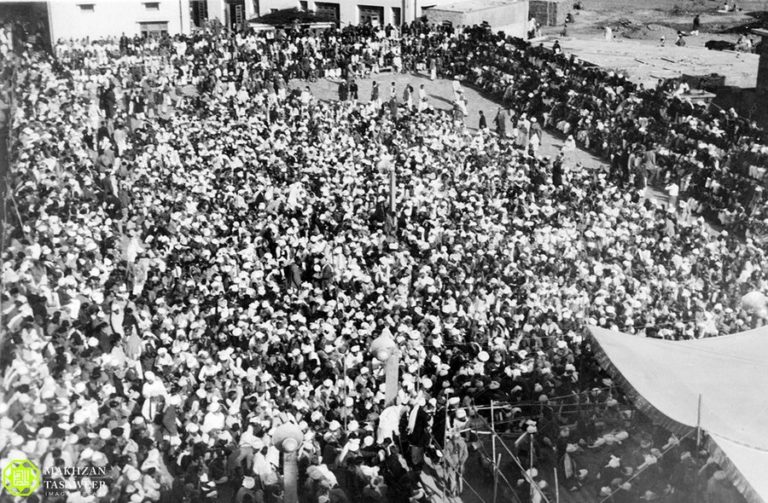
Hazrat Musleh-e-Maudra had the great ability to safely transfer members of the Jamaat from dangerous areas to safe haven during the partition of the Indian subcontinent. However, back in Qadian, the neighboring villagers who were forced to seek refuge in Qadian, took a dangerous decision to travel to Lahore on foot. They decided this without consultation from the Jamaat. Without proper leadership and organisation, this caravan of around 40,000 people came under brutal attack as soon they stepped out of Qadian’s boundaries. This sudden ambush left causalities and devastation behind.

4 October 1947: The foundation of a government in liberated areas of Kashmir was established by Hazrat Musleh-e-Maudra. The first president of this sovereign body was Khawaja Ghulam Nabi Gulgar Sahib (an Ahmadi by faith). The prime minister was Sardar Muhammad Ibrahim. This new development was announced across radio services.

5 October 1945: Hazrat Musleh-e-Maudra initiated a unique scheme called Waqf-e-Tijarat, in which young members of the Jamaat were encouraged to devout their lives for the cause of Islam and enhance their abilities in business and commerce.

5 October 1947: Another caravan of refugees, who had gathered in Qadian, started their journey towards Lahore, on foot. The number of this convoy was reported as around ten thousand. 

5 October 1952: Indonesia’s Armed Forces Day was organised. An Ahmadi missionary, Syed Shah Muhammad Sahib, was also invited to attend this national level event. Ahmadi Muslims had been part of the struggle for the independence of Indonesia and always remained loyal to the country.

6 October 1942: Hazrat Musleh-e-Maudra designed and announced an exclusive scheme for tabligh in India. The first objective of the scheme was to send 1,000 issues of Al Fazl that contained the transcript of his weekly Friday Sermon, to all Muslim scholars. He also instructed for 1,000 copies of The Muslim Sunrise to be sent to them. Secondly, he urged for constant tabligh to influential personalities of the country.   

7 October 1915: Hazrat Mir Qasim Alira started publication of his newspaper Al Faruq from Qadian. This powerful medium of tabligh continued rendering its services untill the sad demise of Hazrat Mir Sahibra in April 1942.

7 October 1924: Hazrat Musleh-e-Maudra graced the House of Lords during his tour of England and silently observed the proceedings of the house.

7 October 1927: A companion of the Promised Messiahas, Hazrat Munshi Abdullah Sanaurira passed away. He will always be remembered for his presence when the sign of “red ink drops” was shown to the Promised Messiahas. As per his will, the sacred shirt that bore marks of the red ink was buried with him. This was a precautionary measure to prevent any possible element of Shirk.

7 October 1954: Hazrat Chuadhry Sir Muhammad Zafarulla Khanra became a judge at the International Court of Justice at The Hague, a position he held until 1961.

8 October 1924: On this date, Hazrat Musleh-e-Maudra visited the House of Commons and also the following day to observe the proceedings there.

8 October 1947: Hazrat Musleh-e-Maudra travelled to visit the proposed land for the new Markaz, Rabwah. After seeing it, he recalled a dream of his in which the land of the new Markaz was shown to him. Hazrat Musleh-e-Maudra mentioned the difference of greenery that he had seen in his dream but was missing in those early years of Rabwah. Today, the lush greenery of Rabwah manifests the truth of the dream and its fulfillment.

9 October 1910: Hazrat Khalifatul Masih Ira prepared and sent a delegation of Ahmadi Muslim scholars on a tour of Utar Pardesh, upon the invitation of Madrasa Ilahiat, Kanpur and Anjuman Hidayat-e-Muslimeen, Utawa. This tour was a great success, it visited the proposed areas and institutions and well attended lectures were delivered. The delegation returned safely to Qadian on 17 October.

9 October 1911: Hazrat Khalifatul Masih Ira recommenced his series of Dars-ul-Quran in Masjid Aqsa, Qadian as he felt a little better from his illness. 

9 October 1918: Following the devastations of WWI, the world experienced another formidable episode of horror and death. This time it was in the shape of a disease: an unusually deadly influenza pandemic, which was colloquially known as the Spanish Flu. It infected 500 million people around the world. Probably 50 million and possibly as high as 100 million died from it, making it one of the deadliest epidemics in human history. The Jamaat, with its very limited resources, rendered its sincere services in response to the epidemic. On this date, Hazrat Musleh-e-Maudra caught this Flu and braved its attack. The scale of his illness could be judged by the fact that Hazrat Musleh-e-Maudra even wrote his will.

9 October 1936: The foundation stone of a mosque in Brahmanbaria, Bengal was laid.

9 October 1947: Hazrat Chaudhary Sir Zafarulla Khanra delivered a powerful and well-grounded speech at the UNO about the Kashmir issue. The speech was widely appreciated by the Muslim press.

9 October 1964: Sheikh Amri Ubaidi Sahib passed away. He was serving as Minister for Cultural Affairs in Tanzania. On 16 October, he was buried with full army protocols at the Ahmadiyya graveyard. The National President and members of the cabinet also attended his funeral and paid respect to him. Sheikh Amri Ubaidi Sahib’s contribution to Tanzania as a country were immense. But his special trait was his zeal and determination to help spread the message of the Jamaat in his country.

10 October 1927: Hazrat Mufti Muhammad Sadiqra headed towards present day Sri Lanka to spread the message of the Jamaat there. His tour continued until 6 November.

10 October 1940: One of the sayings of the Holy Prophet, peace and blessings of Allah be upon him, states to teach one’s children swimming, archery and horse riding. On this date, following the above mentioned hadith, a swimming pool was inaugurated in Qadian to help Atfal learn to swim.

10 October 1942: Hazrat Musleh-e-Maudra laid the foundation stone of a new building for the offices of Majlis Khuddam-ul-Ahmadiyya in Darul Anwar. Hazrat Nawab Muhammad Abdullah Khanra graciously donated a piece of land of around 8 kanals from his personal properties in Qadian.

10 October 1947: Another sad incident of a hand grenade thrown into the premises of Masjid Aqsa took place. In reality, the morale of those attacking Qadian was dropping every hour, due to the strong resistance and extraordinary bravery of Ahmadi youth who were protecting sacred places of Qadian.

26th Jalsa Salana Belgium

0

Mohammad Arsalan, Belgium Correspondent

1111

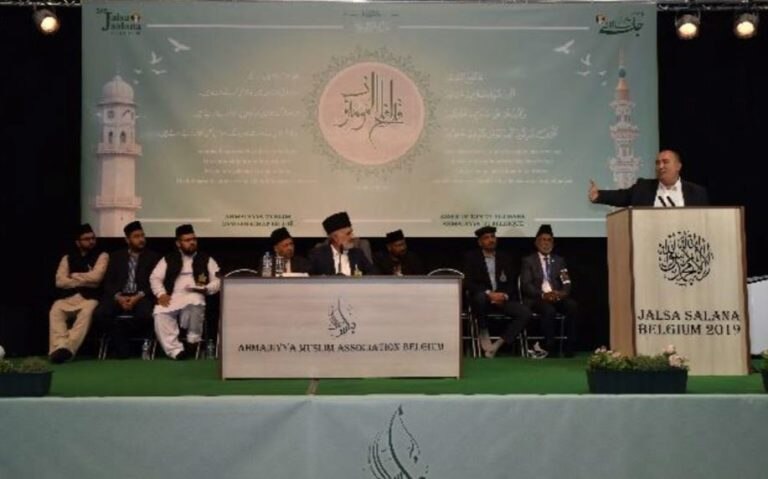
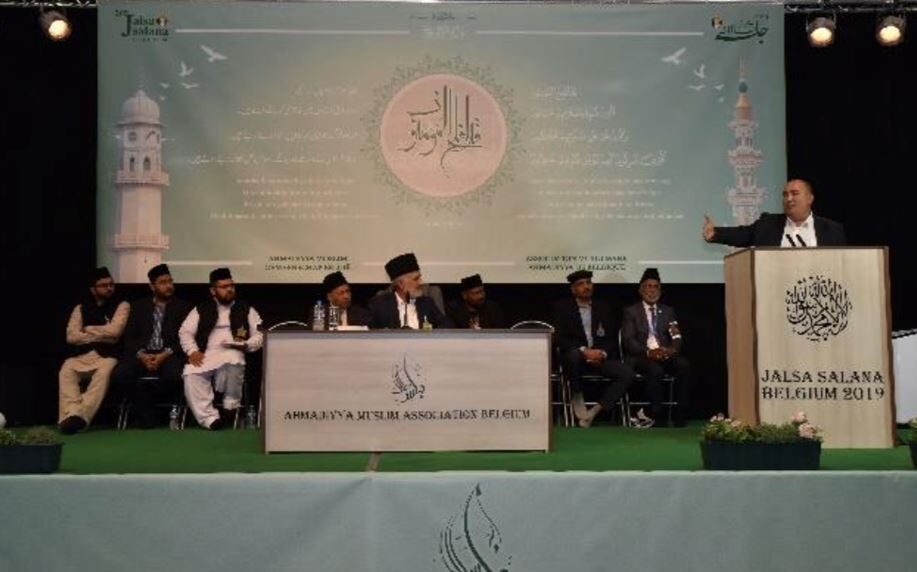
The Ahmadiyya Muslim Jamaat Belgium held its 26th Jalsa Salana from 13 to 15 September 2019 at Brabanthall in Leuven.

The Jalsa Salana started with the flag hoisting ceremony followed with an inspection by central representative, Abdul Majeeb Amir Sahib alongside Amir Sahib and Missionary in charge Jamaat-e-Ahmadiyya Belgium.

One of the highlights of our Jalsa was the exhibition that contained historical photography and unique information about Jamaat-e-Ahmadiyya Belgium. Interactive tablets were placed for the visitors to explore the archives of memorable pictures from the past. At the bookstall, a souvenir magazine of the last 25 years was available for the members of Jamaat-e-Ahmadiyya Belgium.

On the second day, a tabligh event took place for the Dutch, French and Arabic speaking guests.

On the third day, a Bangla tarbiyyat program was held for our Bangla speaking Ahmadi members. Respected Ferooz Alam Sahib was the Markazi guest for this program.

In the afternoon, Jalsa Salana attendees were blessed with the opportunity to watch two live adresses by Hazrat Khalifatul Masih Vaa which he delivered to the National Ijtemas of Lajna Imailah UK and Ansarullah UK.

With the collaboration of MTA International, MTA Studios Belgium was able to stream all three days of the Jalsa Salana proceedings live on YouTube. Alongside the Belgian MTA team, the translation department also provided facility of translation in four languages: Dutch, French, English and Bangla.

On the last day of Jalsa Salana Belgium, two distinguished guests addressed the Jalsa. The first was Mr Fouad Ahidar, former Vice President of the Brussels parliament and acting Chancellor of the Dutch Community Council. The second speaker was a priest of a local church. Both appreciated the efforts of the Jamaat toward establishing peace in society.

The total attendance of the Jalsa was 1489.

Cordoba Book Fair, Argentina

0

Marwan Ahmad Gill, Argentina Correspondent

20190922 205219

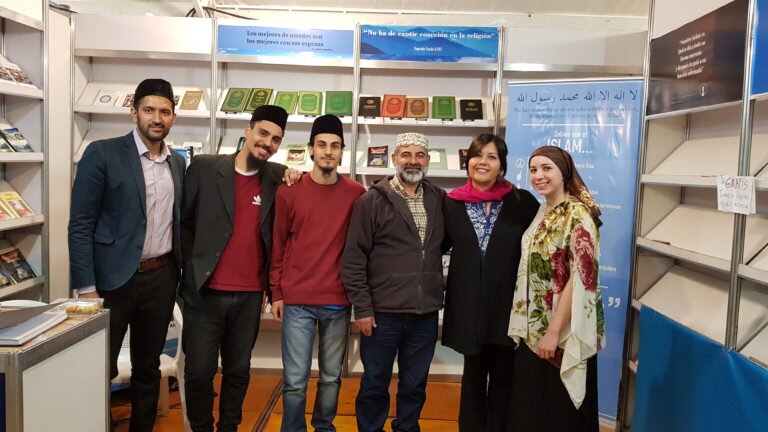
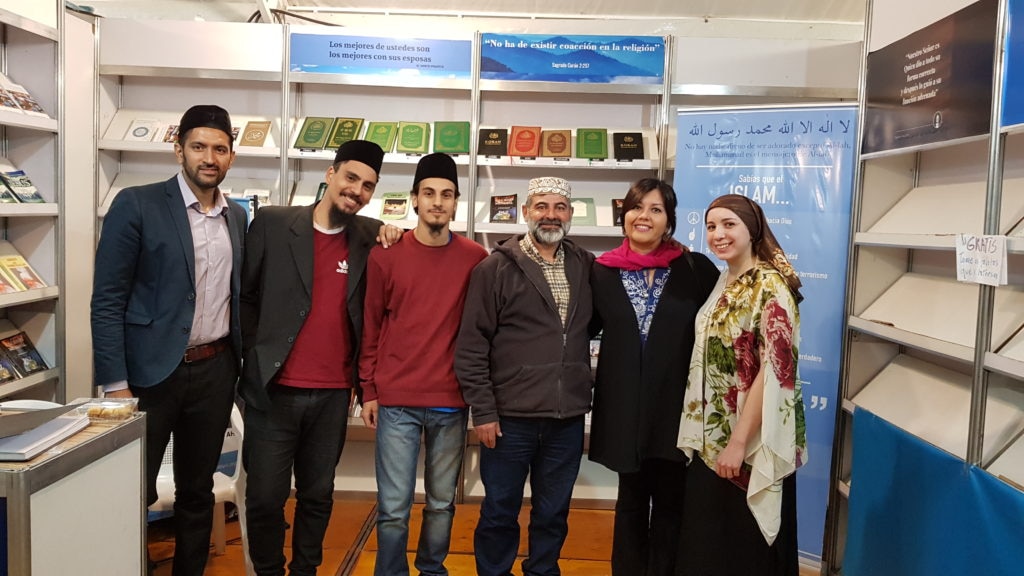
Jamaat-e-Ahmadiyya Argentina had the opportunity to participate, for the very first time, at the book fair of Cordoba, Argentina. The book fair was held from 5 to 22 September 2019.

Cordoba is the second largest city in Argentina. By the grace of Allah, the book fair was a very successful platform to convey the true message of Islam to thousands of Argentinians. More than 100 people left their contact details to stay in touch with the Jamaat-e-Ahmadiyya Argentina and learn more about Islam.

Therefore, each month, Islam classes will be organised in the city of Cordoba for such people. Insha-Allah

May Allah reward the eight local Argentinian Ahmadis who participated in the book fair as volunteers and conveyed the teachings of Islam to their fellow countrymen and explained about the advent of the Promised Messiah, peace be upon him.

Men of Excellence

0

Friday Sermon

6 September 2019

Men of Excellence

5

After reciting the Tashahud, Ta‘awuz, and Surah al-Fatihah, Hazrat Khalifatul Masih Vaa stated: 

In the previous sermon, I started to relate accounts from the life of Hazrat Ubadahra bin Samit, however there still remained some accounts and so, I will  present some further accounts and incidents during his life.

It is written in historical accounts that when the Banu Qainuqa decided to wage war against the Muslims – on the orders of Abdullah bin Ubay – Hazrat Ubadahra bin Samit, like Abdullah bin Ubay, was a confederate of the Banu Qainuqa. However, owing to the impending battle, he distanced himself from the Banu Qainuqa and for the sake of God Almighty and His Prophetsa, he detached himself from being their confederate. It is stated that the following verse was then revealed:

یٰۤاَیُّہَا الَّذِیۡنَ اٰمَنُوۡا لَا تَتَّخِذُوا الۡیَہُوۡدَ وَ النَّصٰرٰۤی اَوۡلِیَآءَ ۘؔ بَعۡضُہُمۡ اَوۡلِیَآءُ بَعۡضٍ ؕ وَ مَنۡ یَّتَوَلَّہُمۡ مِّنۡکُمۡ فَاِنَّہٗ مِنۡہُمۡ ؕ اِنَّ اللّٰہَ لَا یَہۡدِی الۡقَوۡمَ الظّٰلِمِیۡنَ 

“O ye who believe! Take not the Jews and the Christians for friends. They are friends one to another. And whoso among you takes them for friends is indeed one of them. Verily, Allah guides not the unjust people.” [Ch.5: V.52] (Al-Isaba Fi Tamyeez Al-Sahaba, Vol. 3, p. 506, Dar-ul-Kutub al-Ilmiyyah, Beirut, 2005)

At this point, I will reiterate that this verse does not mean that one should not perform virtues deeds that would benefit the Jews or the Christians, nor does it mean that one must sever all ties with them. Rather, it means that one ought to avoid making friends with those Christians and Jews who are engaged in battle with the Muslims. In fact, God Almighty has explained in other place in the Holy Quran that He does not forbid for one to perform virtuous deeds or deal justly with those people who do not wage war against Muslims or to those who do not exile the Muslims from their homes, irrespective of whether they are disbelievers, Jews or Christians. Just as God Almighty states:

لَا یَنۡہٰٮکُمُ اللّٰہُ عَنِ الَّذِیۡنَ لَمۡ یُقَاتِلُوۡکُمۡ فِی الدِّیۡنِ وَ لَمۡ یُخۡرِجُوۡکُمۡ مِّنۡ دِیَارِکُمۡ اَنۡ تَبَرُّوۡہُمۡ وَ تُقۡسِطُوۡۤا اِلَیۡہِمۡ ؕ اِنَّ اللّٰہَ یُحِبُّ الۡمُقۡسِطِیۡنَ

“Allah forbids you not, respecting those who have not fought against you on account of your religion, and who have not driven you forth from your homes, that you be kind to them and act equitably towards them; surely Allah loves those who are equitable.” [Ch.60: V.9]

Thus, through the earlier verse, it has been made evidently clear that one should not forge relations with non-Muslims on the basis of any weakness, fear or cowardice. The real objective should be that one ought to have complete trust and reliance in Allah the Almighty alone. Furthermore, if one improves their spiritual condition, then God Almighty shall grant His support. Unfortunately, these days we witness that Muslim governments fall in the laps of foreign powers and are fearful of them. The result of this is that owing to benefiting from their aid, one Muslim country is turning against the other and they are the very people who are destroying Islam from its roots. Nonetheless, we pray to God Almighty to enable these Muslim governments to see reason.

In any case, in relation to the incident that is being mentioned, which is the battle against the Banu Qainuqa that resulted in them being besieged after the battle and eventually they were defeated, there are further details about it found in Sirat Khatamun-Nabiyyin. It references various historical sources and states regarding this incident that after their defeat, the Banu Qainuqa were ordered to leave [Medina] and the details of this incident are as follows:

“When the Battle of Badr had taken place and Allah the Exalted, out of His grace, granted a convincing victory to the Muslims, despite their being few and without means over a very fierce army of the Quraish, and the prominent leaders of Mecca were mixed to dust, the Jews of Medina went up in flames of jealousy. They began to openly hurl stinging comments at the Muslims and publicly asserted in gatherings that, ‘So what if you have defeated the army of the Quraish. Let Muhammad[sa] fight us and we shall demonstrate how wars are fought.’

“This escalated to such an extent that in one gathering they even uttered such words in the very presence of the Holy Prophetsa. As such, there is a narration that after the Battle of Badr, when the Holy Prophetsa returned to Medina, one day, he gathered the Jews and admonished them and whilst presenting his claim, invited them to Islam. The chieftains among the Jews responded to this peaceful and sympathetic address of the Holy Prophetsa in the following words:

“‘O Muhammad[sa], it seems that you have perhaps become arrogant after killing a few Quraish. Those people were inexperienced in the art of war. If you were to fight us, you would come to know the real likes of warriors.’ The Jews did not rest upon a mere threat, rather, it seems as if they even began to hatch conspiracies to assassinate the Holy Prophetsa. There is a narration that in those days when a faithful Companion by the name of Talhara bin Barra was about to pass away, he bequeathed, ‘If I die at night, the Holy Prophetsa should not be notified about my funeral prayer, lest a misfortune befalls the Holy Prophetsa at the hands of the Jews on my account.’ (i.e. lest the Holy Prophetsa comes at night to lead the funeral prayer and the Jews see it as an opportunity to attack) Therefore, after the Battle of Badr, the Jews openly began to fuel mischief, and among the Jews of Medina, since the Banu Qainuqa were the most powerful and bold, it was they who first began to breach the treaty. As such, historians write:

“‘Among the Jews of Medina, the Banu Qainuqa were the first to break the treaty which had been settled between them and the Holy Prophetsa. After Badr, they began to rebel fiercely and openly expressed their rancour and malice and broke their treaty and agreement.’

“However, despite such events, under the guidance of their Master, the Muslims demonstrated patience in every way and did not allow themselves to take the lead in any respect. It is narrated in a Hadith that after the treaty which had been settled with the Jews, the Holy Prophetsa would even take special care to protect their sentiments.

“On one occasion, an argument broke out between a Muslim and a Jew. The Jew asserted the superiority of Mosesas above all the other Prophets. The Companion was angered by this and he dealt somewhat harshly with that person replying that the Holy Prophetsa was the most superior of all the Messengers. When the Holy Prophetsa was informed of this, he was displeased and rebuked the Companion saying, ‘It is not your task to go about speaking of the superiority of God’s Messengers in comparison to one another.’ Then, the Holy Prophetsa mentioned a partial superiority of Mosesas and consoled the Jew. However, despite this loving conduct of the Holy Prophetsa, the Jews continued to escalate in their mischief. Eventually, it was the Jews who created a cause for war and their heart-felt animosity could not be tamed. What happened was that one day, a Muslim lady went to the shop of a Jew in the market in order to purchase some goods. A few evil Jews, who were then sitting at the shop began to harass her in a most mischievous manner and even the shopkeeper himself committed the evil deed that while the lady was unaware, he attached the lower corner of her skirt to the mantle on her back with a thorn or something of that sort.” (Perhaps there was a hook of some sort and he pinned it against that.) “As a result, when the lady stood up to leave due to their rude behaviour, the lower part of her body became exposed at which the Jewish shopkeeper and his accomplices burst out in laughter. Outraged, the Muslim lady screamed and appealed for help. It so happened that a Muslim was present nearby. He dashed to the scene and in a mutual altercation, the Jewish shopkeeper was killed. Upon this, the Muslim was showered with swords from all directions and this remarkably indignant Muslim was put to death. When the Muslims were informed of this event in national indignation, their eyes gorged with blood in rage. On the other hand, the Jews who desired to make this incident an excuse to fight, congregated in the form of a crowd and a state of riot broke out.

When the Holy Prophetsa was informed of this, he gathered the chieftains of the Banu Qainuqa and explained that such behaviour was not appropriate and that they should refrain from such mischief and fear God. Instead of expressing disappointment or remorse and seeking forgiveness for what had happened, they responded with very refractory answers and boldly repeated their earlier threat that, ‘Do not become arrogant over your victory at Badr. When you are to fight us you shall come to know the real likes of warriors.’ Left with no other choice, the Holy Prophetsa set out towards the fortresses of the Banu Qainuqa with a force of Companions.” (When the Holy Prophetsa went to see the Jews with his companions, they ought to have shown remorse for their actions and extended a hand of peace, but instead they were ready to fight.) “Therefore, war was declared and the forces of Islam and Judaism came forth to battle one another.

“According to the custom of that era, a method of warfare was that one party would secure themselves within their fortresses and wait. The opposing force would besiege the fortress and whenever an opportunity presented itself, every now and then, attacks would be launched against one another. This would continue until the surrounding army would either lose hope in capturing the fortress and lift the siege, and this would be considered a victory to the ones besieged; or being unable to muster the strength to fend off the onslaught, the besieged force would open the gates of their fortress and hand themselves over to the victors. On this occasion, the Banu Qainuqa employed the same tactic, and closed themselves within their own fortresses. The Holy Prophetsa besieged them and this siege continued for fifteen days. Finally, when all the strength and arrogance of the Banu Qainuqa had been shattered, they opened the gates of their fortresses on the condition that though their wealth would belong to the Muslims, their lives and families would be spared. The Holy Prophetsa accepted this condition, even though according to Mosaic law, all of these people were liable to be put to death (according to the Mosaic law, they were liable to be put to death for their wrongdoings) and according to the initial agreement, the judgement of the Mosaic law should have been administered to them.

“However, since this was the first crime committed by this nation, as a first course of action, the merciful and forgiving disposition of the Holy Prophetsa could never be inclined towards an extreme punishment, which should only be imposed as a final remedy. However, on the other hand, allowing such a treacherous and rebellious tribe to remain in Medina was no less than nurturing a snake in the grass, especially when a group of hypocrites from among the Aus and Khazraj was already present within Medina, and from the exterior as well, the opposition of the whole of Arabia had greatly distressed the Muslims. In such circumstances, the only judgement which the Holy Prophetsa could pass was for the Banu Qainuqa to leave Medina. In comparison to their crime and taking into account the circumstances of that era, this was a very mild punishment. Furthermore, the purpose of this punishment was the security of Medina.” (The main purpose of this was to ensure the safety of the Muslims of Medina.)

“Nonetheless, for the nomadic tribes of Arabia it was nothing out of the ordinary to move from one place to another, especially when a tribe did not own any properties in the form of land and orchards – and the Banu Qainuqa had none. The entire tribe was given the opportunity to leave one place and settle somewhere else, with great peace and security. As such, the Banu Qainuqa very peacefully left Medina and settled towards Syria. The Holy Prophetsa assigned the task of overseeing the necessary arrangements, etc. associated with their departure to a companion named Ubadahra bin Samit (the companion who is being mentioned) who was from among their confederates. Ubadahra bin Samit escorted the Banu Qainuqa for a few manzils [ a day’s journey] and after safely sending them off, he returned. The spoils which were attained by the Muslims consisted only of weaponry and instruments of their profession.” Aside from this there was nothing more that the Muslims gained in the spoils. (Sirat Khatamun-Nabiyyin, Hazrat Mirza Bashir Ahmadra, pp. 458-460)

Some details in relation to this incident are also found in Sirat-ul-Halabiyyah. It states that the Holy Prophetsa commanded to expel and exile these Jews from Medina for good. The Holy Prophetsa entrusted Hazrat Ubadahra bin Samit with the responsibility of exiling them and he gave the Jews respite for three days.

Subsequently, after three days, the Jews said farewell to Medina and left. Prior to this, the Jews had requested Hazrat Ubadahra bin Samit to extend the period of respite that they were granted. However, Hazrat Ubadahra rejected this request stating that not a single minute of respite would be given to them. Following this, Hazrat Ubadahra oversaw their exile and the Banu Qainuqa settled in the plains of a town in Syria. (Al-Sirat al-Halabiyyah, Vol. 3, p. 287, Bab Dhikr Maghaziyah, Ghazwah Banu Qainuqa, Dar-ul-Kutub al-Ilmiyyah, Beirut, 2002)

There are many other Ahadith [sayings of the Holy Prophetsa] which have been narrated by Hazrat Ubadahra bin Samit. In one narration, Hazrat Ubadahra states:

“Owing to the increasing engagements of the Holy Prophetsa, whenever someone from among the Muhajireen [Muslims who migrated from Mecca to Medina] presented himself before the Holy Prophetsa, he would entrust him to one of us in order to teach him the Holy Quran as well as religious knowledge.”

He further narrates, “On one occasion, the Holy Prophetsa assigned an individual to me. He stayed at my home and ate with me and my family and I taught him the Holy Quran. When he was about to return home, he thought that since he had stayed with me and I had taught him the Holy Quran, therefore perhaps I had some rights over him. Hence, he gave me a bow as a present.” He further says, “It was of such exceptional quality that I had previously never seen a better bow and was made of excellent wood and was very soft.” Hazrat Ubadahra then says, “I presented myself before the Holy Prophetsa and asked, ‘O Messengersa of Allah! Such and such individual has granted me this bow as a gift. What is your guidance in relation to this?’ The Holy Prophetsa replied, ‘What you are carrying between your shoulders is like a burning coal.’” Meaning that the present he accepted was only given to him because he taught him the Holy Quran and thus it is was fire which he was carrying between his shoulders. (Musnad Ahmad bin Hanbal, Vol. 7, p. 563, Ubadahra bin Samit, Hadith 23146, Aalamul Kutub, Beirut, 1998)

There is another narration related by Hazrat Ubadahra as well in which he said:

“I taught the Holy Quran to some individuals from among the Ahl-e-Suffa and I also taught them how to write. Upon this, one of them sent me a bow as a present. In my heart I thought that this is not money, cash, gold, silver or any form of currency and so decided that I will use it to shoot arrows in the way of Allah. It is merely a bow and it will be useful to me to shoot arrows if the occasion of Jihad ever arises and will be used in the way of Allah.” Nevertheless, he says, “I sought guidance from the Holy Prophetsa in relation to this. Upon this, the Holy Prophetsa said, ‘You may accept it if you wish to wear a chain made out of fire around your neck.’” (Sunan Ibn Majah, Kitabul Tijaaraat, Baab Al-Ajr Ala Taleem-ul-Quran, Hadith 2157)

That is, if he wished to have a chain made out of fire and placed around his neck, then he could accept it.

Both of these narrations are similar and have appeared in different sources. The commentators [of Ahadith] have concluded from these narrations that the bow was given as remuneration for teaching the Holy Quran, however this practice was disliked by the Holy Prophetsa. Therefore, this incident contains guidance for those people who teach the Holy Quran and use it as a source of personal income.

Hazrat Rashid bin Hubaish narrates that on one occasion, the Holy Prophetsa went to enquire about the health of Hazrat Ubadahra bin Samit who was ill at the time. The Holy Prophetsa asked, “Do you know who from among my Ummah will be counted amongst the martyrs?” At this, the Companionsra began to look at one another. Upon this, Hazrat Ubadahra asked for help so that he could sit upright and using support, he sat up and submitted, “O Messengersa of Allah! You asked about who from among the Ummah, will be counted amongst the Martyrs? The ones who will be counted amongst the martyrs are those who only seek virtue as their reward and are subsequently martyred fighting bravely and displaying steadfastness.” To this the Holy Prophetsa replied, “If it is left to this alone, then there will be very few martyrs among my Ummah.” The Holy Prophetsa then said, “The one who dies fighting in the cause of God Almighty is a martyr, the one who dies from the plague is a martyr”, that is, if there is an epidemic and a pious believer passes away due to it, then in that case he will be deemed as a martyr; “the one who drowns will be deemed as a martyr, the one who passes away due to an abdominal illness is a martyr.” The Holy Prophetsa then further said, “A woman who passes away in the state of nifaas, her child will take her straight into paradise.” (Musnad Ahmad bin Hanbal, Vol. 5, p. 492, Musnad Rashid bin Hubaish, Hadith 23146, Aalamul Kutub, Beirut, 1998) 

The state of nifaas is when a woman passes away after childbirth due to excessive blood loss. The state of nifaas can last for up to forty days after childbirth and if owing to weakness or any other reason, a woman passes away during this period, the Holy Prophetsa has said that her child will be the reason for her entering paradise.

There is a narration in Sahih Bukhari, which is similar to the one I have just stated; Hazrat Abu Hurairahra narrates that the Holy Prophetsa said, “There are five types of martyrs: the one who dies from the plague, the one who passes away due to an abdominal illness, the one who drowns, the one who passes away by being crushed and the one who dies fighting in the cause of Allah.” (Sahih al-Bukhari, Kitabul Jihad Wa Al-Sair, Hadith 2829)

The Promised Messiahas was informed [by God Almighty] that the plague was sent down as a sign for him in that whosoever believed in him in the true sense would be saved from the effects of the plague. Thus, this particular case is a completely different matter altogether, however, if under normal circumstances there is an epidemic and a believer who has firm faith passes away as a result of it, then they will be deemed as a martyr.

Ismael bin Ubaid Ansari narrates that Hazrat Ubadahra once said to Hazrat Abu Hurairahra, “O Abu Hurairahra! You were not present at the time when the Holy Prophetsa took the pledge of allegiance from us on the basis that that we would always demonstrate obedience to him in times of increased activity or times of rest, and in times of hardship or ease; and that we will enjoin good and forbid evil in a way that we would not worry about the reproach of any critic. Then when the Holy Prophetsa migrated to Medina, we pledged allegiance to support and protect him with our lives as we would protect our wives and children. We pledged allegiance on all of these matters and in return, we were promised the tidings of paradise. Thus, whosoever breaks this pledge that he made with the Holy Prophetsa, only causes harm to himself. Whosoever fulfils the pledge he made with the Holy Prophetsa, then God Almighty will fulfil His promise as vouchsafed to the Holy Prophetsa.”

On one occasion Hazrat Muawiyyara wrote a letter to Hazrat Uthman Ghanira stating, “The people of Syria are creating unrest against me due to Hazrat Ubadahra bin Samit Therefore, either call back Ubadahra bin Samit to you, or I will remove myself between him and Syria” i.e. he would leave Syria. Hazrat Uthmanra wrote back stating: “Provide transport for him and ensure that he reaches his home in Medina Munawwarah.” Hence, Hazrat Muawiyyara arranged for him to reach Medina. Hazrat Ubadahra went to visit Hazrat Uthmanra in his home and aside from one person, there was nobody present, meaning out of those who had met with the companions, Hazrat Ubadahra saw Hazrat Uthmanra seated in the corner of the room. Hazrat Uthmanra then turned to Hazrat Ubadahra and asked, “O Ubadahra bin Samit what is the matter between you and us?” Hazrat Ubadahra stood up and began addressing the people saying: “I heard the Holy Prophetsa say: ‘After me there will be certain leaders who will urge you to perform deeds that are displeasing to you, and they will dislike those deeds that are pleasing to you. Therefore, whoever is disobedient to God Almighty you should not follow him. Thus, do not transgress the boundaries set by God Almighty.’” (Musnad Ahmad bin Hanbal, Vol. 7, pp. 564-565, Musnad Ubadahra bin Samit, Hadith 23149-23150, Aalamul Kutub, Beirut, 1998)

There are certain matters regarding which there can be a difference of opinion between people, and between Hazrat Ubadahra bin Samit and Hazrat Amir Muawiyyara, there were differences of opinions regarding certain matters. I mentioned in the previous sermon as well that there was a similar incident during the Khilafat of Hazrat Umarra. Since Hazrat Ubadahra bin Samit was among the early companions, who had heard about matters directly from the Holy Prophetsa, therefore, he would firmly adhere to them and ensure others acted on them accordingly. During the Khilafat of Hazrat Umarra there was a difference of opinion between Hazrat Amir Muawiyyara and Hazrat Ubadahra bin Samit. Hazrat Umarra instructed Hazrat Amir Muawiyyara that he was not to question Hazrat Ubadahra bin Samit and to let him act on the matters as he deemed correct. Later, when Hazrat Ubadahra retuned to Medina [due to these differences], Hazrat Umarra sent him back. (Sunan Ibn Majah, Hadith 18)

However, in the time of Hazrat Uthmanra, when the issue arose again, Hazrat Uthmanra called Hazrat Ubadahra to Medina due to the conditions at the time. Nonetheless, Hazrat Ubadahra had a very high status and he was able to interpret certain matters because he had heard them directly from the Holy Prophetsa. For this reason, there was a difference of opinion in certain matters and he would voice his opinion.

For example, in matters of exchanging goods, bartering or in matters of trade. This is a lengthy subject and there is not enough time to discuss it here, but it was relating to such matters that Hazrat Ubadahra and Hazrat Muawiyyara were in disagreement. Since Hazrat Ubadahra had sound arguments to prove his case, therefore he would interpret matters accordingly, while at the same time Hazrat Ameer Muawiyyara held a different opinion about the same issues. However, it is not for everyone to voice disagreements, unless they have clear proof from the Holy Quran or Hadith. Moreover, in this era the Promised Messiahas has elucidated many issues. Nonetheless, the fundamental point to remember in all of this is that one should never cross the limits set by God Almighty and always remain within those prescribed limits. Thus, every Ahmadi ought to bear this in mind and demonstrate complete obedience.

Ata narrates, “I met Waleed, who was the son of a companion of the Holy Prophetsa named Hazrat Ubadahra bin Samit and I asked him what his father, i.e. Hazrat Ubadahra, advised him before he passed away. Waleed replied that he (i.e. Hazrat Ubadahra) said: ‘O my son! Fear God Almighty and know full well that you can never become righteous until you have firm belief in Allah the Almighty, and also until you believe in the divine decree, whether good or bad. Therefore, if you die and believe something contrary to this, then you will be thrown into the fire.’”

Hazrat Anasra bin Malik narrates that the Holy Prophetsa would frequently visit the house of Hazrat Umme Haramra bint Milhan, who was the wife of Hazrat Ubadahra bin Samit and she would present the Holy Prophetsa food. On one occasion when the Holy Prophetsa visited her home, she served him food and then began to groom his hair, at which the Holy Prophetsa fell asleep. A short while later, he woke up from his sleep and he was smiling. Hazrat Umme Haramra asked, “O Messengersa of Allah! Why were you smiling?” The Holy Prophetsa replied, “A few people from among my Ummah who had set out to fight in the way of God Almighty were brought before me. They were sailing in the sea in a manner as if they were kings sitting on thrones, or he stated that they were like kings seated upon their thrones.” The narrator of the incident was unsure as to exactly which word the Holy Prophetsa had used. Nonetheless, Hazrat Umme Haramra said to the Holy Prophetsa, “O Messengersa of Allah! Pray to God Almighty that I may be among those people.” The Holy Prophetsa then prayed for Hazrat Ummera Haram and then rested his head and fell asleep again. Again, he woke up and he was smiling. She asked again as to the reason why the Holy Prophetsa was smiling, to which the Holy Prophetsa said, “Some people from among my Ummah who had set out to fight in the way of Allah were presented before me.” The Holy Prophetsa then repeated what he mentioned earlier. Hazrat Umme Haramra submitted to the Holy Prophetsa, “O Messengersa of Allah! Pray that Allah the Almighty also enable me to be among those group of people.” The Holy Prophetsa stated, “You already are included in the company of these people.” Subsequently, during the era of Muawiyyah bin Abi Sufyan, Hazrat Umme Haramra was part of a voyage and upon disembarking, she fell from her mount and passed away. (Sahih al-Bukhari, Kitabul Jihad Wa Al-Sair, Hadith 2788-2789)

The Holy Prophetsa would visit the house of Hazrat Umme Haramra because he had close familial ties with her. With regard to this, it is stated that Umme Haramra was the daughter of Milhan bin Khalid and belonged to the tribe of Banu Najjar. Umme Haram was the sister of Umme Sulaim, whose son was Hazrat Anasra, and thus she was his maternal aunt. Both Umme Haramra and Umme Sulaim were maternal aunts of the Holy Prophetsa, related to him either through a blood relation or foster relation. (Al-Isti‘ab, Vol. 4, p. 1931, Dar-ul-Jeel, Beirut, 1992)

Imam Nawawi writes that all the scholars unanimously agree that Umme Haramra had a close family relation with the Holy Prophetsa. Owing to this relation, the Holy Prophetsa would sometimes visit her house and take rest during the afternoons. However, there are varying opinions as regards the exact relation. Everyone agrees that she was his close family relative, but there are different views as to exactly how they were related. (Al-Minhaj Bi-Sharah Sahih Mulsim, Imam Nawawi, Kitab-ul-Amarah, Hadith no. 1912, Dar-e-Ibn Hazam, Beirut, 2002)

In any case, they had close family relations in one way or another. Hazrat Umme Haramra accepted Islam at the blessed hand of the Holy Prophetsa. Later, during the Khilafat of Hazrat Uthman Dhul-Noorainra, she left to take part in Jihad, along with her husband, Ubadahra bin Samit, who was a very prominent companion from among the Ansar (whose account is being mentioned) and she was martyred whilst reaching territory occupied by the Byzantines. Thus, she attained the status of martyrdom according to the vision of the Holy Prophetsa.

In Umdatul Qari and Sharah Irshhaad-ul-Saari, which are commentaries of Bukhari, it is stated that Hazrat Umme Haramra passed away in 27-28 AH. According to some, she passed away during the rule of Amir Muawiyyara.

However, the earlier narration is more commonly known and has been quoted by the historians, which is that she passed away during a naval battle during the Khilafat of Hazrat Uthmanra. In reference to the “era of Muawiyya”, it does not refer to the rule of Hazrat Amir Muawiyyara, rather it refers to that period in history in which Hazrat Amir Muawiyyara fought a naval battle against the Byzantine Empire. Hazrat Umme Haramra also took part in this with her husband, Ubadahra bin Samit and upon returning from the battle, she passed away during the Khilafat of Hazrat Uthmanra. (Umdatul Qari [Sharah Sahih al-Bukhari ] Vol. 14, p. 128, Dar Ihyaa al-Turath al-Arabi, Beirut, 2003), (Irshhaad-ul-Saari [Sharah Sahih al-Bukhari], Vol. 5, p. 230, Dar-ul-fikr, Beirut, 2010)

Junadah bin Abu Umaiyyah narrates that they visited Hazrat Ubadahra bin Samit during his illness. They requested him to narrate a hadith which he had heard from the Holy Prophetsa, so that by doing so, God Almighty will grant him blessing. Hazrat Ubadahra bin Samit stated that the Holy Prophetsa once called them and took their Bai‘at. The Holy Prophetsa took a pledge from them on the conditions that they will show complete obedience in all circumstances, whether it be in a state of happiness, sadness, poverty or affluence or even when the decision goes against their preferences. Moreover, they shall not dispute with the rulers in order to assume power for themselves, with the exception of manifest disbelief. (Sahih Al-Bukhari, Kitab-ul-Fitn, Hadith no. 7055-7066)

In regards “with the exception of manifest disbelief”, [i.e. when one can disagree] even then that is when it comes to a fundamental law of God, for which one has a clear and conclusive argument from God and also if one has the power or means to do so. 

Sunabihir relates, “I visited Hazrat Ubadahra bin Samit when he was close to his demise and I began to cry. Hazrat Ubadahra bin Samit told me to stop and enquired the reason for my crying. He then said, ‘By God, if I were to testify, I would certainly testify in your favour. If I were granted the permission to intercede, I will certainly intercede for you and if I had the strength to help you in any way, I would certainly do so.’ He then said, ‘By God, I have narrated to you all the hadith from the Holy Prophetsa which contain all that is good for you, except for one hadith, which I shall narrate to you today at a time when I am close to my demise. I heard the Holy Prophetsa state that whosever affirms that there is no God except Allah and Muhammadsa is the Messenger of Allah, will be safeguarded from the hellfire, in other words, such a person is a Muslim.’” (Sahih Muslim, Kitab-ul-Iman, Hadith no. 29)

May God Almighty continue to elevate the status of the Companionsra, who have conveyed to us such knowledge which is not only beneficial to us spiritually but also in our practical lives as well.

I shall now mention some deceased members [of the Jamaat] and will also lead their funeral prayer.

The first is Saeed Suqiya Sahib from Syria. He passed away on 18 April, however the funeral prayer is being offered late since the news of his demise was not received until recently.

اِنَّا لِلّٰہِ وَ اِنَّاۤ اِلَیۡہِ رَاجِعُوْنَ

“Surely to Allah we belong and to Him shall we return.”

The deceased was among the very sincere and pioneer members of the Jamaat in Syria. He completed the first reading of the Holy Quran by the age of 5 and right from his childhood, he was extremely proficient and skilled in the rules for the correct pronunciation of the Holy Quran and also its recitation. He taught many Ahmadis the rules for the correct pronunciation of the Holy Quran [i.e. Tajweed]. Respected Munir-ul-Husni Sahib had great trust in him.

The deceased acquired an education in law, however he did not like the field of law and instead pursued a career in teaching. He was considered among the top teachers in the country. He taught in various parts of the country and was promoted as headmaster.

The deceased had great passion for tabligh and would preach to everyone he met. A few years ago, when the Arabic Desk translated the books of the Promised Messiahas into Arabic and republished them, he stated that despite having been Ahmadi for such a long time, only now had he truly understood what the Promised Messiahas had stated and for the first time he understood the true essence of the Jamaat. He further stated that he was acquiring information all over again about the true Islam Ahmadiyyat. Every acquaintance of his has mentioned his attributes of exhibiting high morals, dealing with others with kindness, generosity, confidence, considerate of other’s feelings and sentiments and to selflessly help others. In fact, every person who knew him mentioned these qualities of his and had great love for him because of this.

He remained occupied in his own work, very cheerful, a benevolent father and was a devoted husband. He had a very extensive social circle, very regular in his prayers and worship. Whenever he received any money, he would offer his Chanda first, and at times, he would donate the entire amount towards Chanda. He leaves behind three sons and three daughters. His eldest son, Muhammad Sahib, and his youngest son, Jalal-ul-Din Sahib, are Ahmadis. May God Almighty grant him His mercy and forgiveness. May He elevate His status and enable his progeny to become the recipient of his prayers. May God Almighty also enable the rest of his progeny to accept the truth.

The second funeral is of respected Al-Tayyab Al-Ubadi Sahib from Tunisia, who passed away on 26 June at the age of 70

اِنَّا لِلّٰہِ وَ اِنَّاۤ اِلَیۡہِ رَاجِعُوْنَ

“Surely to Allah we belong and to Him shall we return.”

He was the only Ahmadi in his area and was extremely sincere and had great love for the Jamaat and Khilafat. He spent almost his entire life in the mosque. He was a true devotee of the Holy Quran and spent a lot of time occupied in the remembrance of God Almighty.

Upon learning about the Jamaat, he immediately travelled to its headquarters and did the Bai‘at. He had great love for the writings of the Promised Messiahas. In order to attend the Friday Prayer, he would travel almost for five hours on train to offer his prayer in the headquarters. He was an extremely courageous person, and would introduce the Jamaat to whoever he met. He faced a lot of pressure from his family and locals but he remained firm in his belief.

He openheartedly contributed towards Chanda, right from the moment he did the Bai‘at and when he learnt about the Nizam-e-Wasiyyat, he immediately became a part of it. He would always urge the youth to spend in the way of Allah the Almighty and would tell them that it was owing to spending in the way of God Almighty that his wealth was greatly blessed. The deceased also had the opportunity to perform the Hajj. He had great love for the Jamaat and Khilafat. May God Almighty grant him His mercy and forgiveness and enable his progeny and dear ones to become the recipient of his prayers.

The third funeral is of respected Amatul Shukoor Sahiba, who was the eldest daughter of Hazrat Khalifatul Masih IIIrh. She passed away on 3September at the age of 79

اِنَّا لِلّٰہِ وَ اِنَّاۤ اِلَیۡہِ رَاجِعُوْنَ

“Surely to Allah we belong and to Him shall we return.”

As I mentioned that she was the daughter of Hazrat Khalifatul Masih IIIrh and she was the paternal granddaughter of Hazrat Musleh-e-Maudra and the maternal granddaughter of Hazrat Nawab Mubaraka Begum Sahibara and Hazrat Nawab Muhammad Ali Khan Sahibra.

She was born in April, 1940 in Qadian. She acquired her primary education in Qadian and completed her BA from Lahore. She was married twice. Her first marriage was with Shahid Khan Sahib, who was the son of Nawab Abdullah Khan Sahib, she had two sons and three daughters from that marriage. One of her sons, Amir Ahmad Khan, is a Waqf-e-Zindagi and is currently serving in Tahrik-e-Jadid. Two of her grandsons are currently studying in Jamia. Her second marriage was with Dr Mirza Laiq Sahib, however she did not have any children from that marriage.

Although she did not serve in any major office for the Jamaat, however she generally had the opportunity to serve in various Jamaat departments of Lajna Imaillah. Everyone who has written about her has mentioned that she worked with great cooperation and humility. She had great interest in reading and writing and had written a biography on Hazrat Amma Janra and another book on Hazrat Nawab Mubaraka Begum Sahibara, the title of which is, Mubarka Ki Kahani, Mubarka Ki Zubani. Her third book is a biography on the wife of Hazrat Mirza Sharif Ahmad Sahibra, Hazrat Bu Zainab Sahibara. The manuscript of the book is complete but has not been published yet due to the current circumstances [in Pakistan]. These three books therefore are a great literary contribution for the Lajna. Her maternal granddaughter, Malahat, writes, “My grandmother would always tell us that Hazrat Khalifatul Masih IIIrh would say that one should always smile for it is an act of charity. Therefore, I saw that even during the period of her final illness, she would always be smiling.”

She was suffering from a very painful illness and found out very late that it was cancer, however she bore this with great courage and patience.

Hazrat Khalifatul Masih IIIrh would also say that she would endure every difficulty with great patience.

May Allah the Almighty grant her His forgiveness and mercy and may He enable her children and future progeny to also remain attached with Khilafat and the Jamaat with a bond of true loyalty.

I would also like to mention that since the Khuddam-ul-Ahmadiyya Ijtema is commencing from today, therefore the Asr prayer will be combined with the Friday Prayer.

(Originally published in Al-Fazl International on 27 September 2019, pp. 5-9. Translated by The Review of Religions.)